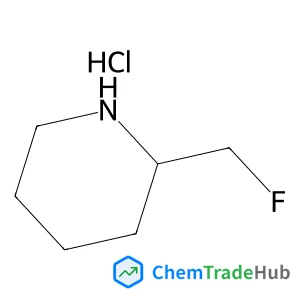
(2S)-2-(Fluoromethyl)piperidine hydrochloride (1:1)
CAS Number:
886216-73-5
Molecular Formula:
C6H13ClFN
Xinqiang Wang, Hengjiang Zhu
Because of the strong d–d interactions, the doped transition metal (TM) atoms in the semiconducting host matrix tend to cluster and form a random distribution or a chemical phase separation. Hence it is a long-standing dream to achieve the desired diluted magnetic semiconductor (DMS) with regularly and separately distributed TM impurities and room-temperature ferromagnetism. Here we, for the first time, demonstrate via accurate ab initio calculations that the cage-like building block Zn12S12 of the novel cluster-assembled sodalite phase of ZnS can provide an appropriate potential well to trap a foreign Mn atom, realizing regular distribution of the doped magnetic atoms. Interestingly, the endohedrally doped Mn@SOD–ZnS displays a ferromagnetic (FM) ground state with the encapsulated Mn atoms preserving their highly atom-like magnetic moment. Furthermore, such a framework is predicted to possess room-temperature half-metallicity. A detailed analysis of the electronic structure shows that the FM half-metallicity originates from the competition between the FM double exchange interaction and the anti-ferromagnetic (AFM) super-exchange interaction. The present study highlights a new avenue to achieve the needed DMS with regular distribution of the magnetic impurities.
DOI: 10.1039/C4CP04194A
Vedi Kuyil Azhagan
DOI: 10.1039/C4CP01497A
Matthew P. Conley, Aaron J. Rossini, Aleix Comas-Vives, Maxence Valla, Gilles Casano, Olivier Ouari, Paul Tordo, Anne Lesage, Lyndon Emsley, Christophe Copéret
DOI: 10.1039/C4CP01973C
Xue-Peng Wang, Nian-Ke Chen, Xian-Bin Li, Yan Cheng, X. Q. Liu, Meng-Jiao Xia, Z. T. Song, X. D. Han, Hong-Bo Sun
DOI: 10.1039/C3CP55476G
Zhiming Bai, Xiang Chen, Xiaoqin Yan, Xin Zheng, Zhuo Kang
DOI: 10.1039/C4CP00892H
C. J. Cobos, L. Sölter, E. Tellbach
DOI: 10.1039/C3CP54274B
Wei Li, Jian Wang, Jie Chen, Fu-Quan Bai, Hong-Xing Zhang
DOI: 10.1039/C4CP00968A
Xiao-wang Zhou, Reese E. Jones, Patrick E. Hopkins, Thomas E. Beechem
DOI: 10.1039/C4CP00261J
Dmitri B. Migas, Andrew B. Filonov, Victor E. Borisenko
DOI: 10.1039/C3CP54906B
Xiaoming Mo, Guojia Fang, Hao Long, Songzhan Li, Haoning Wang, Zhao Chen, Huihui Huang, Wei Zeng, Yupeng Zhang, Chunxu Pan
DOI: 10.1039/C3CP55505D
Waste containing N-Methoxy-N-methyl-1,3-thiazole-5-carboxamide (CAS: 898825-89-3...
N-(4-Biphenylyl)dibenzo[b,d]furan-4-amine should be stored in a tightly sealed c...
The market for 3-Acetamido-5-amino-2,4,6-triiodobenzoic acid (CAS: 1713-07-1) is...
Benzyl 2-O-acetyl-3,4,6-tri-O-benzyl-beta-D-galactopyranoside (CAS: 61820-03-9) ...
2-Ethylpiperazine dihydrochloride (CAS: 438050-52-3) is regulated under the Glob...
1,1'-[1,3-Phenylenebis(methylene)]bis(3-methyl-1H-pyrrole-2,5-dione) (CAS: 11946...
Several alternatives can be used in the synthesis of 5-Fluoro-2-(1-pyrrolidinyl)...
Proper personal protective equipment (PPE) must be worn when handling this compo...
When handling 6-Bromoimidazo[1,2-a]pyridin-8-amine, it is important to wear appr...
Alternatives to (2S,4R)-4-(4-Nitrobenzyl)pyrrolidine-2-carboxylic acid hydrochlo...

Physical Chemistry Chemical Physics (PCCP) is an international journal co-owned by 19 physical chemistry and physics societies from around the world. This journal publishes original, cutting-edge research in physical chemistry, chemical physics and biophysical chemistry. To be suitable for publication in PCCP, articles must include significant innovation and/or insight into physical chemistry; this is the most important criterion that reviewers and Editors will judge against when evaluating submissions. The journal has a broad scope and welcomes contributions spanning experiment, theory, computation and data science. Topical coverage includes spectroscopy, dynamics, kinetics, statistical mechanics, thermodynamics, electrochemistry, catalysis, surface science, quantum mechanics, quantum computing and machine learning. Interdisciplinary research areas such as polymers and soft matter, materials, nanoscience, energy, surfaces/interfaces, and biophysical chemistry are welcomed if they demonstrate significant innovation and/or insight into physical chemistry. Joined experimental/theoretical studies are particularly appreciated when complementary and based on up-to-date approaches.

![2-(7,7-Difluorobicyclo[4.1.0]hept-1-yl)ethanamine structure](https://static.chemtradehub.com/structs/209/2098065-08-6-ff24.webp "2-(7,7-Difluorobicyclo[4.1.0]hept-1-yl)ethanamine structure")