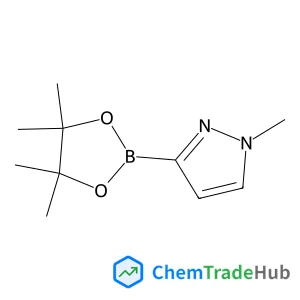
1-Methyl-3-(4,4,5,5-tetramethyl-1,3,2-dioxaborolan-2-yl)-1H-pyrazole
CAS Number:
1020174-04-2
Molecular Formula:
C10H17BN2O2
This work aims to extend the study of the formation of the electric double layer at the interface defined by a solution and an ion-exchange membrane on the basis of the Nernst–Planck and Poisson equations, including different values of the counter-ion diffusion coefficient and the dielectric constant in the solution and membrane phases. The network simulation method is used to obtain the time evolution of the electric potential, the displacement electric vector, the electric charge density and the ionic concentrations at the interface between a binary electrolyte solution and a cation-exchange membrane with total co-ion exclusion. The numerical results for the temporal evolution of the interfacial electric potential and the surface electric charge are compared with analytical solutions derived in the limit of the shortest times by considering the Poisson equation for a simple cationic diffusion process. The steady-state results are justified from the Gouy–Chapman theory for the diffuse double layer in the limits of similar and high bathing ionic concentrations with respect to the fixed-charge concentration inside the membrane. Interesting new physical insights arise from the interpretation of the process of the formation of the electric double layer at the ion exchange membrane–solution interface on the basis of a membrane model with total co-ion exclusion.
Niall J. English, Damian A. Mooney
DOI: 10.1039/B910462C
Fengyan Wang, Yongwei Zhang, Hua Wang, Jie Liu, Bo Jiang, Xiuyan Wang, Xueming Yang
DOI: 10.1039/B903688A
Zhenyu Liu
DOI: 10.1039/C000363H
Norbert Lümmen, Bjørn Kvamme
DOI: 10.1039/B904732H
Bingchen Du, Savelas A. Rabb, Christopher Zangmeister, YuYe Tong
DOI: 10.1039/B816531A
Matthew R. Hudson, Damian G. Allis, Wayne Ouellette, Bruce S. Hudson
DOI: 10.1039/B905070A
Boris B. Averkiev, Alexander I. Boldyrev
DOI: 10.1039/B908973J
A. Setyan, J.-J. Sauvain, M. J. Rossi
DOI: 10.1039/B902509J
Waste containing N-Methoxy-N-methyl-1,3-thiazole-5-carboxamide (CAS: 898825-89-3...
N-(4-Biphenylyl)dibenzo[b,d]furan-4-amine should be stored in a tightly sealed c...
The market for 3-Acetamido-5-amino-2,4,6-triiodobenzoic acid (CAS: 1713-07-1) is...
Benzyl 2-O-acetyl-3,4,6-tri-O-benzyl-beta-D-galactopyranoside (CAS: 61820-03-9) ...
2-Ethylpiperazine dihydrochloride (CAS: 438050-52-3) is regulated under the Glob...
1,1'-[1,3-Phenylenebis(methylene)]bis(3-methyl-1H-pyrrole-2,5-dione) (CAS: 11946...
Several alternatives can be used in the synthesis of 5-Fluoro-2-(1-pyrrolidinyl)...
Proper personal protective equipment (PPE) must be worn when handling this compo...
When handling 6-Bromoimidazo[1,2-a]pyridin-8-amine, it is important to wear appr...
Alternatives to (2S,4R)-4-(4-Nitrobenzyl)pyrrolidine-2-carboxylic acid hydrochlo...

Physical Chemistry Chemical Physics (PCCP) is an international journal co-owned by 19 physical chemistry and physics societies from around the world. This journal publishes original, cutting-edge research in physical chemistry, chemical physics and biophysical chemistry. To be suitable for publication in PCCP, articles must include significant innovation and/or insight into physical chemistry; this is the most important criterion that reviewers and Editors will judge against when evaluating submissions. The journal has a broad scope and welcomes contributions spanning experiment, theory, computation and data science. Topical coverage includes spectroscopy, dynamics, kinetics, statistical mechanics, thermodynamics, electrochemistry, catalysis, surface science, quantum mechanics, quantum computing and machine learning. Interdisciplinary research areas such as polymers and soft matter, materials, nanoscience, energy, surfaces/interfaces, and biophysical chemistry are welcomed if they demonstrate significant innovation and/or insight into physical chemistry. Joined experimental/theoretical studies are particularly appreciated when complementary and based on up-to-date approaches.