


Droplet based microfluidics: spectroscopic characterization of levofloxacin and its SERS detection
Literature Information
Publication Date
2015-01-16
DOI
10.1039/C4CP04970E
Impact Factor
3.676
Authors
I. J. Hidi, M. Jahn
View Original
Abstract
Levofloxacin (Levo), a second generation fluoroquinolone, has both clinical and environmental relevance. Therefore, the implementation of fast, robust and cost effective techniques for its monitoring is required. Here, its spectroscopic characterization and its detection in aqueous environment were carried out using surface enhanced Raman spectroscopy combined with droplet based microfluidics. The Levo molecule interacts with the silver nanoparticles via the carboxylate group and it adopts an upright or slightly tilted orientation. Furthermore, it is shown that the presence of Cl− ions has a strong influence on the enhancement efficiency of the Raman signal of the target molecule. Thus, for the determination of the limit of detection (LOD) the measurements were carried out in the absence of any electrolytes. The estimated LOD is ∼0.8 μM and the linear dynamic window ranges between 1–15 μM. These results were achieved after the normalization of the SERS signal to the Raman mode at 230 cm−1. This band was attributed to the ν(Ag–O) stretching and it accounts for the Levo molecules in the first layer on the Ag nanoparticles.
Recommended Journals

Journal of Organometallic Chemistry

Journal of Medicinal Chemistry

Proceedings of the National Academy of Sciences of the United States of America

Science Progress

Kinetics and Catalysis

Helvetica Chimica Acta

Organic Preparations and Procedures International

Pure and Applied Chemistry

Pharmacological Reviews

Israel Journal of Chemistry
Related Literature
How active sites facilitate charge-transfer interactions of silver and gold clusters with TCNQ?
Jing Chen, Zhixun Luo, Jiannian Yao
2017-07-25
Paper
DOI: 10.1039/C7CP02538F
Strain induced new phase and indirect–direct band gap transition of monolayer InSe
Ting Hu, Jian Zhou, Jinming Dong
2017-07-24
Paper
DOI: 10.1039/C7CP03558F
Differentiating between long and short range disorder in infra-red spectra: on the meaning of “crystallinity” in silica
Luca Nodari, Ivana Angelini, Tiziana Boffa Ballaran
2017-07-19
Paper
DOI: 10.1039/C7CP03446F
Novel multiple phosphorescence in nanostructured zinc oxide and calculations of correlated colour temperature
Sagnik Das, Uttam Kumar Ghorai, Rajib Dey, Chandan Kumar Ghosh, Mrinal Pal
2017-08-08
Paper
DOI: 10.1039/C7CP03631K
Interface nanoparticle control of a nanometer water pump
Jiaye Su, Yunzhen Zhao, Chang Fang, Syed Bilal Ahmed, Yue Shi
2017-08-04
Paper
DOI: 10.1039/C7CP03351F
Metal-doped ceria nanoparticles: stability and redox processes
Alberto Figueroba, Albert Bruix, Gábor Kovács
2017-07-25
Paper
DOI: 10.1039/C7CP02820B
The pressure–temperature phase diagram of pure Co based on first-principles calculations
Cuiping Wang, Cong Li, Jiajia Han, Lihui Yan, Bin Deng, Xingjun Liu
2017-07-24
Paper
DOI: 10.1039/C7CP03775A
Electron transport properties in dye-sensitized solar cells with {001} facet-dominant TiO2 nanoparticles
M. M. Maitani, K. Tanaka, Q. Shen, T. Toyoda, Y. Wada
2017-07-27
Paper
DOI: 10.1039/C7CP03593D
Enzymatic activity inside a DNA/peptide complex
Wei Pan, Hao Wen, Dehai Liang
2017-08-01
Paper
DOI: 10.1039/C7CP04066K
Interpretation of the à ← transition of hydrated protons in aqueous solutions observed in the far-UV region with quantum chemical calculations
Takeyoshi Goto, Krzysztof B. Beć, Yukihiro Ozaki
2017-07-20
Paper
DOI: 10.1039/C7CP01766A
You might also like
Compound Q&A
Is 6-(3-Fluorophenyl)picolinic acid (CAS: 887982-40-3) safe?
6-(3-Fluorophenyl)picolinic acid is generally considered safe for laboratory use...
887982-40-36-(3-Fluorophenyl)pi...
Compound Q&A
What industries use (3R)-3-Pyrrolidinol (CAS: 2799-21-5)?
(3R)-3-Pyrrolidinol is used in the pharmaceutical industry as a precursor for dr...
2799-21-5(3R)-3-Pyrrolidinol
Compound Q&A
What precautions should be taken when handling (4R,5R)-4,5-Diethoxycarbonyl-2,2-dimethyldioxolane (CAS: 59779-75-8)?
When handling (4R,5R)-4,5-Diethoxycarbonyl-2,2-dimethyldioxolane (CAS: 59779-75-...
59779-75-8(4R,5R)-4,5-Diethoxy...
Compound Q&A
How is 1-(6-Chloroimidazo[1,2-b]pyridazin-3-yl)ethanone (CAS: 90734-71-7) typically synthesized?
1-(6-Chloroimidazo[1,2-b]pyridazin-3-yl)ethanone is often synthesized via a mult...
90734-71-71-(6-Chloroimidazo[1...
Compound Q&A
What is the market or research trend for N-Ethyl-3,4-dimethylbenzylamine (CAS: 39180-83-1)?
The market for N-Ethyl-3,4-dimethylbenzylamine (CAS: 39180-83-1) remains steady,...
39180-83-1N-Ethyl-3,4-dimethyl...
Compound Q&A
What is Tert-butyl 3-(pyrrolidin-1-yl)azetidine-1-carboxylate (CAS: 1019008-21-9)?
Tert-butyl 3-(pyrrolidin-1-yl)azetidine-1-carboxylate is a chemical compound wit...
1019008-21-9Tert-butyl 3-(pyrrol...
Compound Q&A
What regulatory guidelines apply to 1-Bromo-3-chloro-2,4-dimethoxybenzene (CAS: 1228956-93-1)?
1-Bromo-3-chloro-2,4-dimethoxybenzene (CAS: 1228956-93-1) falls under the classi...
1228956-93-11-Bromo-3-chloro-2,4...
Compound Q&A
Is 8-Bromo-2-methyl-3,4-dihydroisoquinolin-1(2H)-one (CAS: 1368622-07-4) safe?
The safety of 8-Bromo-2-methyl-3,4-dihydroisoquinolin-1(2H)-one (CAS: 1368622-07...
1368622-07-48-Bromo-2-methyl-3,4...
Compound Q&A
Is Benzyl [(3S)-2,6-dioxo-3-piperidinyl]carbamate (CAS: 22785-43-9) safe?
Benzyl [(3S)-2,6-dioxo-3-piperidinyl]carbamate is generally safe when handled wi...
22785-43-9Benzyl [(3S)-2,6-dio...
Compound Q&A
How should 1-{[4-(4,4,5,5-Tetramethyl-1,3,2-dioxaborolan-2-yl)phenyl]sulfonyl}pyrrolidine (CAS: 928657-21-0) be stored?
1-{[4-(4,4,5,5-Tetramethyl-1,3,2-dioxaborolan-2-yl)phenyl]sulfonyl}pyrrolidine s...
928657-21-01-{[4-(4,4,5,5-Tetra...
Source Journal
Physical Chemistry Chemical Physics

CiteScore:
5.5
Self-citation Rate:
10.3%
Articles per Year:
3036
Physical Chemistry Chemical Physics (PCCP) is an international journal co-owned by 19 physical chemistry and physics societies from around the world. This journal publishes original, cutting-edge research in physical chemistry, chemical physics and biophysical chemistry. To be suitable for publication in PCCP, articles must include significant innovation and/or insight into physical chemistry; this is the most important criterion that reviewers and Editors will judge against when evaluating submissions. The journal has a broad scope and welcomes contributions spanning experiment, theory, computation and data science. Topical coverage includes spectroscopy, dynamics, kinetics, statistical mechanics, thermodynamics, electrochemistry, catalysis, surface science, quantum mechanics, quantum computing and machine learning. Interdisciplinary research areas such as polymers and soft matter, materials, nanoscience, energy, surfaces/interfaces, and biophysical chemistry are welcomed if they demonstrate significant innovation and/or insight into physical chemistry. Joined experimental/theoretical studies are particularly appreciated when complementary and based on up-to-date approaches.
Recommended Compounds
![(1R,6R)-6-({[(2-Methyl-2-propanyl)oxy]carbonyl}amino)-3-cyclohexene-1-carboxylic acid structure](https://static.chemtradehub.com/structs/865/865689-24-3-5fef.webp "(1R,6R)-6-({[(2-Methyl-2-propanyl)oxy]carbonyl}amino)-3-cyclohexene-1-carboxylic acid structure")
(1R,6R)-6-({[(2-Methyl-2-propanyl)oxy]carbonyl}amino)-3-cyclohexene-1-carboxylic acid
CAS Number:
865689-24-3
Molecular Formula:
C12H19NO4
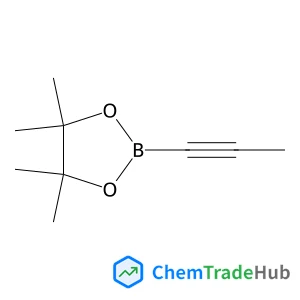
4,4,5,5-Tetramethyl-2-(1-propyn-1-YL)-1,3,2-dioxaborolane
CAS Number:
347389-75-7
Molecular Formula:
C9H15BO2
Recommended Suppliers





Disclaimer
This page provides academic journal information for reference and research purposes only. We are not affiliated with any journal publishers and do not handle publication submissions. For publication-related inquiries, please contact the respective journal publishers directly.
If you notice any inaccuracies in the information displayed, please contact us at support@chemtradehub.com. We will promptly review and address your concerns.