












Electronic structure and spectra of (Cu2O)n–H2O complexes
Literature Information
Publication Date
2014-11-07
DOI
10.1039/C4CP04303K
Impact Factor
3.676
Authors
Jerry Whitten
View Original
Abstract
Density functional theory calculations have been employed to determine optimized geometries for different (Cu2O)n clusters for n = 1 to 6, 12 and 18. The results show the formation of (Cu2O)n rings for n ≥ 2, while (Cu2O)n nanobarrels have been determined for n = 12 and for n = 18. Adsorption of H2O on the (Cu2O)n clusters occurs preferentially by interaction of the water O with outer Cu atoms. Absorption spectra calculated by time dependent density functional theory show that in all cases charge-transfer excitations from occupied orbitals of the (Cu2O)n cluster to a Rydberg orbital of H2O contribute to the character of the singlet excited states calculated at energies starting at about 2.6 eV, with increasing contribution found at higher excitation energies. Configuration interaction calculations on selected (Cu2O)n–H2O complexes determine charge-transfer excitations to contribute significantly to excited states lying at 4.6–6.2 eV above the ground state.
Related Literature
The effect of pulse duration on nanoparticle generation in pulsed laser ablation in liquids: insights from large-scale atomistic simulations
Maxim V. Shugaev, Chengping Wu, Leonid V. Zhigilei
2020-03-06
Paper
DOI: 10.1039/D0CP00608D
Ab initio investigation of the formation mechanism of nano-interfaces between 3d-late transition-metals and ZrO2 nanoclusters
Larissa Zibordi-Besse, Lucas G. Verga, Vivianne K. Ocampo-Restrepo, Juarez L. F. Da Silva
2020-03-25
Paper
DOI: 10.1039/D0CP00584C
Ligand binding to G-quadruplex DNA: new insights from ultraviolet resonance Raman spectroscopy
Silvia Di Fonzo, Jussara Amato, Federica D’Aria, Marco Caterino, Francesco D’Amico, Alessandro Gessini, John W. Brady, Bruno Pagano, Concetta Giancola
2020-03-25
Paper
DOI: 10.1039/D0CP01022G
Incorporation of trivalent cations in NaX zeolite nanocrystals for the adsorption of O2 in the presence of CO2
Sarah Komaty, Ayoub Daouli, Michael Badawi, Clément Anfray, Moussa Zaarour, Samuel Valable, Svetlana Mintova
2020-04-14
Paper
DOI: 10.1039/D0CP00111B
On the chemiluminescence emission of luminol: protic and aprotic solvents and encapsulation to improve the properties in aqueous solution
Angelo Giussani, Mercedes Rubio, Daniel Roca-Sanjuán
2020-11-18
Paper
DOI: 10.1039/D0CP04571C
Structural and electronic properties of NaTaO3 cubic nanowires
Guilherme Ribeiro Portugal, Jeverson Teodoro Arantes
2020-03-16
Paper
DOI: 10.1039/C9CP06769H
Identifying reaction pathways in phase space via asymptotic trajectories
Yutaka Nagahata, R. M. Benito, Rigoberto Hernandez
2020-03-25
Paper
DOI: 10.1039/C9CP06610A
Role of specific solute–solvent interactions on the photophysical properties of distyryl substituted BODIPY derivatives
Mariagrazia Fortino, Elisabetta Collini, Alfonso Pedone, Julien Bloino
2020-04-20
Paper
DOI: 10.1039/D0CP00034E
Molecular insights on NaCl crystal formation approaching PVDF membranes functionalized with graphene
Maria Luisa Perrotta, Francesca Macedonio, Lidietta Giorno, Wanqin Jin, Annarosa Gugliuzza, Elena Tocci
2020-03-13
Paper
DOI: 10.1039/D0CP00928H
Can glycine betaine denature proteins?
Arusha Acharyya, Dayoung Shin, Thomas Troxler, Feng Gai
2020-03-30
Paper
DOI: 10.1039/D0CP00397B
You might also like
Compound Q&A
What are the main uses of 1-(3-Aminophenyl)-3-[(3R)-1-(3,3-dimethyl-2-oxobutyl)-2-oxo-5-(2-pyridinyl)-2,3-dihydro-1H-1,4-benzodiazepin-3-yl]urea (CAS: 155412-88-7)?
This compound is mainly used as an intermediate in the synthesis of antipsychoti...
155412-88-71-(3-Aminophenyl)-3-...
Compound Q&A
How should waste containing 1-(D-Ribofuranosyl)-1,4-dihydro-3-pyridinecarboxamide (CAS: 19132-12-8) be handled?
Waste containing 1-(D-Ribofuranosyl)-1,4-dihydro-3-pyridinecarboxamide (CAS: 191...
19132-12-81-(D-Ribofuranosyl)-...
Compound Q&A
What regulatory guidelines apply to 2-Methyl-2-propanyl 3-bromo-3-(hydroxymethyl)-1-azetidinecarboxylate (CAS: 2007919-81-3)?
2-Methyl-2-propanyl 3-bromo-3-(hydroxymethyl)-1-azetidinecarboxylate (CAS: 20079...
2007919-81-32-Methyl-2-propanyl ...
Compound Q&A
What is N-(4-Chloro-2-pyridinyl)acetamide (CAS: 245056-66-0)?
N-(4-Chloro-2-pyridinyl)acetamide (CAS: 245056-66-0) is a chemical compound with...
245056-66-0N-(4-Chloro-2-pyridi...
Compound Q&A
What is 5-Chloro-2-hydroxybenzoic acid (CAS: 321-14-2)?
5-Chloro-2-hydroxybenzoic acid, also known as 5-chlorosalicylic acid, is an arom...
321-14-25-Chloro-2-hydroxybe...
Compound Q&A
What precautions should be taken when handling 1,1-Dichloro-1-fluoroethane (CAS: 1717-00-6)?
When handling 1,1-Dichloro-1-fluoroethane (CAS: 1717-00-6), it is important to u...
1717-00-61,1-Dichloro-1-fluor...
Compound Q&A
What are the physical and chemical properties of Fmoc-(2S,3R)-3-phenylpyrrolidine-2-carboxylic acid (CAS: 281655-32-1)?
Fmoc-(2S,3R)-3-phenylpyrrolidine-2-carboxylic acid is a white crystalline solid ...
281655-32-1Fmoc-(2S,3R)-3-pheny...
Compound Q&A
What are the main uses of 4-Amino-5-bromo-2-pyridinecarboxylic acid (CAS: 1363381-01-4)?
4-Amino-5-bromo-2-pyridinecarboxylic acid is primarily used as a precursor in th...
1363381-01-44-Amino-5-bromo-2-py...
Compound Q&A
What precautions should be taken when handling (S)-tert-butyl 2-((2-(4-bromophenyl)-2-oxoethyl)carbamoyl)pyrrolidine-1-carboxylate (CAS: 1007881-98-2)?
Handling this compound should be done with personal protective equipment (PPE) i...
1007881-98-2(S)-tert-butyl 2-((2...
Compound Q&A
What precautions should be taken when handling 8-bromo-2,2-dimethyl-3,4-dihydro-2H-1,4-benzoxazin-3-one (CAS: 688363-73-7)?
When handling 8-bromo-2,2-dimethyl-3,4-dihydro-2H-1,4-benzoxazin-3-one, use prop...
688363-73-78-bromo-2,2-dimethyl...
Source Journal
Physical Chemistry Chemical Physics

CiteScore:
5.5
Self-citation Rate:
10.3%
Articles per Year:
3036
Physical Chemistry Chemical Physics (PCCP) is an international journal co-owned by 19 physical chemistry and physics societies from around the world. This journal publishes original, cutting-edge research in physical chemistry, chemical physics and biophysical chemistry. To be suitable for publication in PCCP, articles must include significant innovation and/or insight into physical chemistry; this is the most important criterion that reviewers and Editors will judge against when evaluating submissions. The journal has a broad scope and welcomes contributions spanning experiment, theory, computation and data science. Topical coverage includes spectroscopy, dynamics, kinetics, statistical mechanics, thermodynamics, electrochemistry, catalysis, surface science, quantum mechanics, quantum computing and machine learning. Interdisciplinary research areas such as polymers and soft matter, materials, nanoscience, energy, surfaces/interfaces, and biophysical chemistry are welcomed if they demonstrate significant innovation and/or insight into physical chemistry. Joined experimental/theoretical studies are particularly appreciated when complementary and based on up-to-date approaches.
Recommended Compounds
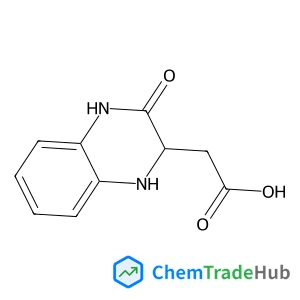
(3-Oxo-1,2,3,4-tetrahydro-2-quinoxalinyl)acetic acid
CAS Number:
136584-14-0
Molecular Formula:
C10H10N2O3
![tert-Butyl N-[(2-chloropyridin-4-yl)methyl]carbamate structure](https://static.chemtradehub.com/structs/916/916210-27-0-9f95.webp "tert-Butyl N-[(2-chloropyridin-4-yl)methyl]carbamate structure")
tert-Butyl N-[(2-chloropyridin-4-yl)methyl]carbamate
CAS Number:
916210-27-0
Molecular Formula:
C11H15ClN2O2
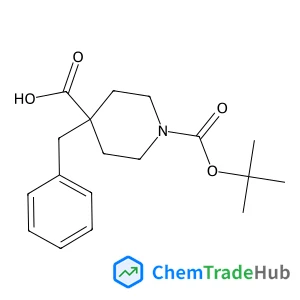
4-Benzyl-1-(tert-butoxycarbonyl)piperidine-4-carboxylic acid
CAS Number:
170838-87-6
Molecular Formula:
C18H25NO4
Recommended Suppliers




Disclaimer
This page provides academic journal information for reference and research purposes only. We are not affiliated with any journal publishers and do not handle publication submissions. For publication-related inquiries, please contact the respective journal publishers directly.
If you notice any inaccuracies in the information displayed, please contact us at support@chemtradehub.com. We will promptly review and address your concerns.