












First-principles study of ground-state properties of U2Mo
Literature Information
Publication Date
2014-10-20
DOI
10.1039/C4CP03841J
Impact Factor
3.676
Authors
Xiyue Cheng, Yuting Zhang, Ronghan Li, Weiwei Xing, Pengcheng Zhang, Xing-Qiu Chen
View Original
Abstract
By means of first-principles calculations, we have systematically investigated the structural, elastic, vibrational, thermal and electronic properties of the ground-state phase for the intermetallic compound U2Mo. Our results reveal that the previously synthesized I4/mmm structure of U2Mo is a metastable phase and unstable, neither thermodynamically nor vibrationally at the ground state. In combination with the evolutionary structural searches, our first-principles calculations suggest a new ground-state Pmmn phase, which has been confirmed theoretically to be stable, both thermodynamically and vibrationally. Moreover, through the DFT + D technique we have discussed the influence of van der Waals interactions on the structural, elastic and vibrational properties, revealing a weak effect in pure U and Mo solids and U2Mo alloy. The analysis of the electronic band structures evidences its electronic stabilities with the appearance of a deep valley in the density of states at the Fermi level. Moreover, we have investigated further the temperature-dependent structural, thermal expansion and elastic properties of our proposed Pmmn ground-state phase. These results are expected to stimulate further experimental investigations of the ground-state phase of U2Mo.
Related Literature
Bergman cyclopolymerization within the channels of functional hybrid nanocomposites formed by co-assembly of silica and polymerizable surfactant monomer
Chetan Jagdish Bhongale, Chung-He Yang, Chain-Shu Hsu
2006-04-26
Communication
DOI: 10.1039/B603195A
Easy access to the family of thiazole N-oxides using HOF·CH3CN
Elizabeta Amir, Shlomo Rozen
2006-04-25
Communication
DOI: 10.1039/B602594C
Synthesis, structure, and olefinpolymerization with nickel(ii) N-heterocyclic carbene enolates
Benjamin E. Ketz, Xavier G. Ottenwaelder, Robert M. Waymouth
2005-10-20
Communication
DOI: 10.1039/B511202H
Hosomi–Sakurai reactions of silacyclic allyl silanes
Jonathan D. Sellars, Patrick G. Steel, Michael J. Turner
2006-05-02
Communication
DOI: 10.1039/B602642G
The direct α-zincation of amides, phosphonates and phosphine oxides by H–Zn exchange
Mark L. Hlavinka, Jeffrey F. Greco, John R. Hagadorn
2005-09-23
Communication
DOI: 10.1039/B509190J
Samarium diiodide-induced intramolecular pinacol coupling of dinitrones: synthesis of cyclic cis-vicinal diamines
Jean-Philippe Ebran, Rita G. Hazell, Troels Skrydstrup
2005-09-30
Communication
DOI: 10.1039/B511491H
Formation of layered titania and zirconia catalysed by surface-bound silicatein
Muhammad Nawaz Tahir, Patrick Théato, Werner E. G. Müller, Heinz C. Schröder, Alexandra Borejko, Simon Faiß, Andreas Janshoff, Joachim Huth, Wolfgang Tremel
2005-10-13
Communication
DOI: 10.1039/B510113A
A catenane consisting of a large ring threaded through both cyclic units of a handcuff-like compound
Julien Frey, Tomáš Kraus, Valérie Heitz, Jean-Pierre Sauvage
2005-09-23
Communication
DOI: 10.1039/B509745B
A missing allene of heavy Group 14 elements: 2-germadisilaallene
Takeaki Iwamoto, Takashi Abe, Chizuko Kabuto, Mitsuo Kira
2005-09-12
Communication
DOI: 10.1039/B509878E
Ag/SiO2: a novel catalyst with high activity and selectivity for hydrogenation of chloronitrobenzenes
Yangying Chen, Chuang Wang, Hongyang Liu, Jieshan Qiu, Xinhe Bao
2005-09-23
Communication
DOI: 10.1039/B509595F
You might also like
Compound Q&A
What are the main uses of 1H-Indazole-6-carbonitrile (CAS: 141290-59-7)?
1H-Indazole-6-carbonitrile finds applications in pharmaceuticals, where it serve...
141290-59-71H-Indazole-6-carbon...
Compound Q&A
How should waste containing Dioctyl (2E)-2-butenedioate (CAS: 2997-85-5) be handled?
Waste containing Dioctyl (2E)-2-butenedioate (CAS: 2997-85-5) should be collecte...
2997-85-5Dioctyl (2E)-2-buten...
Compound Q&A
What industries use Sodium [(1,2-benzoxazol-3-ylmethyl)sulfonyl]azanide (CAS: 68291-98-5)?
Sodium [(1,2-benzoxazol-3-ylmethyl)sulfonyl]azanide is primarily used in pharmac...
68291-98-5Sodium [(1,2-benzoxa...
Compound Q&A
Are there alternatives to Dimethyl 4-(4,4,5,5-tetramethyl-1,3,2-dioxaborolan-2-yl)-2,6-pyridinedicarboxylate (CAS: 741709-66-0) in synthesis?
Dimethyl 4-(4,4,5,5-tetramethyl-1,3,2-dioxaborolan-2-yl)-2,6-pyridinedicarboxyla...
741709-66-0Dimethyl 4-(4,4,5,5-...
Compound Q&A
How should waste containing 2-Fluoro-6-hydrazinopyridine (CAS: 80714-39-2) be handled?
Waste containing 2-Fluoro-6-hydrazinopyridine (CAS: 80714-39-2) should be manage...
80714-39-22-Fluoro-6-hydrazino...
Compound Q&A
What is 6-Formyl-2-pyridinecarboxylic acid (CAS: 499214-11-8)?
6-Formyl-2-pyridinecarboxylic acid is an organic compound with the molecular for...
499214-11-86-Formyl-2-pyridinec...
Compound Q&A
What is the market or research trend for 3-(3,4-dimethoxyphenyl)-2,5-dimethyl-N-(2-morpholin-4-ylethyl)pyrazolo[1,5-a]pyrimidin-7-amine (CAS: 900874-91-1)?
Research trends for this compound indicate a focus on its potential applications...
900874-91-13-(3,4-dimethoxyphen...
Compound Q&A
How is 9H-Tribenzo[b,d,f]azepine (CAS: 29875-73-8) typically synthesized?
9H-Tribenzo[b,d,f]azepine is typically synthesized via a multi-step process invo...
29875-73-89H-Tribenzo[b,d,f]az...
Compound Q&A
How is 1-Cyclopropyl-7-ethoxy-6-fluoro-8-methoxy-4-oxo-1,4-dihydro-3-quinolinecarboxylic acid (CAS: 1797982-51-4) typically synthesized?
1-Cyclopropyl-7-ethoxy-6-fluoro-8-methoxy-4-oxo-1,4-dihydro-3-quinolinecarboxyli...
1797982-51-41-Cyclopropyl-7-etho...
Compound Q&A
How should waste containing Methyl 3-oxo-1,2,3,4-tetrahydro-6-quinoxalinecarboxylate (CAS: 671820-52-3) be handled?
Waste containing Methyl 3-oxo-1,2,3,4-tetrahydro-6-quinoxalinecarboxylate (CAS: ...
671820-52-3Methyl 3-oxo-1,2,3,4...
Source Journal
Physical Chemistry Chemical Physics

CiteScore:
5.5
Self-citation Rate:
10.3%
Articles per Year:
3036
Physical Chemistry Chemical Physics (PCCP) is an international journal co-owned by 19 physical chemistry and physics societies from around the world. This journal publishes original, cutting-edge research in physical chemistry, chemical physics and biophysical chemistry. To be suitable for publication in PCCP, articles must include significant innovation and/or insight into physical chemistry; this is the most important criterion that reviewers and Editors will judge against when evaluating submissions. The journal has a broad scope and welcomes contributions spanning experiment, theory, computation and data science. Topical coverage includes spectroscopy, dynamics, kinetics, statistical mechanics, thermodynamics, electrochemistry, catalysis, surface science, quantum mechanics, quantum computing and machine learning. Interdisciplinary research areas such as polymers and soft matter, materials, nanoscience, energy, surfaces/interfaces, and biophysical chemistry are welcomed if they demonstrate significant innovation and/or insight into physical chemistry. Joined experimental/theoretical studies are particularly appreciated when complementary and based on up-to-date approaches.
Recommended Compounds
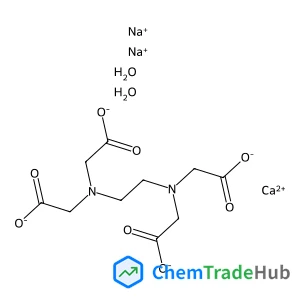
EthylenediaminetetraaceticacidcalciumDisodiumsalthydrate
CAS Number:
23411-34-9
Molecular Formula:
C10H16CaN2Na2O10
Recommended Suppliers





Disclaimer
This page provides academic journal information for reference and research purposes only. We are not affiliated with any journal publishers and do not handle publication submissions. For publication-related inquiries, please contact the respective journal publishers directly.
If you notice any inaccuracies in the information displayed, please contact us at support@chemtradehub.com. We will promptly review and address your concerns.