












Enhancing spectral shifts of plasmon-coupled noble metal nanoparticles for sensing applications
Literature Information
Publication Date
2014-11-05
DOI
10.1039/C4CP03739A
Impact Factor
3.676
Authors
Kristian L. Göeken, Ron Gill
View Original
Abstract
Noble metal nanoparticles possess very large scattering cross-sections, which make them useful as tags in biosensing assays with the potential to detect even single binding events. In this study, we investigated the effects of nanoparticle size on the shift in the light scattering spectrum following formation of Au–Au, Ag–Ag or Ag–Au dimers using FDTD simulations. We discuss the use of a color camera to detect these spectral changes for application in a target-induced dimerization sensing assay. Dimerization of Au nanoparticles induced a larger shift in color compared to Ag nanoparticles. Heterodimers composed of 60 nm Ag and 40 nm Au demonstrated an even larger spectral shift and color response compared to the best homodimer pair (80–40 nm Au). The increased spectral shift of the Ag–Au heterodimer was subsequently observed experimentally for the DNA-induced dimerization of nanoparticles, showing that careful selection of nanoparticle size and composition can significantly enhance recognition of nanoparticle dimerization events for use in (color) sensing assays.
Related Literature
Categorization of atomic mixing patterns in bimetallic nanoparticles by the energy competition
Kayoung Yun, Ho-Seok Nam, Seungchul Kim
2020-03-16
Paper
DOI: 10.1039/C9CP06967D
The structural α-relaxation times of prilocaine confined in 1 nm pores of molecular sieves: quantitative explanation by the coupling model
K. L. Ngai, Z. Wojnarowska, Marian Paluch
2020-03-31
Paper
DOI: 10.1039/D0CP00282H
The effect of N-heterocyclic carbene units on the absorption spectra of Fe(ii) complexes: a challenge for theory
Omar Baig, Oliver Kühn, Leticia González
2020-11-20
Paper
DOI: 10.1039/D0CP04781C
Microfluidic out-of-equilibrium control of molecular nanotubes
Björn Kriete, Carolien J. Feenstra, Maxim S. Pshenichnikov
2020-04-21
Paper
DOI: 10.1039/D0CP01734E
Thermodynamics of the formation of surface PtO2 stripes on Pt(111) in the absence of subsurface oxygen
Selwyn Hanselman, Ian T. McCrum, Marcel J. Rost, Marc T. M. Koper
2019-10-30
Paper
DOI: 10.1039/C9CP05107D
Solvation properties of protic ionic liquid–molecular solvent mixtures
Dilek Yalcin, Andrew J. Christofferson, Calum J. Drummond, Tamar L. Greaves
2020-04-22
Paper
DOI: 10.1039/D0CP00201A
Metal extraction from a deep eutectic solvent, an insight into activities
Peng Cen, Mikhail S. Tyumentsev, Mark R. St. J. Foreman
2020-04-28
Paper
DOI: 10.1039/C9CP05982B
Heteronuclear DNP of 1H and 19F nuclei using BDPA as a polarizing agent
Antonio Gennaro, Alexander Karabanov, Alexey Potapov, Walter Köckenberger
2020-03-31
Paper
DOI: 10.1039/D0CP00892C
Good stability and high thermoelectric performance of Fe doped Cu1.80S
Pengfei Qiu, Kunpeng Zhao, Dudi Ren, Xun Shi
2020-03-17
Paper
DOI: 10.1039/D0CP00733A
The statistical molecular fragmentation model compared to experimental plasma induced hydrocarbon decays
Stéphane Pasquiers, Nicole Blin-Simiand, Lionel Magne, Nguyen-Thi Van-Oanh, Sébastien Thomas
2020-03-20
Paper
DOI: 10.1039/C9CP06958E
You might also like
Compound Q&A
What are the main uses of 1-(3-Aminophenyl)-3-[(3R)-1-(3,3-dimethyl-2-oxobutyl)-2-oxo-5-(2-pyridinyl)-2,3-dihydro-1H-1,4-benzodiazepin-3-yl]urea (CAS: 155412-88-7)?
This compound is mainly used as an intermediate in the synthesis of antipsychoti...
155412-88-71-(3-Aminophenyl)-3-...
Compound Q&A
How should waste containing 1-(D-Ribofuranosyl)-1,4-dihydro-3-pyridinecarboxamide (CAS: 19132-12-8) be handled?
Waste containing 1-(D-Ribofuranosyl)-1,4-dihydro-3-pyridinecarboxamide (CAS: 191...
19132-12-81-(D-Ribofuranosyl)-...
Compound Q&A
What regulatory guidelines apply to 2-Methyl-2-propanyl 3-bromo-3-(hydroxymethyl)-1-azetidinecarboxylate (CAS: 2007919-81-3)?
2-Methyl-2-propanyl 3-bromo-3-(hydroxymethyl)-1-azetidinecarboxylate (CAS: 20079...
2007919-81-32-Methyl-2-propanyl ...
Compound Q&A
What is N-(4-Chloro-2-pyridinyl)acetamide (CAS: 245056-66-0)?
N-(4-Chloro-2-pyridinyl)acetamide (CAS: 245056-66-0) is a chemical compound with...
245056-66-0N-(4-Chloro-2-pyridi...
Compound Q&A
What is 5-Chloro-2-hydroxybenzoic acid (CAS: 321-14-2)?
5-Chloro-2-hydroxybenzoic acid, also known as 5-chlorosalicylic acid, is an arom...
321-14-25-Chloro-2-hydroxybe...
Compound Q&A
What precautions should be taken when handling 1,1-Dichloro-1-fluoroethane (CAS: 1717-00-6)?
When handling 1,1-Dichloro-1-fluoroethane (CAS: 1717-00-6), it is important to u...
1717-00-61,1-Dichloro-1-fluor...
Compound Q&A
What are the physical and chemical properties of Fmoc-(2S,3R)-3-phenylpyrrolidine-2-carboxylic acid (CAS: 281655-32-1)?
Fmoc-(2S,3R)-3-phenylpyrrolidine-2-carboxylic acid is a white crystalline solid ...
281655-32-1Fmoc-(2S,3R)-3-pheny...
Compound Q&A
What are the main uses of 4-Amino-5-bromo-2-pyridinecarboxylic acid (CAS: 1363381-01-4)?
4-Amino-5-bromo-2-pyridinecarboxylic acid is primarily used as a precursor in th...
1363381-01-44-Amino-5-bromo-2-py...
Compound Q&A
What precautions should be taken when handling (S)-tert-butyl 2-((2-(4-bromophenyl)-2-oxoethyl)carbamoyl)pyrrolidine-1-carboxylate (CAS: 1007881-98-2)?
Handling this compound should be done with personal protective equipment (PPE) i...
1007881-98-2(S)-tert-butyl 2-((2...
Compound Q&A
What precautions should be taken when handling 8-bromo-2,2-dimethyl-3,4-dihydro-2H-1,4-benzoxazin-3-one (CAS: 688363-73-7)?
When handling 8-bromo-2,2-dimethyl-3,4-dihydro-2H-1,4-benzoxazin-3-one, use prop...
688363-73-78-bromo-2,2-dimethyl...
Source Journal
Physical Chemistry Chemical Physics

CiteScore:
5.5
Self-citation Rate:
10.3%
Articles per Year:
3036
Physical Chemistry Chemical Physics (PCCP) is an international journal co-owned by 19 physical chemistry and physics societies from around the world. This journal publishes original, cutting-edge research in physical chemistry, chemical physics and biophysical chemistry. To be suitable for publication in PCCP, articles must include significant innovation and/or insight into physical chemistry; this is the most important criterion that reviewers and Editors will judge against when evaluating submissions. The journal has a broad scope and welcomes contributions spanning experiment, theory, computation and data science. Topical coverage includes spectroscopy, dynamics, kinetics, statistical mechanics, thermodynamics, electrochemistry, catalysis, surface science, quantum mechanics, quantum computing and machine learning. Interdisciplinary research areas such as polymers and soft matter, materials, nanoscience, energy, surfaces/interfaces, and biophysical chemistry are welcomed if they demonstrate significant innovation and/or insight into physical chemistry. Joined experimental/theoretical studies are particularly appreciated when complementary and based on up-to-date approaches.
Recommended Compounds
![2,6-Bis({(2R)-2-[hydroxy(diphenyl)methyl]-1-pyrrolidinyl}methyl)-4-methylphenol structure](https://static.chemtradehub.com/structs/877/877395-58-9-70bf.webp "2,6-Bis({(2R)-2-[hydroxy(diphenyl)methyl]-1-pyrrolidinyl}methyl)-4-methylphenol structure")
2,6-Bis({(2R)-2-[hydroxy(diphenyl)methyl]-1-pyrrolidinyl}methyl)-4-methylphenol
CAS Number:
877395-58-9
Molecular Formula:
C43H46N2O3
![1-[3-(4-Morpholinylsulfonyl)phenyl]methanamine structure](https://static.chemtradehub.com/structs/933/933989-32-3-51af.webp "1-[3-(4-Morpholinylsulfonyl)phenyl]methanamine structure")
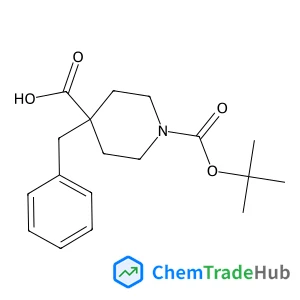
4-Benzyl-1-(tert-butoxycarbonyl)piperidine-4-carboxylic acid
CAS Number:
170838-87-6
Molecular Formula:
C18H25NO4
Recommended Suppliers






Disclaimer
This page provides academic journal information for reference and research purposes only. We are not affiliated with any journal publishers and do not handle publication submissions. For publication-related inquiries, please contact the respective journal publishers directly.
If you notice any inaccuracies in the information displayed, please contact us at support@chemtradehub.com. We will promptly review and address your concerns.