


![(1R,5R)-3-{[(2-Methyl-2-propanyl)oxy]carbonyl}-3-azabicyclo[3.1.0]hexane-1-carboxylic acid structure](https://static.chemtradehub.com/structs/116/1165450-63-4-bfe1.webp "(1R,5R)-3-{[(2-Methyl-2-propanyl)oxy]carbonyl}-3-azabicyclo[3.1.0]hexane-1-carboxylic acid structure")
(1R,5R)-3-{[(2-Methyl-2-propanyl)oxy]carbonyl}-3-azabicyclo[3.1.0]hexane-1-carboxylic acid
CAS Number:
1165450-63-4
Molecular Formula:
C11H17NO4
Andrew Cassidy, Oksana Plekan, Jack Dunger, Richard Balog, Nykola C. Jones, Jérôme Lasne, Alexander Rosu-Finsen, Martin R. S. McCoustra, David Field
The recent discovery of a new class of solids displaying bulk spontaneous electric fields as high as 108 V m−1, so-called ‘spontelectrics’, poses fundamental and unresolved problems in solid state physics. The purpose of the present work is to delve more deeply into the nature of the interactions which give rise to the spontelectric effect in films of nitrous oxide (N2O), by observing the variation of the spontaneous field as the N2O molecules are physically removed from one another by dilution in Xe. Data, obtained using the ASTRID storage ring, are presented for films diluted by factors ξ = Xe/N2O of 0.9 to 67, at deposition temperatures of 38 K, 44 K and 48 K, where films are laid down by deposition from a gas mixture. Results show that the spontelectric field decreases as ξ increases and that at ξ = 67 for 44 K deposition, the spontelectric effect is absent. Reflection–absorption infrared spectroscopy (RAIRS) data are also reported, providing insight into the structure of Xe/N2O films and specifically showing that N2O remains dispersed in the Xe/N2O films prepared here. A simplified theoretical model is developed which illustrates that electric fields can be understood in terms of dilution-dependent dipole orientation. This model is used to reproduce experimental data up to an average molecular separation, s, of ≥1.25 nm apart, ∼4 times that associated with pure solid N2O. The disappearance of the spontelectric effect at larger average distances of separation, between s = 1.25 nm and s = 1.75 nm, is a phenomenon which cannot be described by any existing model but which shows that dipole–dipole interactions are an essential ingredient for the creation of the spontelectric state.

Journal of the Indian Institute of Science

Electroanalysis

Polycyclic Aromatic Compounds

Chinese Journal of Chemistry

Heteroatom Chemistry

Bioorganic & Medicinal Chemistry Letters

Acta Metallurgica Sinica-English Letters

Colloid Journal

Biocatalysis and Biotransformation

Critical Reviews in Solid State and Materials Sciences
Yu Xiao, Guisheng Zou, Jinpeng Huo, Jin Peng, Zehua Li, Daozhi Shen, Lei Liu
DOI: 10.1039/D3NH00448A
Shuonan Wang, Kai Zhang, Hao Liu, Libing Liao
DOI: 10.1039/D3TA05355E
Yanyan Liu, Shuyue Wang, Minghao Sun, Min Ling, Shaodong Zhou, Chengdu Liang
DOI: 10.1039/D3TA05203F
Zhanpin Zhu, Ruibing Chen
DOI: 10.1039/D3NP00012E
Jiawei Tang, Duo Wang, Jing Zhang, Litao Sun, Baisheng Sa, Bobby G. Sumpter, Jingsong Huang, Weiwei Sun
DOI: 10.1039/D3NH00364G
When handling lithium chloride hydrate (1:1:1) (CAS: 16712-20-2), it is importan...
4-(4H-1,2,4-Triazol-4-yl)piperidine is generally considered safe for use in phar...
Waste containing 1,3-Thiazole-2-carboxamide (CAS: 16733-85-0) should be collecte...
5-(Difluoromethyl)-2-fluorobenzonitrile (CAS: 934175-58-3) is subject to regulat...
Methyl 3-acetamido-2-thiophenecarboxylate can be synthesized by the reaction of ...
4-Isoquinolinecarbonitrile is a chemical compound with the CAS number 34846-65-6...
Store Methyl 1H-1,2,3-triazole-4-carboxylate (CAS: 877309-59-6) in a cool, dry p...
6-Bromo[1,3]thiazolo[5,4-b]pyridin-2-amine (CAS: 1160791-13-8) is subject to the...
(2S,3S)-2-Ammonio-3-(3,4-dihydroxyphenyl)-3-hydroxypropanoate (CAS: 23651-95-8) ...
7-Bromo-3-methyl-3,4-dihydroquinazolin-4-one is a solid with a crystalline form....

Physical Chemistry Chemical Physics (PCCP) is an international journal co-owned by 19 physical chemistry and physics societies from around the world. This journal publishes original, cutting-edge research in physical chemistry, chemical physics and biophysical chemistry. To be suitable for publication in PCCP, articles must include significant innovation and/or insight into physical chemistry; this is the most important criterion that reviewers and Editors will judge against when evaluating submissions. The journal has a broad scope and welcomes contributions spanning experiment, theory, computation and data science. Topical coverage includes spectroscopy, dynamics, kinetics, statistical mechanics, thermodynamics, electrochemistry, catalysis, surface science, quantum mechanics, quantum computing and machine learning. Interdisciplinary research areas such as polymers and soft matter, materials, nanoscience, energy, surfaces/interfaces, and biophysical chemistry are welcomed if they demonstrate significant innovation and/or insight into physical chemistry. Joined experimental/theoretical studies are particularly appreciated when complementary and based on up-to-date approaches.
![Benzeneacetic acid, 2-bromo-α-[[(1,1-dimethylethoxy)carbonyl]amino]-, (αS)- structure](https://static.chemtradehub.com/structs/122/1228547-87-2-f296.webp "Benzeneacetic acid, 2-bromo-α-[[(1,1-dimethylethoxy)carbonyl]amino]-, (αS)- structure")
![6-(Benzyloxy)-8-(2-bromoacetyl)-2H-benzo[b][1,4]oxazin-3(4H)-one structure](https://static.chemtradehub.com/structs/926/926319-53-1-2287.webp "6-(Benzyloxy)-8-(2-bromoacetyl)-2H-benzo[b][1,4]oxazin-3(4H)-one structure")
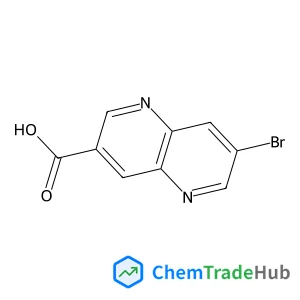
![1-[4-(4-Methyl-1H-imidazol-1-yl)phenyl]ethanone structure](https://static.chemtradehub.com/structs/142/142161-53-3-7f55.webp "1-[4-(4-Methyl-1H-imidazol-1-yl)phenyl]ethanone structure")






