












Lithium conductivity in glasses of the Li2O–Al2O3–SiO2 system
Literature Information
Publication Date
2014-11-03
DOI
10.1039/C4CP03609C
Impact Factor
3.676
Authors
Sebastian Ross
View Original
Abstract
To improve the understanding of Li-dynamics in oxide glasses, i.e. the effect of [AlO4]− tetrahedra and non-bridging oxygens on the potential landscape, electrical conductivity of seven fully polymerized and partly depolymerized lithium aluminosilicate glasses was investigated using impedance spectroscopy (IS). Lithium is the only mobile particle in these materials. Data derived from IS, i.e. activation energies, pre-exponential factors and diffusivities for lithium, are interpreted in light of Raman spectroscopic analyses of local structures in order to identify building units, which are crucial for lithium dynamics and migration. In polymerized glasses (compositional join LiAlSiO4–LiAlSi4O10) the direct current (DC) electrical conductivity continuously increases with increasing lithium content while lithium diffusivity is not affected by the Al/Si ratio in the glasses. Hence, the increase in electrical conductivity can be solely assigned to lithium concentration in the glasses. An excess of Li with respect to Al, i.e. the introduction of non-bridging oxygen into the network, causes a decrease in lithium mobility in the glasses. Activation energies in polymerized glasses (66 to 70 kJ mol−1) are significantly lower than those in depolymerized networks (76 to 78 kJ mol−1) while pre-exponential factors are nearly constant across all compositions. Comparison of the data with results for lithium silicates from the literature indicates a minimum in lithium diffusivity for glasses containing both aluminium tetrahedra and non-bridging oxygens. The findings allow a prediction of DC conductivity for a large variety of lithium aluminosilicate glass compositions.
Related Literature
A DFT+U investigation of hydrogen adsorption on the LaFeO3(010) surface
Isaac W. Boateng, Richard Tia, Evans Adei, Nelson Y. Dzade
2017-02-17
Paper
DOI: 10.1039/C6CP08698E
Poly(vinyl alcohol) as a water protecting agent for silver nanoparticles: the role of polymer size and structure
Dmitry A. Pasko, Oleg N. Kalugin
2017-02-07
Paper
DOI: 10.1039/C6CP05562A
Periodicity of band gaps of chiral α-graphyne nanotubes
Baotao Kang, Daeheum Cho, Jin Yong Lee
2017-02-20
Paper
DOI: 10.1039/C7CP00137A
Drug–DNA complexation as the key factor in photosensitized thymine dimerization
M. Consuelo Cuquerella, Virginie Lhiaubet-Vallet, Miguel A. Miranda, Francisco Bosca
2017-01-20
Communication
DOI: 10.1039/C6CP08485K
A battery cell for in situ NMR measurements of liquid electrolytes
Simon Wiemers-Meyer, Sascha Nowak
2017-01-26
Communication
DOI: 10.1039/C6CP08653E
A velocity map imaging study of the photodissociation of the methyl iodide cation
S. Marggi Poullain, D. V. Chicharro, L. Rubio-Lago, L. Bañares
2017-02-24
Paper
DOI: 10.1039/C7CP00319F
Bonding-induced thermal transport enhancement across a hard/soft material interface using molecular monolayers
Chao Yuan, Mengyu Huang, Yanhua Cheng, Xiaobing Luo
2017-02-07
Paper
DOI: 10.1039/C7CP00209B
In situ spectroscopic studies on vapor phase catalytic decomposition of dimethyl oxalate
Shweta Hegde, Kalsang Tharpa, Satyanarayana Reddy Akuri, Rakesh K., Ajay Kumar, Raj Deshpande, Sreejit A. Nair
2017-02-23
Paper
DOI: 10.1039/C6CP07769B
Correlation of the structural information obtained for europium-chelate ensembles from gas-phase photoluminescence and ion-mobility spectroscopy with density-functional computations and ligand-field theory
Jean-François Greisch, Jiří Chmela, Michael E. Harding, Dirk Wunderlich, Bernhard Schäfer
2017-01-27
Paper
DOI: 10.1039/C6CP04656H
Eu3+-Doped Y3−xNdxAl3O12 garnet: synthesis and structural investigation
L. Pavasaryte, A. Katelnikovas, V. Klimavicius, V. Balevicius, A. Krajnc, G. Mali, J. Plavec, A. Kareiva
2017-01-18
Paper
DOI: 10.1039/C6CP07723D
You might also like
Compound Q&A
What are the main uses of 1H-Indazole-6-carbonitrile (CAS: 141290-59-7)?
1H-Indazole-6-carbonitrile finds applications in pharmaceuticals, where it serve...
141290-59-71H-Indazole-6-carbon...
Compound Q&A
How should waste containing Dioctyl (2E)-2-butenedioate (CAS: 2997-85-5) be handled?
Waste containing Dioctyl (2E)-2-butenedioate (CAS: 2997-85-5) should be collecte...
2997-85-5Dioctyl (2E)-2-buten...
Compound Q&A
What industries use Sodium [(1,2-benzoxazol-3-ylmethyl)sulfonyl]azanide (CAS: 68291-98-5)?
Sodium [(1,2-benzoxazol-3-ylmethyl)sulfonyl]azanide is primarily used in pharmac...
68291-98-5Sodium [(1,2-benzoxa...
Compound Q&A
Are there alternatives to Dimethyl 4-(4,4,5,5-tetramethyl-1,3,2-dioxaborolan-2-yl)-2,6-pyridinedicarboxylate (CAS: 741709-66-0) in synthesis?
Dimethyl 4-(4,4,5,5-tetramethyl-1,3,2-dioxaborolan-2-yl)-2,6-pyridinedicarboxyla...
741709-66-0Dimethyl 4-(4,4,5,5-...
Compound Q&A
How should waste containing 2-Fluoro-6-hydrazinopyridine (CAS: 80714-39-2) be handled?
Waste containing 2-Fluoro-6-hydrazinopyridine (CAS: 80714-39-2) should be manage...
80714-39-22-Fluoro-6-hydrazino...
Compound Q&A
What is 6-Formyl-2-pyridinecarboxylic acid (CAS: 499214-11-8)?
6-Formyl-2-pyridinecarboxylic acid is an organic compound with the molecular for...
499214-11-86-Formyl-2-pyridinec...
Compound Q&A
What is the market or research trend for 3-(3,4-dimethoxyphenyl)-2,5-dimethyl-N-(2-morpholin-4-ylethyl)pyrazolo[1,5-a]pyrimidin-7-amine (CAS: 900874-91-1)?
Research trends for this compound indicate a focus on its potential applications...
900874-91-13-(3,4-dimethoxyphen...
Compound Q&A
How is 9H-Tribenzo[b,d,f]azepine (CAS: 29875-73-8) typically synthesized?
9H-Tribenzo[b,d,f]azepine is typically synthesized via a multi-step process invo...
29875-73-89H-Tribenzo[b,d,f]az...
Compound Q&A
How is 1-Cyclopropyl-7-ethoxy-6-fluoro-8-methoxy-4-oxo-1,4-dihydro-3-quinolinecarboxylic acid (CAS: 1797982-51-4) typically synthesized?
1-Cyclopropyl-7-ethoxy-6-fluoro-8-methoxy-4-oxo-1,4-dihydro-3-quinolinecarboxyli...
1797982-51-41-Cyclopropyl-7-etho...
Compound Q&A
How should waste containing Methyl 3-oxo-1,2,3,4-tetrahydro-6-quinoxalinecarboxylate (CAS: 671820-52-3) be handled?
Waste containing Methyl 3-oxo-1,2,3,4-tetrahydro-6-quinoxalinecarboxylate (CAS: ...
671820-52-3Methyl 3-oxo-1,2,3,4...
Source Journal
Physical Chemistry Chemical Physics

CiteScore:
5.5
Self-citation Rate:
10.3%
Articles per Year:
3036
Physical Chemistry Chemical Physics (PCCP) is an international journal co-owned by 19 physical chemistry and physics societies from around the world. This journal publishes original, cutting-edge research in physical chemistry, chemical physics and biophysical chemistry. To be suitable for publication in PCCP, articles must include significant innovation and/or insight into physical chemistry; this is the most important criterion that reviewers and Editors will judge against when evaluating submissions. The journal has a broad scope and welcomes contributions spanning experiment, theory, computation and data science. Topical coverage includes spectroscopy, dynamics, kinetics, statistical mechanics, thermodynamics, electrochemistry, catalysis, surface science, quantum mechanics, quantum computing and machine learning. Interdisciplinary research areas such as polymers and soft matter, materials, nanoscience, energy, surfaces/interfaces, and biophysical chemistry are welcomed if they demonstrate significant innovation and/or insight into physical chemistry. Joined experimental/theoretical studies are particularly appreciated when complementary and based on up-to-date approaches.
Recommended Compounds
![(1S)-1,5-Anhydro-1-[3-(1-benzothiophen-2-ylmethyl)-4-fluorophenyl]-D-glucitol structure](https://static.chemtradehub.com/structs/761/761423-87-4-dbeb.webp "(1S)-1,5-Anhydro-1-[3-(1-benzothiophen-2-ylmethyl)-4-fluorophenyl]-D-glucitol structure")
(1S)-1,5-Anhydro-1-[3-(1-benzothiophen-2-ylmethyl)-4-fluorophenyl]-D-glucitol
CAS Number:
761423-87-4
Molecular Formula:
C21H21FO5S
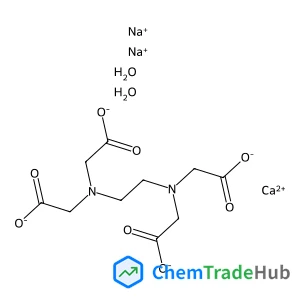
EthylenediaminetetraaceticacidcalciumDisodiumsalthydrate
CAS Number:
23411-34-9
Molecular Formula:
C10H16CaN2Na2O10
Recommended Suppliers




Disclaimer
This page provides academic journal information for reference and research purposes only. We are not affiliated with any journal publishers and do not handle publication submissions. For publication-related inquiries, please contact the respective journal publishers directly.
If you notice any inaccuracies in the information displayed, please contact us at support@chemtradehub.com. We will promptly review and address your concerns.