












Surface sites on Pt–CeO2 mixed oxide catalysts probed by CO adsorption: a synchrotron radiation photoelectron spectroscopy study
Literature Information
Publication Date
2014-10-06
DOI
10.1039/C4CP03346A
Impact Factor
3.676
Authors
Armin Neitzel, Yaroslava Lykhach, Tomáš Skála, Nataliya Tsud, Mykhailo Vorokhta, Daniel Mazur, Vladimír Matolín
View Original
Abstract
By means of synchrotron radiation photoemission spectroscopy, we have investigated Pt–CeO2 mixed oxide films prepared on CeO2(111)/Cu(111). Using CO molecules as a probe, we associate the corresponding surface species with specific surface sites. This allows us to identify the changes in the composition and morphology of Pt–CeO2 mixed oxide films caused by annealing in an ultrahigh vacuum. Specifically, two peaks in C 1s spectra at 289.4 and 291.2 eV, associated with tridentate and bidentate carbonate species, are formed on the nanostructured stoichiometric CeO2 film. The peak at 290.5–291.0 eV in the C 1s spectra indicates the onset of restructuring, i.e. coarsening, of the Pt–CeO2 film. This peak is associated with a carbonate species formed near an oxygen vacancy. The onset of cerium oxide reduction is indicated by the peak at 287.8–288.0 eV associated with carbonite species formed near Ce3+ cations. The development of surface species on the Pt–CeO2 mixed oxides suggests that restructuring of the films occurs above 300 K irrespective of Pt loadings. We do not find any adsorbed CO species associated with Pt4+ or Pt2+. The onset of Pt2+ reduction is indicated by the peak at 286.9 eV in the C 1s spectra due to CO adsorption on metallic Pt particles. The thermal stability of Pt2+ in Pt–CeO2 mixed oxide depends on Pt loading. We find excellent stability of Pt2+ for 12% Pt content in the CeO2 film, whereas at a Pt concentration of 25% in the CeO2 film, a large fraction of the Pt2+ is converted into metallic Pt particles above 300 K.
Related Literature
Pressure-dependent kinetics of methyl formate reactions with OH at combustion, atmospheric and interstellar temperatures
Junjun Wu, Liuhao Ma
2018-09-24
Paper
DOI: 10.1039/C8CP04114H
Necessary and sufficient conditions for the successful three-phase photocatalytic reduction of CO2 by H2O over heterogeneous photocatalysts
2018-02-28
Perspective
DOI: 10.1039/C7CP07783A
Enhancement of Y123 dye-sensitized solar cell performance using plasmonic gold nanorods
P. S. Chandrasekhar, Piyush K. Parashar, Sanjay Kumar Swami, Viresh Dutta, Vamsi K. Komarala
2018-03-16
Paper
DOI: 10.1039/C7CP08445E
Photogalvanic effect induced fully spin polarized current and pure spin current in zigzag SiC nanoribbons
Jian Wang
2018-09-25
Paper
DOI: 10.1039/C8CP05046E
Gravimetric tank method to evaluate material-enhanced hydrogen storage by physisorbing materials
Artem Iakunkov, Alexey Klechikov, Jinhua Sun, Timothy Steenhaut, Sophie Hermans, Yaroslav Filinchuk, Alexandr Talyzin
2018-10-19
Paper
DOI: 10.1039/C8CP05241G
Programed dynamical ordering in self-organization processes of a nanocube: a molecular dynamics study
Ryuhei Harada, Takako Mashiko, Masanori Tachikawa, Shuichi Hiraoka, Yasuteru Shigeta
2018-03-06
Paper
DOI: 10.1039/C8CP00284C
Full elucidation of the transmembrane anion transport mechanism of squaramides using in silico investigations
Igor Marques, Pedro M. R. Costa, Margarida Q. Miranda, Nathalie Busschaert, Harriet J. Clarke, Cally J. E. Haynes, Isabelle L. Kirby, Ananda M. Rodilla, Ricardo Pérez-Tomás, Vítor Félix
2018-07-03
Paper
DOI: 10.1039/C8CP02576B
You might also like
Compound Q&A
What are the main uses of 1-(3-Aminophenyl)-3-[(3R)-1-(3,3-dimethyl-2-oxobutyl)-2-oxo-5-(2-pyridinyl)-2,3-dihydro-1H-1,4-benzodiazepin-3-yl]urea (CAS: 155412-88-7)?
This compound is mainly used as an intermediate in the synthesis of antipsychoti...
155412-88-71-(3-Aminophenyl)-3-...
Compound Q&A
How should waste containing 1-(D-Ribofuranosyl)-1,4-dihydro-3-pyridinecarboxamide (CAS: 19132-12-8) be handled?
Waste containing 1-(D-Ribofuranosyl)-1,4-dihydro-3-pyridinecarboxamide (CAS: 191...
19132-12-81-(D-Ribofuranosyl)-...
Compound Q&A
What regulatory guidelines apply to 2-Methyl-2-propanyl 3-bromo-3-(hydroxymethyl)-1-azetidinecarboxylate (CAS: 2007919-81-3)?
2-Methyl-2-propanyl 3-bromo-3-(hydroxymethyl)-1-azetidinecarboxylate (CAS: 20079...
2007919-81-32-Methyl-2-propanyl ...
Compound Q&A
What is N-(4-Chloro-2-pyridinyl)acetamide (CAS: 245056-66-0)?
N-(4-Chloro-2-pyridinyl)acetamide (CAS: 245056-66-0) is a chemical compound with...
245056-66-0N-(4-Chloro-2-pyridi...
Compound Q&A
What is 5-Chloro-2-hydroxybenzoic acid (CAS: 321-14-2)?
5-Chloro-2-hydroxybenzoic acid, also known as 5-chlorosalicylic acid, is an arom...
321-14-25-Chloro-2-hydroxybe...
Compound Q&A
What precautions should be taken when handling 1,1-Dichloro-1-fluoroethane (CAS: 1717-00-6)?
When handling 1,1-Dichloro-1-fluoroethane (CAS: 1717-00-6), it is important to u...
1717-00-61,1-Dichloro-1-fluor...
Compound Q&A
What are the physical and chemical properties of Fmoc-(2S,3R)-3-phenylpyrrolidine-2-carboxylic acid (CAS: 281655-32-1)?
Fmoc-(2S,3R)-3-phenylpyrrolidine-2-carboxylic acid is a white crystalline solid ...
281655-32-1Fmoc-(2S,3R)-3-pheny...
Compound Q&A
What are the main uses of 4-Amino-5-bromo-2-pyridinecarboxylic acid (CAS: 1363381-01-4)?
4-Amino-5-bromo-2-pyridinecarboxylic acid is primarily used as a precursor in th...
1363381-01-44-Amino-5-bromo-2-py...
Compound Q&A
What precautions should be taken when handling (S)-tert-butyl 2-((2-(4-bromophenyl)-2-oxoethyl)carbamoyl)pyrrolidine-1-carboxylate (CAS: 1007881-98-2)?
Handling this compound should be done with personal protective equipment (PPE) i...
1007881-98-2(S)-tert-butyl 2-((2...
Compound Q&A
What precautions should be taken when handling 8-bromo-2,2-dimethyl-3,4-dihydro-2H-1,4-benzoxazin-3-one (CAS: 688363-73-7)?
When handling 8-bromo-2,2-dimethyl-3,4-dihydro-2H-1,4-benzoxazin-3-one, use prop...
688363-73-78-bromo-2,2-dimethyl...
Source Journal
Physical Chemistry Chemical Physics

CiteScore:
5.5
Self-citation Rate:
10.3%
Articles per Year:
3036
Physical Chemistry Chemical Physics (PCCP) is an international journal co-owned by 19 physical chemistry and physics societies from around the world. This journal publishes original, cutting-edge research in physical chemistry, chemical physics and biophysical chemistry. To be suitable for publication in PCCP, articles must include significant innovation and/or insight into physical chemistry; this is the most important criterion that reviewers and Editors will judge against when evaluating submissions. The journal has a broad scope and welcomes contributions spanning experiment, theory, computation and data science. Topical coverage includes spectroscopy, dynamics, kinetics, statistical mechanics, thermodynamics, electrochemistry, catalysis, surface science, quantum mechanics, quantum computing and machine learning. Interdisciplinary research areas such as polymers and soft matter, materials, nanoscience, energy, surfaces/interfaces, and biophysical chemistry are welcomed if they demonstrate significant innovation and/or insight into physical chemistry. Joined experimental/theoretical studies are particularly appreciated when complementary and based on up-to-date approaches.
Recommended Compounds
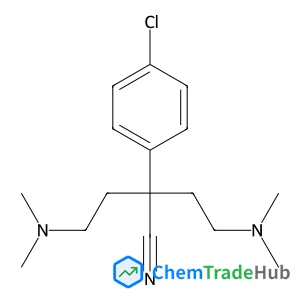
2-(4-Chlorophenyl)-4-(dimethylamino)-2-(2-(dimethylamino)ethyl)butanenitrile
CAS Number:
1246816-57-8
Molecular Formula:
C16H24ClN3
![tert-Butyl N-[(2-chloropyridin-4-yl)methyl]carbamate structure](https://static.chemtradehub.com/structs/916/916210-27-0-9f95.webp "tert-Butyl N-[(2-chloropyridin-4-yl)methyl]carbamate structure")
tert-Butyl N-[(2-chloropyridin-4-yl)methyl]carbamate
CAS Number:
916210-27-0
Molecular Formula:
C11H15ClN2O2
Recommended Suppliers




Disclaimer
This page provides academic journal information for reference and research purposes only. We are not affiliated with any journal publishers and do not handle publication submissions. For publication-related inquiries, please contact the respective journal publishers directly.
If you notice any inaccuracies in the information displayed, please contact us at support@chemtradehub.com. We will promptly review and address your concerns.