












Hydrogen generation by water splitting on hematite (0001) surfaces: first-principles calculations
Literature Information
Publication Date
2014-10-16
DOI
10.1039/C4CP03209H
Impact Factor
3.676
Authors
Gaowu Qin
View Original
Abstract
The surface chemical activity is a critical factor affecting the photocatalytic efficiency of hematite. In this study, we investigate systematically the reaction kinetics of water heterolytic dissociation (H2O–OH− + H+) and hydrogen generation by water splitting on four kinds of hematite (0001) surfaces, namely perfect and defective O- and Fe-terminated surfaces, at the electronic level based on first-principles calculations. The simulation results illustrate that the chemical reaction rate for the dissociation and hydrogen generation is sensitive to the morphology of the hematite (0001) surface. For water heterolytic dissociation, the hydrogen atom is apt to drop from water molecules on the perfect O-terminated (0001) surface without energy consumption. However, the Fe-terminated (0001) perfect surface is a preferable candidate for hydrogen generation, on which the whole photoelectrochemical process needs to overcome a rate determined barrier of 2.77 eV. Our investigation shows that O- or Fe-vacancy on hematite (0001) surfaces is not conductive to hydrogen generation by water splitting.
Related Literature
New Fukui, dual and hyper-dual kernels as bond reactivity descriptors
Carlos-A Polanco-Ramírez, Paul W. Ayers, José L. Gázquez, Alberto Vela
2017-05-22
Paper
DOI: 10.1039/C7CP02613G
A novel anion doping strategy to enhance upconversion luminescence in NaGd(MoO4)2:Yb3+/Er3+ nanophosphors
Dekang Xu, Hao Lin, Lu Yao, Shenghong Yang, Yuanzhi Shao, Yueli Zhang, Zhenqiang Chen
2017-05-25
Paper
DOI: 10.1039/C7CP00855D
Computer simulation study on the self-assembly of unimodal and bimodal polymer-grafted nanoparticles in a polymer melt
Rui Shi, Hu-Jun Qian, Zhong-Yuan Lu
2017-06-02
Paper
DOI: 10.1039/C7CP01905J
Establishing the link between fibril formation and Raman optical activity spectra of insulin
Shigeki Yamamoto, Petr Bouř
2017-05-11
Paper
DOI: 10.1039/C7CP01556A
Correction: Eu2+–Eu3+ valence transition in double, Eu-, and Na-doped PbSe from transport, magnetic, and electronic structure studies
SunPhil Kim, Yeseul Lee, Bin He, Gloria Lehr, Mercouri G. Kanatzidis, Donald T. Morelli
2017-06-12
Correction
DOI: 10.1039/C7CP90127E
The effects of lattice strain, dislocations, and microstructure on the transport properties of YSZ films
George F. Harrington, Andrea Cavallaro, Stephen J. Skinner
2017-05-19
Paper
DOI: 10.1039/C7CP02017A
Molecular dynamic heterogeneity in relation to free volume and relaxation dynamics in organic glass-formers: oligomeric cis-1,4-poly(isoprene)
H. Švajdlenková, Z. Nógellová, J. Bartoš
2017-05-17
Paper
DOI: 10.1039/C7CP00446J
Comment on “Non-linear photoelectron effect contributes to the formation of negative matrix ions in UV-MALDI”
2017-06-05
Comment
DOI: 10.1039/C7CP00454K
Factors affecting bubble size in ionic liquids
Stuart A. Brittle, Pratik Desai, William A. Zimmerman
2017-05-16
Paper
DOI: 10.1039/C7CP01725A
Evolution of the structural, energetic, and electronic properties of the 3d, 4d, and 5d transition-metal clusters (30 TMn systems for n = 2–15): a density functional theory investigation
Maurício J. Piotrowski, Juarez L. F. Da Silva
2017-05-18
Paper
DOI: 10.1039/C7CP02240A
You might also like
Compound Q&A
What are the main uses of 1-(3-Aminophenyl)-3-[(3R)-1-(3,3-dimethyl-2-oxobutyl)-2-oxo-5-(2-pyridinyl)-2,3-dihydro-1H-1,4-benzodiazepin-3-yl]urea (CAS: 155412-88-7)?
This compound is mainly used as an intermediate in the synthesis of antipsychoti...
155412-88-71-(3-Aminophenyl)-3-...
Compound Q&A
How should waste containing 1-(D-Ribofuranosyl)-1,4-dihydro-3-pyridinecarboxamide (CAS: 19132-12-8) be handled?
Waste containing 1-(D-Ribofuranosyl)-1,4-dihydro-3-pyridinecarboxamide (CAS: 191...
19132-12-81-(D-Ribofuranosyl)-...
Compound Q&A
What regulatory guidelines apply to 2-Methyl-2-propanyl 3-bromo-3-(hydroxymethyl)-1-azetidinecarboxylate (CAS: 2007919-81-3)?
2-Methyl-2-propanyl 3-bromo-3-(hydroxymethyl)-1-azetidinecarboxylate (CAS: 20079...
2007919-81-32-Methyl-2-propanyl ...
Compound Q&A
What is N-(4-Chloro-2-pyridinyl)acetamide (CAS: 245056-66-0)?
N-(4-Chloro-2-pyridinyl)acetamide (CAS: 245056-66-0) is a chemical compound with...
245056-66-0N-(4-Chloro-2-pyridi...
Compound Q&A
What is 5-Chloro-2-hydroxybenzoic acid (CAS: 321-14-2)?
5-Chloro-2-hydroxybenzoic acid, also known as 5-chlorosalicylic acid, is an arom...
321-14-25-Chloro-2-hydroxybe...
Compound Q&A
What precautions should be taken when handling 1,1-Dichloro-1-fluoroethane (CAS: 1717-00-6)?
When handling 1,1-Dichloro-1-fluoroethane (CAS: 1717-00-6), it is important to u...
1717-00-61,1-Dichloro-1-fluor...
Compound Q&A
What are the physical and chemical properties of Fmoc-(2S,3R)-3-phenylpyrrolidine-2-carboxylic acid (CAS: 281655-32-1)?
Fmoc-(2S,3R)-3-phenylpyrrolidine-2-carboxylic acid is a white crystalline solid ...
281655-32-1Fmoc-(2S,3R)-3-pheny...
Compound Q&A
What are the main uses of 4-Amino-5-bromo-2-pyridinecarboxylic acid (CAS: 1363381-01-4)?
4-Amino-5-bromo-2-pyridinecarboxylic acid is primarily used as a precursor in th...
1363381-01-44-Amino-5-bromo-2-py...
Compound Q&A
What precautions should be taken when handling (S)-tert-butyl 2-((2-(4-bromophenyl)-2-oxoethyl)carbamoyl)pyrrolidine-1-carboxylate (CAS: 1007881-98-2)?
Handling this compound should be done with personal protective equipment (PPE) i...
1007881-98-2(S)-tert-butyl 2-((2...
Compound Q&A
What precautions should be taken when handling 8-bromo-2,2-dimethyl-3,4-dihydro-2H-1,4-benzoxazin-3-one (CAS: 688363-73-7)?
When handling 8-bromo-2,2-dimethyl-3,4-dihydro-2H-1,4-benzoxazin-3-one, use prop...
688363-73-78-bromo-2,2-dimethyl...
Source Journal
Physical Chemistry Chemical Physics

CiteScore:
5.5
Self-citation Rate:
10.3%
Articles per Year:
3036
Physical Chemistry Chemical Physics (PCCP) is an international journal co-owned by 19 physical chemistry and physics societies from around the world. This journal publishes original, cutting-edge research in physical chemistry, chemical physics and biophysical chemistry. To be suitable for publication in PCCP, articles must include significant innovation and/or insight into physical chemistry; this is the most important criterion that reviewers and Editors will judge against when evaluating submissions. The journal has a broad scope and welcomes contributions spanning experiment, theory, computation and data science. Topical coverage includes spectroscopy, dynamics, kinetics, statistical mechanics, thermodynamics, electrochemistry, catalysis, surface science, quantum mechanics, quantum computing and machine learning. Interdisciplinary research areas such as polymers and soft matter, materials, nanoscience, energy, surfaces/interfaces, and biophysical chemistry are welcomed if they demonstrate significant innovation and/or insight into physical chemistry. Joined experimental/theoretical studies are particularly appreciated when complementary and based on up-to-date approaches.
Recommended Compounds
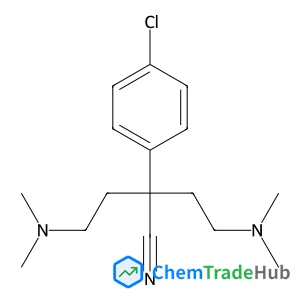
2-(4-Chlorophenyl)-4-(dimethylamino)-2-(2-(dimethylamino)ethyl)butanenitrile
CAS Number:
1246816-57-8
Molecular Formula:
C16H24ClN3
![2,6-Di(thiophen-2-yl)dithieno[3,2-b:2',3'-d]thiophene structure](https://static.chemtradehub.com/structs/910/910788-24-8-5b70.webp "2,6-Di(thiophen-2-yl)dithieno[3,2-b:2',3'-d]thiophene structure")
2,6-Di(thiophen-2-yl)dithieno[3,2-b:2',3'-d]thiophene
CAS Number:
910788-24-8
Molecular Formula:
C16H8S5
![tert-Butyl N-[(2-chloropyridin-4-yl)methyl]carbamate structure](https://static.chemtradehub.com/structs/916/916210-27-0-9f95.webp "tert-Butyl N-[(2-chloropyridin-4-yl)methyl]carbamate structure")
tert-Butyl N-[(2-chloropyridin-4-yl)methyl]carbamate
CAS Number:
916210-27-0
Molecular Formula:
C11H15ClN2O2
Recommended Suppliers




Disclaimer
This page provides academic journal information for reference and research purposes only. We are not affiliated with any journal publishers and do not handle publication submissions. For publication-related inquiries, please contact the respective journal publishers directly.
If you notice any inaccuracies in the information displayed, please contact us at support@chemtradehub.com. We will promptly review and address your concerns.