












Reactive molecular simulations of protonation of water clusters and depletion of acidity in H-ZSM-5 zeolite
Literature Information
Publication Date
2014-07-16
DOI
10.1039/C4CP02612H
Impact Factor
3.676
Authors
Kaushik L. Joshi, George Psofogiannakis, Adri C. T. van Duin, Sumathy Raman
View Original
Abstract
Using reactive molecular dynamics (RMD), we present an atomistic insight into the interaction between water molecules and acidic centers of H-ZSM-5 zeolite. The reactive force field method, ReaxFF, was used to evaluate the adsorption and diffusion of water as well as to study the protonation of water molecules inside zeolite channels. The existing Si/Al/O/H parameters were refitted against DFT calculations to improve the ReaxFF description of interaction between water molecules and the acidic sites of zeolites. The diffusion coefficient of water in the zeolite obtained from refitted parameters is in excellent agreement with experimental results. The molecular dynamics (MD) simulations indicate that protonation of water molecules and acidity of the zeolite catalyst depend on water loadings and temperature and the observed trends compare favorably with existing experimental and theoretical studies. At higher water loadings, protonation of water molecules is more frequent leading to formation and growth of protonated water clusters inside zeolite channels. From the analysis of various reaction channels that were observed during the simulations, we found that such water clusters have relatively short life due to frequent interchange of protons and water molecules among the water clusters. Such proton hopping events play a key role in moving the protons between different acidic centers of zeolite. These simulations show the capability of ReaxFF in providing atomistic details of complex chemical interactions between the water phase and solid acid zeolites.
Recommended Journals
Related Literature
Dynamical modes of two almost identical chemical oscillators connected via both pulsatile and diffusive coupling
2018-04-03
Paper
DOI: 10.1039/C7CP08032H
Fluorescence imaging of antibiotic clofazimine encapsulated within mesoporous silica particle carriers: relevance to drug delivery and the effect on its release kinetics
Lorenzo Angiolini, Boiko Cohen, Abderrazzak Douhal
2018-03-26
Paper
DOI: 10.1039/C7CP08328A
Gas phase 1H NMR studies and kinetic modeling of dihydrogen isotope equilibration catalyzed by Ru-nanoparticles under normal conditions: dissociative vs. associative exchange
Hans-Heinrich Limbach, Tal Pery, Niels Rothermel, Bruno Chaudret, Torsten Gutmann, Gerd Buntkowsky
2017-12-19
Paper
DOI: 10.1039/C7CP07770J
A thermostated cell for electrochemistry: minimising natural convection and investigating the role of evaporation and radiation
Xiuting Li, Christopher Batchelor-McAuley, Javor K. Novev, Richard G. Compton
2018-04-10
Paper
DOI: 10.1039/C8CP01360H
Molecular structure and adsorption of dimethyl sulfoxide at the air/aqueous solution interface probed by non-resonant second harmonic generation
Qianshun Wei, Dexia Zhou, Hongtao Bian
2018-03-27
Paper
DOI: 10.1039/C8CP00099A
Application of far-infrared spectroscopy to the structural identification of protein materials
Yanchen Han, Shengjie Ling, Zeming Qi, Zhengzhong Shao, Xin Chen
2018-04-04
Paper
DOI: 10.1039/C8CP00802G
Unifying theoretical framework for deciphering the oxygen reduction reaction on platinum
Michael Eikerling
2018-04-05
Paper
DOI: 10.1039/C8CP01315B
Effects of crystal structure and composition on the photocatalytic performance of Ta–O–N functional materials
Qing-Lu Liu, Zong-Yan Zhao, Jian-Hong Yi
2018-03-27
Paper
DOI: 10.1039/C8CP00432C
You might also like
Compound Q&A
What are the main uses of 1-(3-Aminophenyl)-3-[(3R)-1-(3,3-dimethyl-2-oxobutyl)-2-oxo-5-(2-pyridinyl)-2,3-dihydro-1H-1,4-benzodiazepin-3-yl]urea (CAS: 155412-88-7)?
This compound is mainly used as an intermediate in the synthesis of antipsychoti...
155412-88-71-(3-Aminophenyl)-3-...
Compound Q&A
How should waste containing 1-(D-Ribofuranosyl)-1,4-dihydro-3-pyridinecarboxamide (CAS: 19132-12-8) be handled?
Waste containing 1-(D-Ribofuranosyl)-1,4-dihydro-3-pyridinecarboxamide (CAS: 191...
19132-12-81-(D-Ribofuranosyl)-...
Compound Q&A
What regulatory guidelines apply to 2-Methyl-2-propanyl 3-bromo-3-(hydroxymethyl)-1-azetidinecarboxylate (CAS: 2007919-81-3)?
2-Methyl-2-propanyl 3-bromo-3-(hydroxymethyl)-1-azetidinecarboxylate (CAS: 20079...
2007919-81-32-Methyl-2-propanyl ...
Compound Q&A
What is N-(4-Chloro-2-pyridinyl)acetamide (CAS: 245056-66-0)?
N-(4-Chloro-2-pyridinyl)acetamide (CAS: 245056-66-0) is a chemical compound with...
245056-66-0N-(4-Chloro-2-pyridi...
Compound Q&A
What is 5-Chloro-2-hydroxybenzoic acid (CAS: 321-14-2)?
5-Chloro-2-hydroxybenzoic acid, also known as 5-chlorosalicylic acid, is an arom...
321-14-25-Chloro-2-hydroxybe...
Compound Q&A
What precautions should be taken when handling 1,1-Dichloro-1-fluoroethane (CAS: 1717-00-6)?
When handling 1,1-Dichloro-1-fluoroethane (CAS: 1717-00-6), it is important to u...
1717-00-61,1-Dichloro-1-fluor...
Compound Q&A
What are the physical and chemical properties of Fmoc-(2S,3R)-3-phenylpyrrolidine-2-carboxylic acid (CAS: 281655-32-1)?
Fmoc-(2S,3R)-3-phenylpyrrolidine-2-carboxylic acid is a white crystalline solid ...
281655-32-1Fmoc-(2S,3R)-3-pheny...
Compound Q&A
What are the main uses of 4-Amino-5-bromo-2-pyridinecarboxylic acid (CAS: 1363381-01-4)?
4-Amino-5-bromo-2-pyridinecarboxylic acid is primarily used as a precursor in th...
1363381-01-44-Amino-5-bromo-2-py...
Compound Q&A
What precautions should be taken when handling (S)-tert-butyl 2-((2-(4-bromophenyl)-2-oxoethyl)carbamoyl)pyrrolidine-1-carboxylate (CAS: 1007881-98-2)?
Handling this compound should be done with personal protective equipment (PPE) i...
1007881-98-2(S)-tert-butyl 2-((2...
Compound Q&A
What precautions should be taken when handling 8-bromo-2,2-dimethyl-3,4-dihydro-2H-1,4-benzoxazin-3-one (CAS: 688363-73-7)?
When handling 8-bromo-2,2-dimethyl-3,4-dihydro-2H-1,4-benzoxazin-3-one, use prop...
688363-73-78-bromo-2,2-dimethyl...
Source Journal
Physical Chemistry Chemical Physics

CiteScore:
5.5
Self-citation Rate:
10.3%
Articles per Year:
3036
Physical Chemistry Chemical Physics (PCCP) is an international journal co-owned by 19 physical chemistry and physics societies from around the world. This journal publishes original, cutting-edge research in physical chemistry, chemical physics and biophysical chemistry. To be suitable for publication in PCCP, articles must include significant innovation and/or insight into physical chemistry; this is the most important criterion that reviewers and Editors will judge against when evaluating submissions. The journal has a broad scope and welcomes contributions spanning experiment, theory, computation and data science. Topical coverage includes spectroscopy, dynamics, kinetics, statistical mechanics, thermodynamics, electrochemistry, catalysis, surface science, quantum mechanics, quantum computing and machine learning. Interdisciplinary research areas such as polymers and soft matter, materials, nanoscience, energy, surfaces/interfaces, and biophysical chemistry are welcomed if they demonstrate significant innovation and/or insight into physical chemistry. Joined experimental/theoretical studies are particularly appreciated when complementary and based on up-to-date approaches.
Recommended Compounds

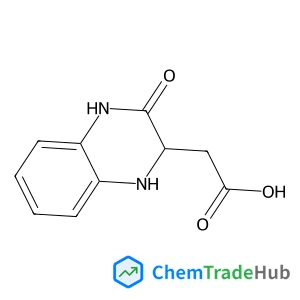
(3-Oxo-1,2,3,4-tetrahydro-2-quinoxalinyl)acetic acid
CAS Number:
136584-14-0
Molecular Formula:
C10H10N2O3

Recommended Suppliers






Disclaimer
This page provides academic journal information for reference and research purposes only. We are not affiliated with any journal publishers and do not handle publication submissions. For publication-related inquiries, please contact the respective journal publishers directly.
If you notice any inaccuracies in the information displayed, please contact us at support@chemtradehub.com. We will promptly review and address your concerns.