












The driving forces for twisted or planar intramolecular charge transfer
Literature Information
Publication Date
2015-02-24
DOI
10.1039/C4CP02381A
Impact Factor
3.676
Authors
View Original
Abstract
A D–A (donor–acceptor)-type chromophore may twist or flatten in its excited state to form a TICT (twisted intramolecular charge transfer) state or a PICT (planar intramolecular charge transfer) state, respectively. What is the driving force behind this twisting or planarization? Which geometry will occur for a certain D–A chromophore? To answer these questions, both fragment orbital interaction and excited state energy decomposition analyses were performed on several classical TICT/PICT molecules. Three driving forces were identified, namely, energy gap, hole–electron interactions, and excited state relaxation. The contributions of these driving forces in various types of molecules were analyzed to determine how the molecular structure affects them. The energy gap difference between the twisted and planar geometries was found to play a decisive role in most situations. Thus, evaluating the frontier orbital interactions between the donor and acceptor effectively predicts whether chromophores planarize or twist in the excited state.
Related Literature
DFT study of the rate constants of the reactions CHClmF3−m + Cl = CClmF3−m + HCl (m = 3 − 1)
Chao Yang Wang
2002-08-19
Paper
DOI: 10.1039/B206133N
Monte Carlo simulations of ion selectivity in a biological Na channel: Charge–space competition
Dezső Boda, David D. Busath, Bob Eisenberg, Douglas Henderson, Wolfgang Nonner
2002-09-18
Paper
DOI: 10.1039/B203686J
Raman spectroscopic study of Ni2+–DNA interactions in aqueous systems
Janusz Stangret, Rodrigue Savoie
2002-08-30
Paper
DOI: 10.1039/B202346F
Second virial coefficients of fluorinated methanes CH4−xFx (x = 0–4) and their binary mixtures
Joachim A. Lamp, Bernhard F. Schramm, Shokry M. Saad, Samia A. El-Geubeily
2002-08-12
Paper
DOI: 10.1039/B204839F
Shock wave study of the unimolecular dissociation of H2O2 in its falloff range and of its secondary reactions
Ch. Kappel, K. Luther, J. Troe
2002-08-09
Paper
DOI: 10.1039/B204364E
High pressure solid–liquid phase equilibria in synthetic waxes
2002-08-08
Paper
DOI: 10.1039/B205017J
A gas-phase kinetic study of the silylene addition reaction SiH2 + C2D4 as a function of temperature and pressure: isotope effects and mechanistic complexities
N. Al-Rubaiey, R. Becerra, R. Walsh
2002-09-09
Paper
DOI: 10.1039/B204508G
MSA-NRTL model for the description of the thermodynamic properties of electrolyte solutions
J.-P. Simonin, O. Bernard, W. Kunz
2002-08-08
Paper
DOI: 10.1039/B204841H
Temperature dependence of isotope fractionation in N2O photolysis
Jan Kaiser, Thomas Röckmann, Carl A. M. Brenninkmeijer
2002-08-02
Paper
DOI: 10.1039/B204837J
Computational studies of gas–carbon nanotube collision dynamics
Kim Bolton, Arne Rosén
2002-08-07
Paper
DOI: 10.1039/B200581F
You might also like
Compound Q&A
How should waste containing 2-Ethyl-4-Methyl-1H-Imidazole-5-Carbaldehyde (CAS: 88634-80-4) be handled?
Waste containing 2-Ethyl-4-Methyl-1H-Imidazole-5-Carbaldehyde (CAS: 88634-80-4) ...
88634-80-42-Ethyl-4-Methyl-1H-...
Compound Q&A
What industries use Triethoxy(octyl)silane (CAS: 1385031-14-0)?
Triethoxy(octyl)silane (CAS: 1385031-14-0) is widely used in the pharmaceuticals...
1385031-14-0Triethoxy(octyl)sila...
Compound Q&A
Are there alternatives to 3-iodo-7-nitro-1H-indazole (CAS: 864724-64-1) in synthesis?
Several alternatives to 3-iodo-7-nitro-1H-indazole (CAS: 864724-64-1) exist in t...
864724-64-13-iodo-7-nitro-1H-in...
Compound Q&A
Are there alternatives to Benzene, bis[(trimethoxysilyl)ethyl] (CAS: 266317-71-9) in synthesis?
Yes, there are alternatives to Benzene, bis[(trimethoxysilyl)ethyl] (CAS: 266317...
266317-71-9Benzene, bis[(trimet...
Compound Q&A
Is Isothiazole-3-carbonitrile (CAS: 1452-17-1) safe?
Isothiazole-3-carbonitrile (CAS: 1452-17-1) is generally considered safe when us...
1452-17-1Isothiazole-3-carbon...
Compound Q&A
Is (3-Chlorophenyl)methanol (CAS: 873-63-2) safe?
(3-Chlorophenyl)methanol (CAS: 873-63-2) is considered low to moderately toxic. ...
873-63-2(3-Chlorophenyl)meth...
Compound Q&A
How is (2S,3S)-2-Hydroxy-3-({[(2-methyl-2-propanyl)oxy]carbonyl}amino)-3-(2-naphthyl)propanoic acid (CAS: 959583-98-3) typically synthesized?
(2S,3S)-2-Hydroxy-3-({[(2-methyl-2-propanyl)oxy]carbonyl}amino)-3-(2-naphthyl)pr...
959583-98-3(2S,3S)-2-Hydroxy-3-...
Compound Q&A
What precautions should be taken when handling Methyl 2-(bromomethyl)-5-methoxybenzoate (CAS: 788081-99-2)?
Proper handling of methyl 2-(bromomethyl)-5-methoxybenzoate requires the use of ...
788081-99-2Methyl 2-(bromomethy...
Compound Q&A
What is 6,8-Dibromoimidazo[1,2-a]pyridine-2-carboxylic acid (CAS: 904805-36-3)?
6,8-Dibromoimidazo[1,2-a]pyridine-2-carboxylic acid (CAS: 904805-36-3) is an aro...
904805-36-36,8-Dibromoimidazo[1...
Compound Q&A
Is 3-Amino-5-bromo-2-pyridinecarbonitrile (CAS: 573675-27-1) safe?
3-Amino-5-bromo-2-pyridinecarbonitrile is considered safe when handled under pro...
573675-27-13-Amino-5-bromo-2-py...
Source Journal
Physical Chemistry Chemical Physics

CiteScore:
5.5
Self-citation Rate:
10.3%
Articles per Year:
3036
Physical Chemistry Chemical Physics (PCCP) is an international journal co-owned by 19 physical chemistry and physics societies from around the world. This journal publishes original, cutting-edge research in physical chemistry, chemical physics and biophysical chemistry. To be suitable for publication in PCCP, articles must include significant innovation and/or insight into physical chemistry; this is the most important criterion that reviewers and Editors will judge against when evaluating submissions. The journal has a broad scope and welcomes contributions spanning experiment, theory, computation and data science. Topical coverage includes spectroscopy, dynamics, kinetics, statistical mechanics, thermodynamics, electrochemistry, catalysis, surface science, quantum mechanics, quantum computing and machine learning. Interdisciplinary research areas such as polymers and soft matter, materials, nanoscience, energy, surfaces/interfaces, and biophysical chemistry are welcomed if they demonstrate significant innovation and/or insight into physical chemistry. Joined experimental/theoretical studies are particularly appreciated when complementary and based on up-to-date approaches.
Recommended Compounds
![2,2'-[(Abieta-8,11,13-trien-18-ylimino)bis(2,1-ethanediyloxy)]diethanol structure](https://static.chemtradehub.com/structs/513/51344-62-8-8518.webp "2,2'-[(Abieta-8,11,13-trien-18-ylimino)bis(2,1-ethanediyloxy)]diethanol structure")
2,2'-[(Abieta-8,11,13-trien-18-ylimino)bis(2,1-ethanediyloxy)]diethanol
CAS Number:
51344-62-8
Molecular Formula:
C28H47NO4
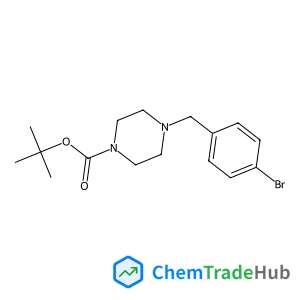
2-Methyl-2-propanyl 4-(4-bromobenzyl)-1-piperazinecarboxylate
CAS Number:
844891-10-7
Molecular Formula:
C16H23BrN2O2
Recommended Suppliers







Disclaimer
This page provides academic journal information for reference and research purposes only. We are not affiliated with any journal publishers and do not handle publication submissions. For publication-related inquiries, please contact the respective journal publishers directly.
If you notice any inaccuracies in the information displayed, please contact us at support@chemtradehub.com. We will promptly review and address your concerns.