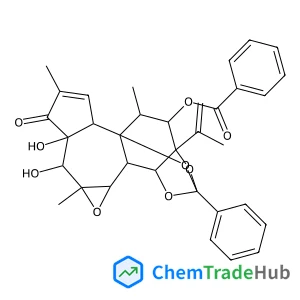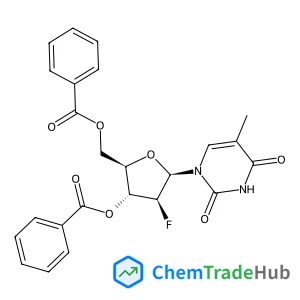
1-(3',5'-Di-O-benzoyl-2'-deoxy-2'-fluoro-b-D-arabinofuranosyl)thymine
CAS Number:
97614-47-6
Molecular Formula:
C24H21FN2O7
Guanzhong Lu
NO adsorption, diffusion and reaction at reduced CeO2(110) were studied by density functional theory calculations. NO accommodated by O vacancies can readily diffuse via alternate NO2 formation and dissociation, facilitating N2O2 formation and subsequent reduction to N2. Rare earth ceria plays an important catalytic role in both static and dynamic ways by tuning the electron distribution in adsorbates and reacting molecules.
Zhuojun Yao, Xueting Wu, Xiaocui Zhang, Qin Xiong, Shichao Jiang, Zhipeng Yu
DOI: 10.1039/C9OB00898E
Leixia Mei, Ziran Zhai, Suyun He, Tingting Zhu
DOI: 10.1039/C9OB00046A
Yasunori Toda, Riki Matsuda, Shuto Gomyou, Hiroyuki Suga
DOI: 10.1039/C9OB00602H
Radhey M. Singh
DOI: 10.1039/C9OB00841A
Marc A. Little
DOI: 10.1039/C9OB00123A
Sk. Atiur Rahaman, Munshi Sahid Hossain, Sruthy Baburaj, Ankita Biswas, Arijit Bag, Subhajit Bandyopadhyay
DOI: 10.1039/C9OB00781D
Yuta Nakagawa, Ryuta Sekiguchi, Jun Kawakami, Shunji Ito
DOI: 10.1039/C9OB00763F
Riccardo Gava, Elena Fernández
DOI: 10.1039/C9OB00989B
Hiromu Kashida, Yuta Kokubo, Koki Makino, Hiroyuki Asanuma
DOI: 10.1039/C9OB00946A
(3.beta.)-3-Hydroxy-N,N-dimethyl-chol-5-en-24-amide (CAS: 79066-03-8) is primari...
5-(Aminomethyl)-2-methoxyphenol (CAS: 89702-89-6) is classified under GHS as a s...
Thieno[2,3-c]pyridin-7(6H)-one (CAS: 28981-13-7) is a heterocyclic organic compo...
1-[(6-Methoxy-3-pyridinyl)methyl]-4-piperidinamine dihydrochloride is generally ...
[(2E)-3-Phenyl-2-propen-1-yl]phosphonic acid (CAS: 146404-58-2) is regulated und...
6-Bromo-7-methoxyquinoline (CAS: 1620515-86-7) falls under the scope of the Glob...
This compound is primarily used in the pharmaceutical industry for the developme...
1-Ethyl-7-[2-methyl-6-(4H-1,2,4-triazol-3-yl)-3-pyridinyl]-3,5-dihydropyrazino[2...
Alternative reagents such as 2-[(dimethylamino)methyl]phenylboronic acid or rela...
3-(Piperidin-4-yloxy)pyridine (CAS: 310881-48-2) is an organic compound with the...

Physical Chemistry Chemical Physics (PCCP) is an international journal co-owned by 19 physical chemistry and physics societies from around the world. This journal publishes original, cutting-edge research in physical chemistry, chemical physics and biophysical chemistry. To be suitable for publication in PCCP, articles must include significant innovation and/or insight into physical chemistry; this is the most important criterion that reviewers and Editors will judge against when evaluating submissions. The journal has a broad scope and welcomes contributions spanning experiment, theory, computation and data science. Topical coverage includes spectroscopy, dynamics, kinetics, statistical mechanics, thermodynamics, electrochemistry, catalysis, surface science, quantum mechanics, quantum computing and machine learning. Interdisciplinary research areas such as polymers and soft matter, materials, nanoscience, energy, surfaces/interfaces, and biophysical chemistry are welcomed if they demonstrate significant innovation and/or insight into physical chemistry. Joined experimental/theoretical studies are particularly appreciated when complementary and based on up-to-date approaches.