












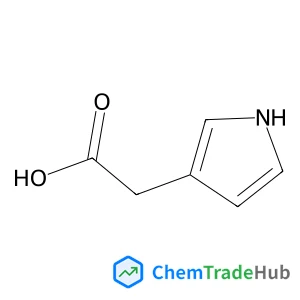
Structure of saligenin: microwave, UV and IR spectroscopy studies in a supersonic jet combined with quantum chemistry calculations
Literature Information
Publication Date
2014-06-27
DOI
10.1039/C4CP01693A
Impact Factor
3.676
Authors
Sumit Kumar, Santosh K. Singh, Camilla Calabrese, Assimo Maris, Sonia Melandri, Aloke Das
View Original
Abstract
In this study, we have determined the structure of a medicinally important molecule saligenin (2-hydroxybenzyl alcohol) using UV, IR and microwave absorption spectroscopy in a supersonic jet combined with ab initio calculations. The structure of the only observed conformer of saligenin corresponds to the global minimum on the conformational surface. The observed structure is stabilized by an intramolecular strong O–H⋯O hydrogen bonding as well as a very weak O–H⋯π interaction. The hydrogen bond is formed through phenolic OH as the hydrogen bond donor and benzylic OH as the hydrogen bond acceptor while the O–H⋯π interaction is through benzylic O–H as the hydrogen bond donor and phenyl group as the hydrogen bond acceptor. It has been observed that the benzylic OH stretching frequency in saligenin is more red-shifted compared to that in benzyl alcohol as the strong O–H⋯O interaction present in saligenin acts on the benzylic O–H group. In fact, there is a subtle interplay among the strong O–H⋯O hydrogen bond, weak O–H⋯π interaction, and steric effects arising from the ortho substitution of the OH group in benzyl alcohol. This fine-tuning of multiple interactions very often governs the specific structures of biomolecules and materials.
Recommended Journals
Related Literature
Dehydroamino acids: chemical multi-tools for late-stage diversification
Jonathan W. Bogart, Albert A. Bowers
2019-02-27
Review Article
DOI: 10.1039/C8OB03155J
Sarocladione, a unique 5,10:8,9-diseco-steroid from the deep-sea-derived fungus Sarocladium kiliense
Chun-Lan Xie, Jin-Mei Xia, Cui-Ping Xing, Zhu-Hua Luo, Zongze Shao, Xiao-Jun Yan, Shan He, Xian-Wen Yang
2019-05-29
Communication
DOI: 10.1039/C9OB01159E
A multi-component reaction for the synthesis of pyrido [1,2-b] isoquinoline derivatives via the [3 + 2] cycloaddition reaction between alkynes and in situ generated isoquinolinium ylides
Soumi Laha, Dharmendra K. Tiwari, B. Sridhar
2019-04-01
Paper
DOI: 10.1039/C9OB00560A
6-Polyamino-substituted quinolines: synthesis and multiple metal (CuII, HgII and ZnII) monitoring in aqueous media
Anton S. Abel, Andrey V. Cheprakov, Vitaly A. Roznyatovsky, Franck Denat, Alla Bessmertnykh-Lemeune
2019-03-01
Paper
DOI: 10.1039/C9OB00259F
The cubane paradigm in bioactive molecule discovery: further scope, limitations and the cyclooctatetraene complement‡
Sevan D. Houston, Tyler Fahrenhorst-Jones, Hui Xing, Benjamin A. Chalmers, Melissa L. Sykes, Jeanette E. Stok, Clementina Farfan Soto, Jed M. Burns, Paul V. Bernhardt, James J. De Voss, Glen M. Boyle, Maree T. Smith, John Tsanaktsidis, G. Paul Savage, Vicky M. Avery, Craig M. Williams
2019-06-26
Paper
DOI: 10.1039/C9OB01238A
Solvent-free ruthenium-catalysed triflate coupling as a convenient method for selective azole-o-C–H monoarylation
Taoufik Boubaker, Julien Roger
2019-05-22
Communication
DOI: 10.1039/C9OB00806C
Phosphine-catalyzed dearomative (3 + 2) annulation of 2-nitrobenzofurans and nitrobenzothiophenes with allenoates
Jian-Qiang Zhao, Lei Yang, Yong You, Zhen-Hua Wang, Ke-Xin Xie, Xiao-Mei Zhang, Xiao-Ying Xu, Wei-Cheng Yuan
2019-05-07
Paper
DOI: 10.1039/C9OB00775J
Divergent synthesis of 5′,7′-difluorinated dihydroxanthene-hemicyanine fused near-infrared fluorophores
Shasha Zheng, Gu Lingyue, Michelle Jui Hsien Ong, Denis Jacquemin, Jean-Alexandre Richard, Rajavel Srinivasan
2019-04-10
Paper
DOI: 10.1039/C9OB00568D
You might also like
Compound Q&A
What are the main uses of (3.beta.)-3-Hydroxy-N,N-dimethyl-chol-5-en-24-amide (CAS: 79066-03-8)?
(3.beta.)-3-Hydroxy-N,N-dimethyl-chol-5-en-24-amide (CAS: 79066-03-8) is primari...
79066-03-8(3.beta.)-3-Hydroxy-...
Compound Q&A
What regulatory guidelines apply to 5-(aminomethyl)-2-methoxyphenol (CAS: 89702-89-6)?
5-(Aminomethyl)-2-methoxyphenol (CAS: 89702-89-6) is classified under GHS as a s...
89702-89-65-(aminomethyl)-2-me...
Compound Q&A
What is Thieno[2,3-c]pyridin-7(6H)-one (CAS: 28981-13-7)?
Thieno[2,3-c]pyridin-7(6H)-one (CAS: 28981-13-7) is a heterocyclic organic compo...
28981-13-7Thieno[2,3-c]pyridin...
Compound Q&A
Is 1-[(6-Methoxy-3-pyridinyl)methyl]-4-piperidinamine dihydrochloride (CAS: 1185311-28-7) safe?
1-[(6-Methoxy-3-pyridinyl)methyl]-4-piperidinamine dihydrochloride is generally ...
1185311-28-71-[(6-Methoxy-3-pyri...
Compound Q&A
What regulatory guidelines apply to [(2E)-3-Phenyl-2-propen-1-yl]phosphonic acid (CAS: 146404-58-2)?
[(2E)-3-Phenyl-2-propen-1-yl]phosphonic acid (CAS: 146404-58-2) is regulated und...
146404-58-2[(2E)-3-Phenyl-2-pro...
Compound Q&A
What regulatory guidelines apply to 6-Bromo-7-methoxyquinoline (CAS: 1620515-86-7)?
6-Bromo-7-methoxyquinoline (CAS: 1620515-86-7) falls under the scope of the Glob...
1620515-86-76-Bromo-7-methoxyqui...
Compound Q&A
What industries use (2R)-1-(1-Benzofuran-2-yl)-N-propyl-2-pentanamine (CAS: 260550-89-8)?
This compound is primarily used in the pharmaceutical industry for the developme...
260550-89-8(2R)-1-(1-Benzofuran...
Compound Q&A
What are the main uses of 1-Ethyl-7-[2-methyl-6-(4H-1,2,4-triazol-3-yl)-3-pyridinyl]-3,5-dihydropyrazino[2,3-b]pyrazin-2(1H)-one (CAS: 1228013-15-7)?
1-Ethyl-7-[2-methyl-6-(4H-1,2,4-triazol-3-yl)-3-pyridinyl]-3,5-dihydropyrazino[2...
1228013-15-71-Ethyl-7-[2-methyl-...
Compound Q&A
Are there alternatives to {5-(Acryloylamino)-2-[(dimethylamino)methyl]phenyl}boronic acid (CAS: 1217500-78-1) in synthesis?
Alternative reagents such as 2-[(dimethylamino)methyl]phenylboronic acid or rela...
1217500-78-1{5-(Acryloylamino)-2...
Compound Q&A
What is 3-(Piperidin-4-yloxy)pyridine (CAS: 310881-48-2)?
3-(Piperidin-4-yloxy)pyridine (CAS: 310881-48-2) is an organic compound with the...
310881-48-23-(Piperidin-4-yloxy...
Source Journal
Physical Chemistry Chemical Physics

CiteScore:
5.5
Self-citation Rate:
10.3%
Articles per Year:
3036
Physical Chemistry Chemical Physics (PCCP) is an international journal co-owned by 19 physical chemistry and physics societies from around the world. This journal publishes original, cutting-edge research in physical chemistry, chemical physics and biophysical chemistry. To be suitable for publication in PCCP, articles must include significant innovation and/or insight into physical chemistry; this is the most important criterion that reviewers and Editors will judge against when evaluating submissions. The journal has a broad scope and welcomes contributions spanning experiment, theory, computation and data science. Topical coverage includes spectroscopy, dynamics, kinetics, statistical mechanics, thermodynamics, electrochemistry, catalysis, surface science, quantum mechanics, quantum computing and machine learning. Interdisciplinary research areas such as polymers and soft matter, materials, nanoscience, energy, surfaces/interfaces, and biophysical chemistry are welcomed if they demonstrate significant innovation and/or insight into physical chemistry. Joined experimental/theoretical studies are particularly appreciated when complementary and based on up-to-date approaches.
Recommended Compounds
![4-[(4-Bromophenyl)sulfonyl]thiomorpholine structure](https://static.chemtradehub.com/structs/223/223555-81-5-2d67.webp "4-[(4-Bromophenyl)sulfonyl]thiomorpholine structure")
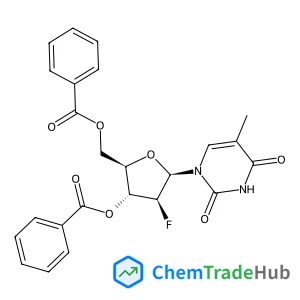
1-(3',5'-Di-O-benzoyl-2'-deoxy-2'-fluoro-b-D-arabinofuranosyl)thymine
CAS Number:
97614-47-6
Molecular Formula:
C24H21FN2O7
![4,4-Difluoro-2-methyl-1-{[(2-methyl-2-propanyl)oxy]carbonyl}-L-proline structure](https://static.chemtradehub.com/structs/119/1194032-23-9-f426.webp "4,4-Difluoro-2-methyl-1-{[(2-methyl-2-propanyl)oxy]carbonyl}-L-proline structure")
4,4-Difluoro-2-methyl-1-{[(2-methyl-2-propanyl)oxy]carbonyl}-L-proline
CAS Number:
1194032-23-9
Molecular Formula:
C11H17F2NO4
Recommended Suppliers






Disclaimer
This page provides academic journal information for reference and research purposes only. We are not affiliated with any journal publishers and do not handle publication submissions. For publication-related inquiries, please contact the respective journal publishers directly.
If you notice any inaccuracies in the information displayed, please contact us at support@chemtradehub.com. We will promptly review and address your concerns.