












![(4-Methyl-1H-benzo[d]imidazol-2-yl)methanamine structure](https://static.chemtradehub.com/structs/933/933756-31-1-7b0b.webp "(4-Methyl-1H-benzo[d]imidazol-2-yl)methanamine structure")
Boron doped defective graphene as a potential anode material for Li-ion batteries
Literature Information
Publication Date
2014-06-27
DOI
10.1039/C4CP01412J
Impact Factor
3.676
Authors
Rahul P. Hardikar, Deya Das, Sang Soo Han, Kwang-Ryeol Lee, Abhishek K. Singh
View Original
Abstract
Graphene with large surface area and robust structure has been proposed as a high storage capacity anode material for Li ion batteries. While the inertness of pristine graphene leads to better Li kinetics, poor adsorption leads to Li clustering, significantly affecting the performance of the battery. Here, we show the role of defects and doping in achieving enhanced adsorption without compromising on the high diffusivity of Li. Using first principles density functional theory (DFT) calculations, we carry out a comprehensive study of diffusion kinetics of Li over the plane of the defective structures and calculate the change in the number of Li atoms in the vicinity of defects, with respect to pristine graphene. Our results show that the Li–C interaction, storage capacity and the energy barriers depend sensitively on the type of defects. The un-doped and boron doped mono-vacancy, doped di-vacancy up to two boron, one nitrogen doped di-vacancy, and Stone–Wales defects show low energy barriers that are comparable to pristine graphene. Furthermore, boron doping at mono-vacancy enhances the adsorption of Li. In particular, the two boron doped mono-vacancy graphene shows both a low energy barrier of 0.31 eV and better adsorption, and hence can be considered as a potential candidate for anode material.
Related Literature
Correction: First-principles analysis of the spectroscopic limited maximum efficiency of photovoltaic absorber layers for CuAu-like chalcogenides and silicon
Marnik Bercx, Nasrin Sarmadian, Rolando Saniz, Bart Partoens, Dirk Lamoen
2017-02-10
Correction
DOI: 10.1039/C7CP90033C
On the multi-reference nature of plutonium oxides: PuO22+, PuO2, PuO3 and PuO2(OH)2
Florent Réal, Paweł Tecmer, André Severo Pereira Gomes, Örs Legeza, Paul W. Ayers, Valérie Vallet
2017-01-13
Paper
DOI: 10.1039/C6CP05429C
Sizable dynamics in small pores: CO2 location and motion in the α-Mg formate metal–organic framework
Yuanjun Lu, Bryan E. G. Lucier, Yue Zhang, Anmin Zheng, Yining Huang
2017-01-27
Paper
DOI: 10.1039/C7CP00199A
Effects of the Hofmeister series of sodium salts on the solvent properties of water
L. A. Ferreira, V. N. Uversky, B. Y. Zaslavsky
2017-01-09
Paper
DOI: 10.1039/C6CP08214A
The crucial role of Mn spiral spin order in stabilizing the Dy–Mn exchange striction in multiferroic DyMnO3
H. W. Wang, C. L. Li, S. L. Yuan, J. F. Wang, C. L. Lu, J.-M. Liu
2017-01-04
Paper
DOI: 10.1039/C6CP06369A
Structural and magneto-electronic properties and electric field-mediated effects for transition metal-terminated zigzag h-BN nanoribbons
J. Liu, Z. H. Zhang, P. F. Yuan, Z. Q. Fan
2017-01-04
Paper
DOI: 10.1039/C6CP06909F
Effective pair potential between charged nanoparticles at high volume fractions
Guillaume Bareigts, Christophe Labbez
2017-01-20
Paper
DOI: 10.1039/C6CP08056A
The role of π-linkers in tuning the optoelectronic properties of triphenylamine derivatives for solar cell applications – A DFT/TDDFT study‡
Arunkumar Kathiravan, Rajadurai Vijay Solomon
2017-01-26
Paper
DOI: 10.1039/C6CP07768D
Nanoparticle–nanoparticle vs. nanoparticle–substrate hot spot contributions to the SERS signal: studying Raman labelled monomers, dimers and trimers
Kamila Moor, Kristina Gudun, Zarina Yelemessova, Rostislav Bukasov
2016-12-15
Paper
DOI: 10.1039/C6CP08254H
You might also like
Compound Q&A
What are the main uses of (5-Sulfamoyl-3-pyridinyl)boronic acid (CAS: 951233-61-7)?
(5-Sulfamoyl-3-pyridinyl)boronic acid is primarily used in chemical synthesis, p...
951233-61-7(5-Sulfamoyl-3-pyrid...
Compound Q&A
How is Benzyl 2-methyl-2-(methylsulfonyl)-4-pentenoate (CAS: 1942858-50-5) typically synthesized?
Benzyl 2-methyl-2-(methylsulfonyl)-4-pentenoate is typically synthesized via est...
1942858-50-5Benzyl 2-methyl-2-(m...
Compound Q&A
What precautions should be taken when handling 8-Fluoroquinolin-6-ol (CAS: 209353-22-0)?
When handling 8-Fluoroquinolin-6-ol (CAS: 209353-22-0), it is important to use p...
209353-22-08-Fluoroquinolin-6-o...
Compound Q&A
What are the physical and chemical properties of 1,3-Dibromo-5-(2-methyl-2-propanyl)benzene (CAS: 129316-09-2)?
1,3-Dibromo-5-(2-methyl-2-propanyl)benzene (CAS: 129316-09-2) is a crystalline c...
129316-09-21,3-Dibromo-5-(2-met...
Compound Q&A
What industries use Ethyl 7-chloro-4-oxo-1-(1,3-thiazol-2-yl)-1,4-dihydro-1,8-naphthyridine-3-carboxylate (CAS: 174726-87-5)?
Ethyl 7-chloro-4-oxo-1-(1,3-thiazol-2-yl)-1,4-dihydro-1,8-naphthyridine-3-carbox...
174726-87-5Ethyl 7-chloro-4-oxo...
Compound Q&A
What precautions should be taken when handling Delta-7-Avenasterol (CAS: 23290-26-8)?
When handling Delta-7-Avenasterol (CAS: 23290-26-8), it is important to wear app...
23290-26-8Delta-7-Avenasterol
Compound Q&A
What precautions should be taken when handling N-({(5R)-3-[3-Fluoro-4-(4-morpholinyl)phenyl]-2-oxo-1,3-oxazolidin-5-yl}methyl)acetamide (CAS: 872992-20-6)?
Proper handling involves the use of personal protective equipment such as gloves...
872992-20-6N-({(5R)-3-[3-Fluoro...
Compound Q&A
What precautions should be taken when handling 2-Methyl-2-proanyl 4-[(2-aminophenyl)amino]-1-piperidinecarboxylate (CAS: 79099-00-6)?
When handling 2-Methyl-2-proanyl 4-[(2-aminophenyl)amino]-1-piperidinecarboxylat...
79099-00-62-Methyl-2-propanyl ...
Compound Q&A
What is N-Methyl-4-chlorobenzylamine hydrochloride (CAS: 65542-24-7)?
N-Methyl-4-chlorobenzylamine hydrochloride (CAS: 65542-24-7) is a organic compou...
65542-24-7N-Methyl-4-chloroben...
Compound Q&A
Is [2-(Dodecyloxy)ethoxy]acetic acid (CAS: 27306-90-7) safe?
[2-(Dodecyloxy)ethoxy]acetic acid (CAS: 27306-90-7) is generally considered safe...
27306-90-7[2-(Dodecyloxy)ethox...
Source Journal
Physical Chemistry Chemical Physics

CiteScore:
5.5
Self-citation Rate:
10.3%
Articles per Year:
3036
Physical Chemistry Chemical Physics (PCCP) is an international journal co-owned by 19 physical chemistry and physics societies from around the world. This journal publishes original, cutting-edge research in physical chemistry, chemical physics and biophysical chemistry. To be suitable for publication in PCCP, articles must include significant innovation and/or insight into physical chemistry; this is the most important criterion that reviewers and Editors will judge against when evaluating submissions. The journal has a broad scope and welcomes contributions spanning experiment, theory, computation and data science. Topical coverage includes spectroscopy, dynamics, kinetics, statistical mechanics, thermodynamics, electrochemistry, catalysis, surface science, quantum mechanics, quantum computing and machine learning. Interdisciplinary research areas such as polymers and soft matter, materials, nanoscience, energy, surfaces/interfaces, and biophysical chemistry are welcomed if they demonstrate significant innovation and/or insight into physical chemistry. Joined experimental/theoretical studies are particularly appreciated when complementary and based on up-to-date approaches.
Recommended Compounds
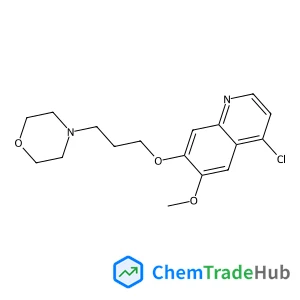
4-(3-((4-Chloro-6-methoxyquinolin-7-yl)oxy)propyl)morpholine
CAS Number:
205448-32-4
Molecular Formula:
C17H21ClN2O3

4-(4-Chloro-2-methoxyphenyl)-3-fluorobenzoic acid
CAS Number:
1261970-23-3
Molecular Formula:
C14H10ClFO3
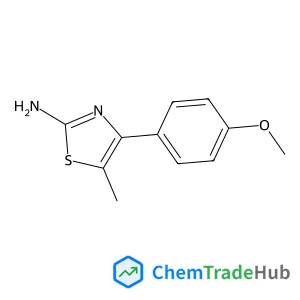
4-(4-Methoxyphenyl)-5-methyl-1,3-thiazol-2-amine
CAS Number:
105512-88-7
Molecular Formula:
C11H12N2OS
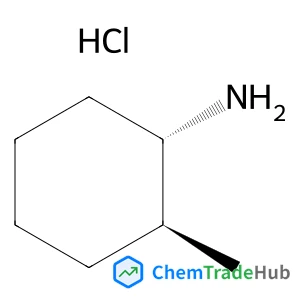
(1R,2R)-2-Methylcyclohexanamine hydrochloride (1:1)
CAS Number:
39558-31-1
Molecular Formula:
C7H16ClN
Recommended Suppliers







Disclaimer
This page provides academic journal information for reference and research purposes only. We are not affiliated with any journal publishers and do not handle publication submissions. For publication-related inquiries, please contact the respective journal publishers directly.
If you notice any inaccuracies in the information displayed, please contact us at support@chemtradehub.com. We will promptly review and address your concerns.