












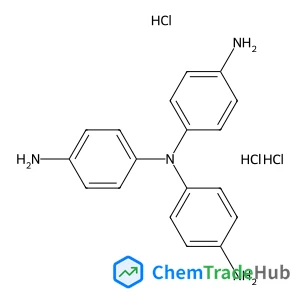
N1,N1-Bis(4-aminophenyl)benzene-1,4-diamine trihydrochloride
CAS Number:
114254-48-7
Molecular Formula:
C18H21Cl3N4
Øivind Wilhelmsen, Dick Bedeaux, Signe Kjelstrup
Heat and mass transfer through interfaces is central in nucleation theory, nanotechnology and many other fields of research. Heat transfer in nanoparticle suspensions and nanoporous materials displays significant and opposite correlations with particle and pore size. We investigate these effects further for transfer of heat and mass across interfaces of bubbles and droplets with radii down to 2 nm. We use square gradient theory at and beyond equilibrium to calculate interfacial resistances in single-component and two-component systems. Interface resistances, as defined by non-equilibrium thermodynamics, vary continuously with the interface curvature, from negative (bubbles) to zero (planar interface) to positive (droplet) values. The interface resistances of 2 nm radii bubbles/droplets are in some cases one order of magnitude different from those of the planar interface. The square gradient model predicts that the thermal interface resistances of droplets decrease with particle size, in accordance with results from the literature, only if the peak in the local resistivity is shifted toward the vapor phase. The curvature will then have an opposite effect on the resistance of bubbles and droplets. The model predicts that the coupling between heat and mass fluxes, when quantified as the heat of transfer of the interface, is of the same order of magnitude as the enthalpy change across the interface, and depends much less on curvature than the interface resistances.
Seigo Ito, Paul Liska, Pascal Comte, Raphaël Charvet, Peter Péchy, Udo Bach, Lukas Schmidt-Mende, Shaik Mohammed Zakeeruddin, Andreas Kay, Mohammad K. Nazeeruddin, Michael Grätzel
DOI: 10.1039/B505718C
Guo-Ping Wang, Er-Qun Song, Hai-Yan Xie, Zhi-Ling Zhang, Zhi-Quan Tian, Chao Zuo, Dai-Wen Pang, Dao-Cheng Wu, Yun-Bo Shi
DOI: 10.1039/B508075D
Tao Yang, Guobao Li, Liping You, Jing Ju, Fuhui Liao, Jianhua Lin
DOI: 10.1039/B506901G
Daniel L. Reger, J. Derek Elgin, Radu F. Semeniuc, Perry J. Pellechia, Mark D. Smith
DOI: 10.1039/B504998A
Martin Schüler, David O'Hagan, Alexandra M. Z. Slawin
DOI: 10.1039/B506010A
Shaofeng Yang, Roel Prins
DOI: 10.1039/B507940C
Patrick J. Hrdlicka, T. Santhosh Kumar, Jesper Wengel
DOI: 10.1039/B506986F
Elizabeth Glogowski, Jinbo He, Thomas P. Russell, Todd Emrick
DOI: 10.1039/B503670D
Nina Gommermann, Paul Knochel
DOI: 10.1039/B507810E
Waste containing N-Methoxy-N-methyl-1,3-thiazole-5-carboxamide (CAS: 898825-89-3...
N-(4-Biphenylyl)dibenzo[b,d]furan-4-amine should be stored in a tightly sealed c...
The market for 3-Acetamido-5-amino-2,4,6-triiodobenzoic acid (CAS: 1713-07-1) is...
Benzyl 2-O-acetyl-3,4,6-tri-O-benzyl-beta-D-galactopyranoside (CAS: 61820-03-9) ...
2-Ethylpiperazine dihydrochloride (CAS: 438050-52-3) is regulated under the Glob...
1,1'-[1,3-Phenylenebis(methylene)]bis(3-methyl-1H-pyrrole-2,5-dione) (CAS: 11946...
Several alternatives can be used in the synthesis of 5-Fluoro-2-(1-pyrrolidinyl)...
Proper personal protective equipment (PPE) must be worn when handling this compo...
When handling 6-Bromoimidazo[1,2-a]pyridin-8-amine, it is important to wear appr...
Alternatives to (2S,4R)-4-(4-Nitrobenzyl)pyrrolidine-2-carboxylic acid hydrochlo...

Physical Chemistry Chemical Physics (PCCP) is an international journal co-owned by 19 physical chemistry and physics societies from around the world. This journal publishes original, cutting-edge research in physical chemistry, chemical physics and biophysical chemistry. To be suitable for publication in PCCP, articles must include significant innovation and/or insight into physical chemistry; this is the most important criterion that reviewers and Editors will judge against when evaluating submissions. The journal has a broad scope and welcomes contributions spanning experiment, theory, computation and data science. Topical coverage includes spectroscopy, dynamics, kinetics, statistical mechanics, thermodynamics, electrochemistry, catalysis, surface science, quantum mechanics, quantum computing and machine learning. Interdisciplinary research areas such as polymers and soft matter, materials, nanoscience, energy, surfaces/interfaces, and biophysical chemistry are welcomed if they demonstrate significant innovation and/or insight into physical chemistry. Joined experimental/theoretical studies are particularly appreciated when complementary and based on up-to-date approaches.
![2-Methyl-2-propanyl {3-[4-(4,4,5,5-tetramethyl-1,3,2-dioxaborolan-2-yl)phenyl]-3-oxetanyl}carbamate structure](https://static.chemtradehub.com/structs/127/1279090-25-3-1b84.webp "2-Methyl-2-propanyl {3-[4-(4,4,5,5-tetramethyl-1,3,2-dioxaborolan-2-yl)phenyl]-3-oxetanyl}carbamate structure")




