












Exchange–correlation functionals from the strong interaction limit of DFT: applications to model chemical systems
Literature Information
Publication Date
2014-03-24
DOI
10.1039/C4CP00407H
Impact Factor
3.676
Authors
Francesc Malet, André Mirtschink, Klaas J. H. Giesbertz, Lucas O. Wagner, Paola Gori-Giorgi
View Original
Abstract
We study one-dimensional model chemical systems (representative of their three-dimensional counterparts) using the strictly-correlated electron (SCE) functional, which, by construction, becomes asymptotically exact in the limit of infinite coupling strength. The SCE functional has a highly non-local dependence on the density and is able to capture strong correlation within the Kohn–Sham theory without introducing any symmetry breaking. Chemical systems, however, are not close enough to the strong-interaction limit so that, while ionization energies and the stretched H2 molecule are accurately described, total energies are in general too low. A correction based on the exact next leading order in the expansion at infinite coupling strength of the Hohenberg–Kohn functional largely improves the results.
Related Literature
Variable temperature NMR of organogelators: the intensities of a single sample describe the full phase diagram
Elliot Christ, Dominique Collin, Jean-Philippe Lamps
2018-03-27
Paper
DOI: 10.1039/C8CP00009C
Determination of the protonation preferences of bilin pigments in cryptophyte antenna complexes
Marina Corbella, Zi S. D. Toa, Gregory D. Scholes, F. Javier Luque, Carles Curutchet
2018-07-30
Paper
DOI: 10.1039/C8CP02541J
Full elucidation of the transmembrane anion transport mechanism of squaramides using in silico investigations
Igor Marques, Pedro M. R. Costa, Margarida Q. Miranda, Nathalie Busschaert, Harriet J. Clarke, Cally J. E. Haynes, Isabelle L. Kirby, Ananda M. Rodilla, Ricardo Pérez-Tomás, Vítor Félix
2018-07-03
Paper
DOI: 10.1039/C8CP02576B
Computational strategies to probe CH activation in dioxo-dicopper complexes
Zhenzhuo Lan, Shaama Mallikarjun Sharada
2018-09-27
Paper
DOI: 10.1039/C8CP05096A
DMPC vesicle structure and dynamics in the presence of low amounts of the saponin aescin
Ramsia Sreij, Carina Dargel, Philippe Geisler, Yvonne Hertle, Aurel Radulescu, Stefano Pasini, Javier Perez, Lara H. Moleiro, Thomas Hellweg
2018-02-28
Paper
DOI: 10.1039/C7CP08027A
A neural network potential energy surface for the F + CH4 reaction including multiple channels based on coupled cluster theory
Xin Xu, Shu Liu, Dong H. Zhang
2018-03-02
Paper
DOI: 10.1039/C7CP08365C
Aggregation response of triglyceride hydrolysis products in cyclohexane and triolein
Sampsa Vierros, Monika Österberg, Maria Sammalkorpi
2018-10-11
Paper
DOI: 10.1039/C8CP05104F
An in situ DRIFTS mechanistic study of CeO2-catalyzed acetylene semihydrogenation reaction
Tian Cao, Rui You, Xuanyu Zhang, Shilong Chen, Dan Li, Zhenhua Zhang, Weixin Huang
2018-03-08
Paper
DOI: 10.1039/C8CP00668G
You might also like
Compound Q&A
What are the main uses of 1-(3-Aminophenyl)-3-[(3R)-1-(3,3-dimethyl-2-oxobutyl)-2-oxo-5-(2-pyridinyl)-2,3-dihydro-1H-1,4-benzodiazepin-3-yl]urea (CAS: 155412-88-7)?
This compound is mainly used as an intermediate in the synthesis of antipsychoti...
155412-88-71-(3-Aminophenyl)-3-...
Compound Q&A
How should waste containing 1-(D-Ribofuranosyl)-1,4-dihydro-3-pyridinecarboxamide (CAS: 19132-12-8) be handled?
Waste containing 1-(D-Ribofuranosyl)-1,4-dihydro-3-pyridinecarboxamide (CAS: 191...
19132-12-81-(D-Ribofuranosyl)-...
Compound Q&A
What regulatory guidelines apply to 2-Methyl-2-propanyl 3-bromo-3-(hydroxymethyl)-1-azetidinecarboxylate (CAS: 2007919-81-3)?
2-Methyl-2-propanyl 3-bromo-3-(hydroxymethyl)-1-azetidinecarboxylate (CAS: 20079...
2007919-81-32-Methyl-2-propanyl ...
Compound Q&A
What is N-(4-Chloro-2-pyridinyl)acetamide (CAS: 245056-66-0)?
N-(4-Chloro-2-pyridinyl)acetamide (CAS: 245056-66-0) is a chemical compound with...
245056-66-0N-(4-Chloro-2-pyridi...
Compound Q&A
What is 5-Chloro-2-hydroxybenzoic acid (CAS: 321-14-2)?
5-Chloro-2-hydroxybenzoic acid, also known as 5-chlorosalicylic acid, is an arom...
321-14-25-Chloro-2-hydroxybe...
Compound Q&A
What precautions should be taken when handling 1,1-Dichloro-1-fluoroethane (CAS: 1717-00-6)?
When handling 1,1-Dichloro-1-fluoroethane (CAS: 1717-00-6), it is important to u...
1717-00-61,1-Dichloro-1-fluor...
Compound Q&A
What are the physical and chemical properties of Fmoc-(2S,3R)-3-phenylpyrrolidine-2-carboxylic acid (CAS: 281655-32-1)?
Fmoc-(2S,3R)-3-phenylpyrrolidine-2-carboxylic acid is a white crystalline solid ...
281655-32-1Fmoc-(2S,3R)-3-pheny...
Compound Q&A
What are the main uses of 4-Amino-5-bromo-2-pyridinecarboxylic acid (CAS: 1363381-01-4)?
4-Amino-5-bromo-2-pyridinecarboxylic acid is primarily used as a precursor in th...
1363381-01-44-Amino-5-bromo-2-py...
Compound Q&A
What precautions should be taken when handling (S)-tert-butyl 2-((2-(4-bromophenyl)-2-oxoethyl)carbamoyl)pyrrolidine-1-carboxylate (CAS: 1007881-98-2)?
Handling this compound should be done with personal protective equipment (PPE) i...
1007881-98-2(S)-tert-butyl 2-((2...
Compound Q&A
What precautions should be taken when handling 8-bromo-2,2-dimethyl-3,4-dihydro-2H-1,4-benzoxazin-3-one (CAS: 688363-73-7)?
When handling 8-bromo-2,2-dimethyl-3,4-dihydro-2H-1,4-benzoxazin-3-one, use prop...
688363-73-78-bromo-2,2-dimethyl...
Source Journal
Physical Chemistry Chemical Physics

CiteScore:
5.5
Self-citation Rate:
10.3%
Articles per Year:
3036
Physical Chemistry Chemical Physics (PCCP) is an international journal co-owned by 19 physical chemistry and physics societies from around the world. This journal publishes original, cutting-edge research in physical chemistry, chemical physics and biophysical chemistry. To be suitable for publication in PCCP, articles must include significant innovation and/or insight into physical chemistry; this is the most important criterion that reviewers and Editors will judge against when evaluating submissions. The journal has a broad scope and welcomes contributions spanning experiment, theory, computation and data science. Topical coverage includes spectroscopy, dynamics, kinetics, statistical mechanics, thermodynamics, electrochemistry, catalysis, surface science, quantum mechanics, quantum computing and machine learning. Interdisciplinary research areas such as polymers and soft matter, materials, nanoscience, energy, surfaces/interfaces, and biophysical chemistry are welcomed if they demonstrate significant innovation and/or insight into physical chemistry. Joined experimental/theoretical studies are particularly appreciated when complementary and based on up-to-date approaches.
Recommended Compounds
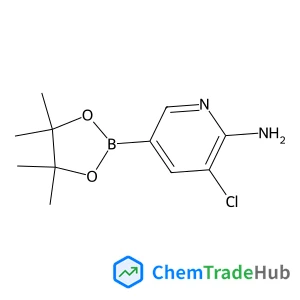
3-Chloro-5-(4,4,5,5-tetramethyl-1,3,2-dioxaborolan-2-yl)-2-pyridinamine
CAS Number:
1032758-99-8
Molecular Formula:
C11H16BClN2O2
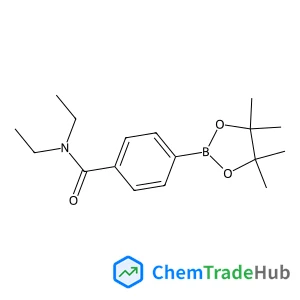
N,N-Diethyl-4-(4,4,5,5-tetramethyl-1,3,2-dioxaborolan-2-yl)benzamide
CAS Number:
325142-99-2
Molecular Formula:
C17H26BNO3
Recommended Suppliers





Disclaimer
This page provides academic journal information for reference and research purposes only. We are not affiliated with any journal publishers and do not handle publication submissions. For publication-related inquiries, please contact the respective journal publishers directly.
If you notice any inaccuracies in the information displayed, please contact us at support@chemtradehub.com. We will promptly review and address your concerns.