












Elucidating the activity of stepped Pt single crystals for oxygen reduction
Literature Information
Publication Date
2014-03-12
DOI
10.1039/C4CP00260A
Impact Factor
3.676
Authors
Aliaksandr S. Bandarenka, Heine A. Hansen, Jan Rossmeisl, Ifan E. L. Stephens
View Original
Abstract
The unexpectedly high measured activity of Pt[n(111) × (111)] and Pt[n(111) × (100)] stepped single crystal surfaces towards the oxygen reduction reaction (ORR) is explained utilizing the hydroxyl binding energy as the activity descriptor. Using this descriptor (estimated using experimental data obtained by different groups), a well-defined Sabatier-type volcano is observed for the activities measured for the Pt[n(111) × (111)] and Pt[n(111) × (100)] stepped single crystals, in remarkable agreement with earlier theoretical studies. We propose that the observed destabilisation of *OH species at these surfaces is due to the decreased solvation of the adsorbed hydroxyl intermediates on adjacent terrace sites.
Related Literature
The effects of lattice strain, dislocations, and microstructure on the transport properties of YSZ films
George F. Harrington, Andrea Cavallaro, Stephen J. Skinner
2017-05-19
Paper
DOI: 10.1039/C7CP02017A
Gate-controlled heat generation in ZnO nanowire FETs
Andrea Pescaglini, Davide Cammi, Carsten Ronning, Daniela Iacopino
2017-05-02
Paper
DOI: 10.1039/C7CP01356F
Methane adsorption in ADOR zeolites: a combined experimental and DFT/CC study
M. Rubeš, M. Trachta, E. Koudelková, R. Bulánek, V. Kasneryk, O. Bludský
2017-06-05
Paper
DOI: 10.1039/C7CP02315D
Vibronic quantized tunneling controlled photoinduced electron transfer in an organic solar cell subjected to an external electric field
Peng Song, Yuanzuo Li, Fengcai Ma
2017-05-30
Paper
DOI: 10.1039/C7CP02157G
Does Z′ equal 1 or 2? Enhanced powder NMR crystallography verification of a disordered room temperature crystal structure of a p38 inhibitor for chronic obstructive pulmonary disease
Cory M. Widdifield, Sten O. Nilsson Lill, Anders Broo, Maria Lindkvist, Anna Pettersen, Anna Svensk Ankarberg, Peter Aldred, Staffan Schantz, Lyndon Emsley
2017-06-02
Paper
DOI: 10.1039/C7CP02349A
3T1R model and tuning of thermoluminescence intensity by optimization of dopant concentration in monoclinic Gd2O3:Er3+;Yb3+ co-doped phosphor
Raunak Kumar Tamrakar, Kanchan Upadhyay, D. P. Bisen
2017-05-09
Paper
DOI: 10.1039/C7CP01424D
Competition between stability of icosahedral and cuboctahedral morphologies in bimetallic nanoalloys
Hamed Akbarzadeh, Mohsen Abbaspour, Esmat Mehrjouei
2017-05-11
Paper
DOI: 10.1039/C7CP01081H
Ionic hydration-induced evolution of decane–water interfacial tension
Boyao Wen, Chengzhen Sun, Bofeng Bai
2017-05-08
Paper
DOI: 10.1039/C7CP01826F
Competing pathways in the near-UV photochemistry of acetaldehyde
Benjamin W. Toulson, Kara M. Kapnas, Dmitry A. Fishman, Craig Murray
2017-05-24
Paper
DOI: 10.1039/C7CP02573D
You might also like
Compound Q&A
What are the main uses of 1-(3-Aminophenyl)-3-[(3R)-1-(3,3-dimethyl-2-oxobutyl)-2-oxo-5-(2-pyridinyl)-2,3-dihydro-1H-1,4-benzodiazepin-3-yl]urea (CAS: 155412-88-7)?
This compound is mainly used as an intermediate in the synthesis of antipsychoti...
155412-88-71-(3-Aminophenyl)-3-...
Compound Q&A
How should waste containing 1-(D-Ribofuranosyl)-1,4-dihydro-3-pyridinecarboxamide (CAS: 19132-12-8) be handled?
Waste containing 1-(D-Ribofuranosyl)-1,4-dihydro-3-pyridinecarboxamide (CAS: 191...
19132-12-81-(D-Ribofuranosyl)-...
Compound Q&A
What regulatory guidelines apply to 2-Methyl-2-propanyl 3-bromo-3-(hydroxymethyl)-1-azetidinecarboxylate (CAS: 2007919-81-3)?
2-Methyl-2-propanyl 3-bromo-3-(hydroxymethyl)-1-azetidinecarboxylate (CAS: 20079...
2007919-81-32-Methyl-2-propanyl ...
Compound Q&A
What is N-(4-Chloro-2-pyridinyl)acetamide (CAS: 245056-66-0)?
N-(4-Chloro-2-pyridinyl)acetamide (CAS: 245056-66-0) is a chemical compound with...
245056-66-0N-(4-Chloro-2-pyridi...
Compound Q&A
What is 5-Chloro-2-hydroxybenzoic acid (CAS: 321-14-2)?
5-Chloro-2-hydroxybenzoic acid, also known as 5-chlorosalicylic acid, is an arom...
321-14-25-Chloro-2-hydroxybe...
Compound Q&A
What precautions should be taken when handling 1,1-Dichloro-1-fluoroethane (CAS: 1717-00-6)?
When handling 1,1-Dichloro-1-fluoroethane (CAS: 1717-00-6), it is important to u...
1717-00-61,1-Dichloro-1-fluor...
Compound Q&A
What are the physical and chemical properties of Fmoc-(2S,3R)-3-phenylpyrrolidine-2-carboxylic acid (CAS: 281655-32-1)?
Fmoc-(2S,3R)-3-phenylpyrrolidine-2-carboxylic acid is a white crystalline solid ...
281655-32-1Fmoc-(2S,3R)-3-pheny...
Compound Q&A
What are the main uses of 4-Amino-5-bromo-2-pyridinecarboxylic acid (CAS: 1363381-01-4)?
4-Amino-5-bromo-2-pyridinecarboxylic acid is primarily used as a precursor in th...
1363381-01-44-Amino-5-bromo-2-py...
Compound Q&A
What precautions should be taken when handling (S)-tert-butyl 2-((2-(4-bromophenyl)-2-oxoethyl)carbamoyl)pyrrolidine-1-carboxylate (CAS: 1007881-98-2)?
Handling this compound should be done with personal protective equipment (PPE) i...
1007881-98-2(S)-tert-butyl 2-((2...
Compound Q&A
What precautions should be taken when handling 8-bromo-2,2-dimethyl-3,4-dihydro-2H-1,4-benzoxazin-3-one (CAS: 688363-73-7)?
When handling 8-bromo-2,2-dimethyl-3,4-dihydro-2H-1,4-benzoxazin-3-one, use prop...
688363-73-78-bromo-2,2-dimethyl...
Source Journal
Physical Chemistry Chemical Physics

CiteScore:
5.5
Self-citation Rate:
10.3%
Articles per Year:
3036
Physical Chemistry Chemical Physics (PCCP) is an international journal co-owned by 19 physical chemistry and physics societies from around the world. This journal publishes original, cutting-edge research in physical chemistry, chemical physics and biophysical chemistry. To be suitable for publication in PCCP, articles must include significant innovation and/or insight into physical chemistry; this is the most important criterion that reviewers and Editors will judge against when evaluating submissions. The journal has a broad scope and welcomes contributions spanning experiment, theory, computation and data science. Topical coverage includes spectroscopy, dynamics, kinetics, statistical mechanics, thermodynamics, electrochemistry, catalysis, surface science, quantum mechanics, quantum computing and machine learning. Interdisciplinary research areas such as polymers and soft matter, materials, nanoscience, energy, surfaces/interfaces, and biophysical chemistry are welcomed if they demonstrate significant innovation and/or insight into physical chemistry. Joined experimental/theoretical studies are particularly appreciated when complementary and based on up-to-date approaches.
Recommended Compounds
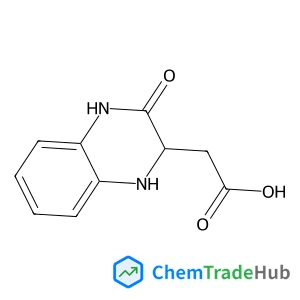
(3-Oxo-1,2,3,4-tetrahydro-2-quinoxalinyl)acetic acid
CAS Number:
136584-14-0
Molecular Formula:
C10H10N2O3

Recommended Suppliers





Disclaimer
This page provides academic journal information for reference and research purposes only. We are not affiliated with any journal publishers and do not handle publication submissions. For publication-related inquiries, please contact the respective journal publishers directly.
If you notice any inaccuracies in the information displayed, please contact us at support@chemtradehub.com. We will promptly review and address your concerns.