












Inside front cover
Literature Information
Publication Date
DOI
10.1039/C4BM90036G
Impact Factor
6.843
Authors
View Original
Abstract
A graphical abstract is available for this content
Related Literature
Multicolor mechanochromism of a multinetwork elastomer that can distinguish between low and high stress
Haoxiang Wang, Lei Shen
2021-06-11
Paper
DOI: 10.1039/D1PY00637A
The synthesis of thermoresponsive POSS-based eight-arm star poly(N-isopropylacrylamide): A comparison between Z-RAFT and R-RAFT strategies
Bo Pang, Rui Liu, Guang Han, Wei Wang
2021-03-02
Paper
DOI: 10.1039/D1PY00087J
Biobased polymers derived from itaconic acid bearing clickable groups with potent antibacterial activity and negligible hemolytic activity
A. Funes, R. Cuervo-Rodríguez
2021-05-05
Paper
DOI: 10.1039/D1PY00098E
Hierarchical ordering and multilayer structure of poly(ε-caprolactone) end-functionalized by a liquid crystalline unit: role of polymer crystallization
Wenqing Xu, Xing Li, Wenhua Yuan, Jian Zhou
2021-07-05
Paper
DOI: 10.1039/D1PY00702E
Polymerizability of exomethylene monomers based on adamantyl frameworks
Raita Goseki, Shogo Miyai, Satoshi Uchida, Takashi Ishizone
2021-06-02
Paper
DOI: 10.1039/D1PY00500F
Conjugated microporous polymers using a copper-catalyzed [4 + 2] cyclobenzannulation reaction: promising materials for iodine and dye adsorption
Saleh Al-Mousawi
2021-03-17
Paper
DOI: 10.1039/D1PY00193K
Facile construction of noncovalent graft copolymers with triple stimuli-responsiveness for triggered drug delivery
Lei Xu, Hairong Wang, Hongrui Tian, Mingzu Zhang, Jinlin He, Peihong Ni
2021-03-12
Paper
DOI: 10.1039/D1PY00135C
Hollow microspherical carbazole-based conjugated polymers by photoinduced step-growth polymerization
Tugba Celiker, Ali Suerkan, Sinem Altinisik, Mert Akgun, Sermet Koyuncu
2021-07-21
Paper
DOI: 10.1039/D1PY00822F
A dual stimuli responsive natural polymer based superabsorbent hydrogel engineered through a novel cross-linker
Safiya Nisar, Sonal Chauhan, Gurmeet Singh, Virender Singh, Sunita Rattan
2021-03-23
Paper
DOI: 10.1039/D0PY01729A
You might also like
Compound Q&A
What industries use (1R,3S)-1,3-Cyclopentanediol (CAS: 16326-97-9)?
(1R,3S)-1,3-Cyclopentanediol finds applications in various industries. In the ph...
16326-97-9(1R,3S)-1,3-Cyclopen...
Compound Q&A
What precautions should be taken when handling N'-[4-(Dimethylamino)phenyl]-N,N-dimethyl-1,4-benzenediamine (CAS: 637-31-0)?
When handling N'-[4-(Dimethylamino)phenyl]-N,N-dimethyl-1,4-benzenediamine, it i...
637-31-0N'-[4-(Dimethylamino...
Compound Q&A
Are there alternatives to 5-(2,4-Difluorophenyl)-2-methoxypyrimidine (CAS: 1352318-16-1) in synthesis?
There are several alternatives to 5-(2,4-Difluorophenyl)-2-methoxypyrimidine in ...
1352318-16-15-(2,4-Difluoropheny...
Compound Q&A
What regulatory guidelines apply to 1-(3-Methoxyphenoxy)propan-2-ol (CAS: 382141-68-6)?
1-(3-Methoxyphenoxy)propan-2-ol (CAS: 382141-68-6) must comply with the Globally...
382141-68-61-(3-Methoxyphenoxy)...
Compound Q&A
Is Tetrodotoxin Citrate (CAS: 18660-81-6) safe?
Tetrodotoxin Citrate is extremely dangerous and should be handled with extreme c...
18660-81-6Tetrodotoxin Citrate
Compound Q&A
What are the main uses of 2-Methyl-2-propanyl [(1R,3S)-3-hydroxycyclopentyl]carbamate (CAS: 225641-84-9)?
2-Methyl-2-propanyl [(1R,3S)-3-hydroxycyclopentyl]carbamate (CAS: 225641-84-9) i...
225641-84-92-Methyl-2-propanyl ...
Compound Q&A
How should waste containing 4-(2-Hydroxyhexafluoroisopropyl)Benzoic Acid (CAS: 16261-80-6) be handled?
Waste containing 4-(2-Hydroxyhexafluoroisopropyl)Benzoic Acid (CAS: 16261-80-6) ...
16261-80-64-(2-Hydroxyhexafluo...
Compound Q&A
How is 2-Methyl-2-proanyl {(2S)-1-[(benzyloxy)amino]-3-hydroxy-3-methyl-1-oxo-2-butanyl}carbamate (CAS: 102507-19-7) typically synthesized?
2-Methyl-2-proanyl {(2S)-1-[(benzyloxy)amino]-3-hydroxy-3-methyl-1-oxo-2-butanyl...
102507-19-72-Methyl-2-propanyl ...
Compound Q&A
What is Benzeneethanamine, α-ethyl-, hydrochloride (1:1) (CAS: 20735-15-3)?
Benzeneethanamine, α-ethyl-, hydrochloride (1:1) is an organic compound with the...
20735-15-3Benzeneethanamine, α...
Compound Q&A
Are there alternatives to 3-{(E)-[4-(Dimethylamino)phenyl]diazenyl}benzoic acid (CAS: 20691-84-3) in synthesis?
In the synthesis of compounds similar to 3-{(E)-[4-(Dimethylamino)phenyl]diazeny...
20691-84-33-{(E)-[4-(Dimethyla...
Source Journal
Biomaterials Science

CiteScore:
11.5
Self-citation Rate:
3.4%
Articles per Year:
492
Biomaterials Science is an international high impact journal exploring the science of biomaterials and their translation towards clinical use. Its scope encompasses new concepts in biomaterials design, studies into the interaction of biomaterials with the body, and the use of materials to answer fundamental biological questions. Papers do not necessarily need to report a new biomaterial but should provide novel insight into the biological applications of the biomaterial. Articles that primarily focus on demonstrating novel materials chemistry and bring a molecular picture to bear on a given material’s suitability as a biomaterial are more suited to our companion journal, Journal of Materials Chemistry B. Biomaterials Science publishes primary research and review-type articles in the following areas: molecular design of biomaterials, including translation of emerging chemistries to biomaterials science of cells and materials at the nanoscale and microscale materials as model systems for stem cell and human biology materials for tissue engineering and regenerative medicine (Nano)materials and (nano)systems for therapeutic delivery interactions at the biointerface biologically inspired and biomimetic materials, including bio-inspired self-assembly systems and cell-inspired synthetic tools next-generation biomaterials tools and methods
Recommended Compounds

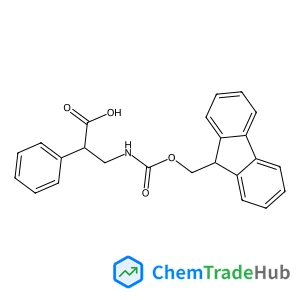
(S)-3-((((9H-Fluoren-9-yl)methoxy)carbonyl)amino)-2-phenylpropanoic acid
CAS Number:
1217663-60-9
Molecular Formula:
C24H21NO4
![6-Bromo-2,3-dihydro-1H-pyrido[2,3-b][1,4]oxazine structure](https://static.chemtradehub.com/structs/120/1203499-17-5-b4d1.webp "6-Bromo-2,3-dihydro-1H-pyrido[2,3-b][1,4]oxazine structure")
6-Bromo-2,3-dihydro-1H-pyrido[2,3-b][1,4]oxazine
CAS Number:
1203499-17-5
Molecular Formula:
C7H7BrN2O
Recommended Suppliers





Disclaimer
This page provides academic journal information for reference and research purposes only. We are not affiliated with any journal publishers and do not handle publication submissions. For publication-related inquiries, please contact the respective journal publishers directly.
If you notice any inaccuracies in the information displayed, please contact us at support@chemtradehub.com. We will promptly review and address your concerns.