











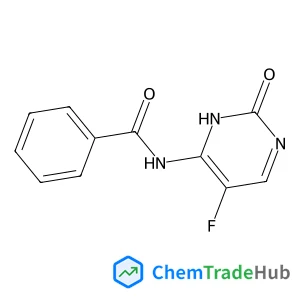
N-(5-Fluoro-2-oxo-2,3-dihydro-4-pyrimidinyl)benzamide
CAS Number:
10357-07-0
Molecular Formula:
C11H8FN3O2
S. L. Burrs, M. Bhargava, N. Mechulan, P. Hendershot, H. Yamaguchi, C. Gomes, E. S. McLamore
Hydrogels have become increasingly popular as immobilization materials for cells, enzymes and proteins for biosensing applications. Enzymatic biosensors that utilize hydrogel as an encapsulant have shown improvements over other immobilization techniques such as cross linking and covalent bonding. However, to date there are no studies which directly compare multiple hydrogel–graphene nanocomposites using the same enzyme and test conditions. This study compares the performance of four different hydrogels used as protein encapsulants in a mediator-free biosensor based on graphene–nanometal–enzyme composites. Alcohol oxidase (AOx) was encapsulated in chitosan poly-N-isopropylacrylamide (PNIPAAM), silk fibroin or cellulose nanocrystals (CNC) hydrogels, and then spin coated onto a nanoplatinum–graphene modified electrode. The transduction mechanism for the biosensor was based on AOx-catalyzed oxidation of methanol to produce hydrogen peroxide. To isolate the effect(s) of stimulus response on biosensor behavior, all experiments were conducted at 25 °C and pH 7.10. Electroactive surface area (ESA), electrochemical impedance spectroscopy (EIS), sensitivity to methanol, response time, limit of detection, and shelf life were measured for each bionanocomposite. Chitosan and PNIPAAM had the highest sensitivity (0.46 ± 0.2 and 0.3 ± 0.1 μA mM−1, respectively) and electroactive surface area (0.2 ± 0.06 and 0.2 ± 0.02 cm2, respectively), as well as the fastest response time (4.3 ± 0.8 and 4.8 ± 1.1 s, respectively). Silk and CNC demonstrated lower sensitivity (0.09 ± 0.02 and 0.15 ± 0.03 μA mM−1, respectively), lower electroactive surface area (0.12 ± 0.02 and 0.09 ± 0.03 cm2, respectively), and longer response time (8.9 ± 2.1 and 6.3 ± 0.8 s, respectively). The high porosity of chitosan, PNIPAAM, and silk gels led to excellent transport, which was significantly better than CNC bionanocomposites. Electrochemical performance of CNC bionanocomposites were relatively poor, which may be linked to poor gel stability. The differences between the Chitosan/PNIPAAM group and the Silk/CNC group were statistically significant (p < 0.05) based on ANOVA. Each of these composites was within the range of other published devices in the literature, while some attributes were significantly improved (namely response time and shelf life). The main advantages of these hydrogel composites over other devices is that only one enzyme is required, all materials are non-toxic, the sensor does not require mediators/cofactors, and the shelf life and response time are significantly improved over other devices.
Ying Chen, Xin Gu, Cha-Geng Nie, Zhi-Yuan Jiang, Zhao-Xiong Xie, Chang-Jian Lin
DOI: 10.1039/B504911C
Hiroyuki Katayama, Hiroshi Yari, Masaki Tanaka, Fumiyuki Ozawa
DOI: 10.1039/B504436G
Maurilio Galletta, Sebastiano Campagna, Manuel Quesada, Gilles Ulrich, Raymond Ziessel
DOI: 10.1039/B507196H
Dirk Jan V. C. van Steenis, Olivier R. P. David, Gino P. F. van Strijdonck, Jan H. van Maarseveen, Joost N. H. Reek
DOI: 10.1039/B507776A
DOI: 10.1039/B502849N
Mei-Ling Hong, Shun-Jun Ji, Yong-Chua Teo
DOI: 10.1039/B507768K
Robin B. Bedford, Duncan W. Bruce, Robert M. Frost, Michael Hird
DOI: 10.1039/B507133J
Tsutomu Kimura, Toshiaki Murai
DOI: 10.1039/B507755A
D. Krishna Kumar, D. Amilan Jose, Amitava Das, Parthasarathi Dastidar
DOI: 10.1039/B506941F
Waste containing N-Methoxy-N-methyl-1,3-thiazole-5-carboxamide (CAS: 898825-89-3...
N-(4-Biphenylyl)dibenzo[b,d]furan-4-amine should be stored in a tightly sealed c...
The market for 3-Acetamido-5-amino-2,4,6-triiodobenzoic acid (CAS: 1713-07-1) is...
Benzyl 2-O-acetyl-3,4,6-tri-O-benzyl-beta-D-galactopyranoside (CAS: 61820-03-9) ...
2-Ethylpiperazine dihydrochloride (CAS: 438050-52-3) is regulated under the Glob...
1,1'-[1,3-Phenylenebis(methylene)]bis(3-methyl-1H-pyrrole-2,5-dione) (CAS: 11946...
Several alternatives can be used in the synthesis of 5-Fluoro-2-(1-pyrrolidinyl)...
Proper personal protective equipment (PPE) must be worn when handling this compo...
When handling 6-Bromoimidazo[1,2-a]pyridin-8-amine, it is important to wear appr...
Alternatives to (2S,4R)-4-(4-Nitrobenzyl)pyrrolidine-2-carboxylic acid hydrochlo...

Analyst publishes analytical and bioanalytical research that reports premier fundamental discoveries and inventions, and the applications of those discoveries, unconfined by traditional discipline barriers.

![[5-fluoro-2-(morpholine-4-carbonyl)phenyl]boronic acid structure](https://static.chemtradehub.com/structs/121/1217501-26-2-505c.webp "[5-fluoro-2-(morpholine-4-carbonyl)phenyl]boronic acid structure")
![2-Methylbenzo[h]quinoline structure](https://static.chemtradehub.com/structs/605/605-88-9-ac43.webp "2-Methylbenzo[h]quinoline structure")






