












A novel molecularly imprinted chitosan–acrylamide, graphene, ferrocene composite cryogel biosensor used to detect microalbumin
Literature Information
Publication Date
2014-09-22
DOI
10.1039/C4AN01000K
Impact Factor
4.616
Authors
View Original
Abstract
A novel highly sensitive and selective molecularly imprinted polymer (MIP) cryogel biosensor for determination of microalbumin in urine samples was fabricated. The MIP gel was prepared based on the graft copolymerization of acrylamide with N,N′-methylenebisacrylamide on chitosan using human serum albumin (HSA) as the template. The sub-zero polymerization allowed the solvent to form ice crystals and left a macroporous cryogel structure when it was thawed. After removing the template, the specific imprinted surface on cryogel pore walls was used to detect HSA via a redox mediator (ferrocene), entrapped in the cryogel, using differential pulse voltammetry (DPV). The electrochemical detection was improved by the presence of graphene that has been composited within the polymer. For determination of albumin, the fabricated MIP cryogel biosensor showed a high sensitivity with a wide linear range of 1.0 × 10⁻⁴ to 1.0 × 101 mg L−1 and a low limit of detection of 5.0 × 10⁻⁵ mg L−1 (S/N = 3). The sensor also provided a very good reusability, i.e., the sensitivity remained >90% after 9 cycles of binding–rewashing (18 analyses per cycle), while the sensitivity only decreased to 90% after 6 weeks of storage at room temperature. The biosensor also showed a good selectivity, both against bovine serum albumin (BSA) and some common possible interfering compounds normally present in urine (ascorbic acid, uric acid, urea, sodium, chloride, potassium and creatinine). The excellent performance of the biosensor was confirmed by analyzing microalbumin in urine samples, and results were in good agreement with those obtained by the standard immunoturbidimetric method (P > 0.05).
Related Literature
Persistent homology analysis of ion aggregations and hydrogen-bonding networks
2018-04-27
Paper
DOI: 10.1039/C8CP01552J
A drastic influence of the anion nature and concentration on high pressure intrusion–extrusion of electrolyte solutions in Silicalite-1
A. Ryzhikov, H. Nouali, T. J. Daou, J. Patarin
2018-02-01
Paper
DOI: 10.1039/C7CP06520E
The structure–electrochemical property relationship of quinone electrodes for lithium-ion batteries
Licheng Miao, Luojia Liu, Zhenfeng Shang, Yixin Li, Yong Lu, Fangyi Cheng, Jun Chen
2018-04-17
Paper
DOI: 10.1039/C8CP00597D
Influence of the anion on the properties of ionic liquid mixtures: a molecular dynamics study
Renata Costa, Carlos M. Pereira, M. Natália D. S. Cordeiro
2018-05-17
Paper
DOI: 10.1039/C8CP01541D
All-atom molecular dynamics simulations of spin labelled double and single-strand DNA for EPR studies
C. Prior, L. Danilāne, V. S. Oganesyan
2018-04-16
Paper
DOI: 10.1039/C7CP08625C
Effects of 1-hexanol on C12E10 micelles: a molecular simulations and light scattering study
Sampsa Vierros, Maria Sammalkorpi
2018-01-31
Paper
DOI: 10.1039/C7CP07511A
Pressure-induced emission band separation of the hybridized local and charge transfer excited state in a TPE-based crystal
Xuedan Liu, Aisen Li, Weiqing Xu, Zhiyong Ma, Xinru Jia
2018-04-28
Paper
DOI: 10.1039/C8CP02096E
Use multiscale simulation to explore the effects of the homodimerizations between different conformation states on the activation and allosteric pathway for the μ-opioid receptor
Xi Zhang, Yuan Yuan, Longrong Wang, Yanzhi Guo, Menglong Li, Chuan Li, Xuemei Pu
2018-04-19
Paper
DOI: 10.1039/C8CP02016G
DNA triplex structure, thermodynamics, and destabilisation: insight from molecular simulations
Belinda J. Boehm, Charles Whidborne, Alexander L. Button, Tara L. Pukala, David M. Huang
2018-05-04
Paper
DOI: 10.1039/C8CP02385A
Phonon transport in Janus monolayer MoSSe: a first-principles study
2018-02-15
Paper
DOI: 10.1039/C8CP00350E
You might also like
Compound Q&A
What precautions should be taken when handling 2-Chloro-1,2-bis(4-methylphenyl)ethanone (CAS: 71193-32-3)?
When handling 2-Chloro-1,2-bis(4-methylphenyl)ethanone (CAS: 71193-32-3), it is ...
71193-32-32-Chloro-1,2-bis(4-m...
Compound Q&A
What industries use 4-Ethoxy-3-(5-methyl-4-oxo-7-propyl-1,4-dihydroimidazo[5,1-f][1,2,4]triazin-2-yl)benzenesulfonyl chloride (CAS: 224789-26-8)?
4-Ethoxy-3-(5-methyl-4-oxo-7-propyl-1,4-dihydroimidazo[5,1-f][1,2,4]triazin-2-yl...
224789-26-84-Ethoxy-3-(5-methyl...
Compound Q&A
How should Methyl 3-Oxo-4-Androsten-17-Carboxylate (CAS: 2681-55-2) be stored?
Methyl 3-Oxo-4-Androsten-17-Carboxylate (CAS: 2681-55-2) should be stored in a c...
2681-55-2Methyl 3-Oxo-4-Andro...
Compound Q&A
What are the main uses of (R)-3-Amino-4-(3-hexylphenylamino)-4-oxobutylphosphonic acid (CAS: 909725-61-7)?
(R)-3-Amino-4-(3-hexylphenylamino)-4-oxobutylphosphonic acid is primarily used i...
909725-61-7(R)-3-Amino-4-(3-hex...
Compound Q&A
What regulatory guidelines apply to 2-Methyl-2-propanyl 3-amino-3-carbamoyl-1-azetidinecarboxylate (CAS: 1254120-14-3)?
2-Methyl-2-propanyl 3-amino-3-carbamoyl-1-azetidinecarboxylate (CAS: 1254120-14-...
1254120-14-32-Methyl-2-propanyl ...
Compound Q&A
Are there alternatives to (E)-4-(tert-Butoxy)-4-oxobut-2-enoic acid (CAS: 135355-96-3) in synthesis?
There are alternative reagents that can be used in synthesis instead of (E)-4-(t...
135355-96-3(E)-4-(tert-Butoxy)-...
Compound Q&A
What are the physical and chemical properties of [2-(3-Chlorophenyl)-1,3-thiazol-4-yl]methanol (CAS: 121202-20-8)?
[2-(3-Chlorophenyl)-1,3-thiazol-4-yl]methanol (CAS: 121202-20-8) is a crystallin...
121202-20-8[2-(3-Chlorophenyl)-...
Compound Q&A
What is the market or research trend for Methyl (2S)-[(4S)-2,2-dimethyl-1,3-dioxolan-4-yl]{[(4-methylphenyl)sulfonyl]oxy}acetate (CAS: 166249-17-8)?
The market and research trends for Methyl (2S)-[(4S)-2,2-dimethyl-1,3-dioxolan-4...
166249-17-8Methyl (2S)-[(4S)-2,...
Compound Q&A
What is the market or research trend for 1-Bromo-2-isocyanatoethane (CAS: 42865-19-0)?
The market for 1-Bromo-2-isocyanatoethane (CAS: 42865-19-0) is driven by its use...
42865-19-01-Bromo-2-isocyanato...
Compound Q&A
What are the main uses of 4-Nitro-D-phenylalanine hydrochloride (CAS: 147065-06-3)?
4-Nitro-D-phenylalanine hydrochloride (CAS: 147065-06-3) is primarily used in re...
147065-06-34-Nitro-D-phenylalan...
Source Journal
Analyst

CiteScore:
7.8
Self-citation Rate:
5.6%
Articles per Year:
653
Analyst publishes analytical and bioanalytical research that reports premier fundamental discoveries and inventions, and the applications of those discoveries, unconfined by traditional discipline barriers.
Recommended Compounds
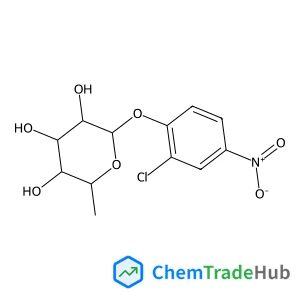
2-Chloro-4-nitrophenyl 6-deoxy-alpha-L-galactopyranoside
CAS Number:
157843-41-9
Molecular Formula:
C12H14ClNO7
Recommended Suppliers



Disclaimer
This page provides academic journal information for reference and research purposes only. We are not affiliated with any journal publishers and do not handle publication submissions. For publication-related inquiries, please contact the respective journal publishers directly.
If you notice any inaccuracies in the information displayed, please contact us at support@chemtradehub.com. We will promptly review and address your concerns.