












Influence of the anion on the properties of ionic liquid mixtures: a molecular dynamics study
Literature Information
Publication Date
2018-05-17
DOI
10.1039/C8CP01541D
Impact Factor
3.676
Authors
Renata Costa, Carlos M. Pereira, M. Natália D. S. Cordeiro
View Original
Abstract
Mixing of ionic liquids provides new opportunities for their tuning, enabling the applications of ionic liquid mixtures to expand. At the same time, the genesis of the fundamental properties of ionic liquid mixtures is still poorly understood. In this study we carried out a molecular dynamics simulation of binary mixtures of 1-buthyl-3-methylimidazolium hexafluorophosphate, 1-buthyl-3-methylimidazolium bis(trifluoromethylsulfonyl)imide, and 1-buthyl-3-methylimidazolium tris(perfluoroethyl)trifluorophosphate ([C4mim][PF6] + [C4mim][NTf2], [C4mim][PF6] + [C4mim][FAP], [C4mim][FAP] + [C4mim][NTf2]) in a wide concentration range at 303.15 K and complemented it with quantum mechanical calculations. Three pure ionic liquids underwent the same kind of analysis for comparison purposes. We found that the addition of the [FAP]−–anion to a mixture enhances the segregation of non-polar domains and weakens the hydrogen-bond network. The H-bonds in the studied mixtures are rather weak, as follows from QTAIM analysis, with the rarest occurrence for the [FAP]−–anion. The competition of two anions in the mixtures for the most acidic hydrogen of the 1-butyl-3-methylimidazolium cation is reported. In most of the cases, the smaller anion ([PF6]− or [NTf2]−) with stronger charge concentration displaces the bigger one ([NTf2]− or [FAP]−) from the preferred coordination site. The existing nano-segregation in some mixtures notably slows down ion diffusion. Our results show that the differences in anion size, shape and nature are the main reasons for nano-segregation and the non-ideal behavior of ionic liquid mixtures.
Related Literature
Controlled release of gentamicin from gelatin/genipin reinforced beta-tricalcium phosphate scaffold for the treatment of osteomyelitis
Qingchun Zhang, Weiping Ren, Xiang Yi, Zubin Zhou, Xiaochun Peng, Meidong Lang
2013-04-30
Paper
DOI: 10.1039/C3TB20261E
A binary PMMA/PVDF blend film modified substrate enables a superior lithium metal anode for lithium batteries
Xiaosong Xiong, Ruoyu Zhi, Qi Zhou, Wenqi Yan, Yusong Zhu, Yuhui Chen, Lijun Fu, Nengfei Yu, Yuping Wu
2021-05-11
Communication
DOI: 10.1039/D1MA00121C
What is special about silicon in functionalised organic semiconductors?
Micai Benford, Yang Song, Sean R. Parkin
2021-07-13
Paper
DOI: 10.1039/D1MA00447F
Silver quasi-nanoparticles: bridging the gap between molecule-like clusters and plasmonic nanoparticles
Fatima Douma, Louwanda Lakiss, Oleg I. Lebedev, Julien Cardin, Krassimir L. Kostov, Jaafar El Fallah, Valentin Valtchev, Mohamad El-Roz
2021-06-30
Paper
DOI: 10.1039/D1MA00382H
Nontoxic photoluminescent tin oxide nanoparticles for cell imaging: deep eutectic solvent mediated synthesis, tuning and mechanism
Linmariya Devassy Koonathan, Suman Neogy, Anil K. Debnath, Soumyakanti Adhikari
2021-05-10
Paper
DOI: 10.1039/D1MA00042J
Engineering poly(lactic-co-glycolic acid)/calcium carbonate microspheres with controllable topography and their cell response
2013-05-30
Paper
DOI: 10.1039/C3TB20284D
Transfer hydrogenation of levulinic acid under hydrothermal conditions catalyzed by sulfate as a temperature-switchable base
Daniel Kopetzki, Markus Antonietti
2010-02-16
Paper
DOI: 10.1039/B924648G
A synergistic approach to achieving the high thermoelectric performance of La-doped SnTe using resonance state and partial band convergence
Srikanth Mandava, Ranita Basu, B. Khasimsaheb, Sai Muthukumar V., Ajay Singh, S. Neeleshwar
2021-05-12
Paper
DOI: 10.1039/D1MA00155H
Retracted article: Hydrophilic hybrid materials with magnetism & NIR fluorescence via surface-initiated RAFT polymerization
Weiwei He, Lifen Zhang, Bing Han, Liang Cheng, Nianchen Zhou, Zhuang Liu, Zhenping Cheng
2013-05-24
Paper
DOI: 10.1039/C3TB20262C
You might also like
Compound Q&A
What precautions should be taken when handling 4-Methyl-6-(trifluoromethyl)quinoline (CAS: 40716-16-3)?
When handling 4-Methyl-6-(trifluoromethyl)quinoline (CAS: 40716-16-3), safety go...
40716-16-34-Methyl-6-(trifluor...
Compound Q&A
What is 4-(3,5-Difluorophenyl)aniline (CAS: 405058-00-6)?
4-(3,5-Difluorophenyl)aniline is an aromatic organic compound with the CAS numbe...
405058-00-64-(3,5-Difluoropheny...
Compound Q&A
How is 5-{[4-(Trifluoromethyl)phenyl]sulfanyl}-1,2,3-thiadiazole-4-carboxylic acid (CAS: 338982-07-3) typically synthesized?
5-{[4-(Trifluoromethyl)phenyl]sulfanyl}-1,2,3-thiadiazole-4-carboxylic acid can ...
338982-07-35-{[4-(Trifluorometh...
Compound Q&A
What is the market or research trend for 4-Benzylaniline hydrochloride (CAS: 6317-57-3)?
The market for 4-Benzylaniline hydrochloride (CAS: 6317-57-3) is steadily growin...
6317-57-34-Benzylaniline hydr...
Compound Q&A
Is [3-(Diethylsulfamoyl)phenyl]boronic acid (CAS: 871329-58-7) safe?
[3-(Diethylsulfamoyl)phenyl]boronic acid is generally considered safe when handl...
871329-58-7[3-(Diethylsulfamoyl...
Compound Q&A
What are the main uses of 3-Bromo-2,5-dimethoxyaniline (CAS: 115929-62-9)?
3-Bromo-2,5-dimethoxyaniline is mainly used in the pharmaceutical and chemical i...
115929-62-93-Bromo-2,5-dimethox...
Compound Q&A
What regulatory guidelines apply to N-Methyl-1-(5-methyl-1H-indol-3-yl)methanamine (CAS: 915922-67-7)?
N-Methyl-1-(5-methyl-1H-indol-3-yl)methanamine (CAS: 915922-67-7) is subject to ...
915922-67-7N-Methyl-1-(5-methyl...
Compound Q&A
What industries use Carbamic acid, N-[(5S)-5,6-diamino-6-oxohexyl]-, 1,1-dimethylethyl ester (CAS: 24828-96-4)?
This compound is primarily used in the pharmaceutical industry for the synthesis...
24828-96-4Carbamic acid, N-[(5...
Compound Q&A
How should 2-Methyl-2-propanyl [(1S,3R)-3-aminocyclohexyl]carbamate (CAS: 1298101-47-9) be stored?
2-Methyl-2-propanyl [(1S,3R)-3-aminocyclohexyl]carbamate (CAS: 1298101-47-9) sho...
1298101-47-92-Methyl-2-propanyl ...
Compound Q&A
What industries use Ethyl 2-bromo-4,4,4-trifluorobutanoate (CAS: 367-33-9)?
Ethyl 2-bromo-4,4,4-trifluorobutanoate (CAS: 367-33-9) is utilized in the pharma...
367-33-9Ethyl 2-bromo-4,4,4-...
Source Journal
Physical Chemistry Chemical Physics

CiteScore:
5.5
Self-citation Rate:
10.3%
Articles per Year:
3036
Physical Chemistry Chemical Physics (PCCP) is an international journal co-owned by 19 physical chemistry and physics societies from around the world. This journal publishes original, cutting-edge research in physical chemistry, chemical physics and biophysical chemistry. To be suitable for publication in PCCP, articles must include significant innovation and/or insight into physical chemistry; this is the most important criterion that reviewers and Editors will judge against when evaluating submissions. The journal has a broad scope and welcomes contributions spanning experiment, theory, computation and data science. Topical coverage includes spectroscopy, dynamics, kinetics, statistical mechanics, thermodynamics, electrochemistry, catalysis, surface science, quantum mechanics, quantum computing and machine learning. Interdisciplinary research areas such as polymers and soft matter, materials, nanoscience, energy, surfaces/interfaces, and biophysical chemistry are welcomed if they demonstrate significant innovation and/or insight into physical chemistry. Joined experimental/theoretical studies are particularly appreciated when complementary and based on up-to-date approaches.
Recommended Compounds
![[3-(2,6-Dichlorophenyl)-5-isopropyl-1,2-oxazol-4-yl]methanol structure](https://static.chemtradehub.com/structs/278/278597-30-1-5c79.webp "[3-(2,6-Dichlorophenyl)-5-isopropyl-1,2-oxazol-4-yl]methanol structure")
[3-(2,6-Dichlorophenyl)-5-isopropyl-1,2-oxazol-4-yl]methanol
CAS Number:
278597-30-1
Molecular Formula:
C13H13Cl2NO2
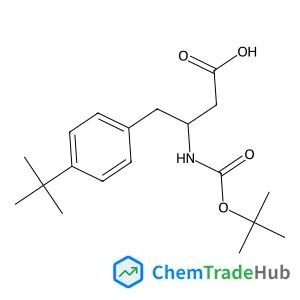
(S)-3-((tert-Butoxycarbonyl)amino)-4-(4-(tert-butyl)phenyl)butanoic acid
CAS Number:
403661-85-8
Molecular Formula:
C19H29NO4
Recommended Suppliers






Disclaimer
This page provides academic journal information for reference and research purposes only. We are not affiliated with any journal publishers and do not handle publication submissions. For publication-related inquiries, please contact the respective journal publishers directly.
If you notice any inaccuracies in the information displayed, please contact us at support@chemtradehub.com. We will promptly review and address your concerns.