












Persistent homology analysis of ion aggregations and hydrogen-bonding networks
Literature Information
Publication Date
2018-04-27
DOI
10.1039/C8CP01552J
Impact Factor
3.676
Authors
View Original
Abstract
Despite the great advancement of experimental tools and theoretical models, a quantitative characterization of the microscopic structures of ion aggregates and their associated water hydrogen-bonding networks still remains a challenging problem. In this paper, a newly-invented mathematical method called persistent homology is introduced, for the first time, to quantitatively analyze the intrinsic topological properties of ion aggregation systems and hydrogen-bonding networks. The two most distinguishable properties of persistent homology analysis of assembly systems are as follows. First, it does not require a predefined bond length to construct the ion or hydrogen-bonding network. Persistent homology results are determined by the morphological structure of the data only. Second, it can directly measure the size of circles or holes in ion aggregates and hydrogen-bonding networks. To validate our model, we consider two well-studied systems, i.e., NaCl and KSCN solutions, generated from molecular dynamics simulations. They are believed to represent two morphological types of aggregation, i.e., local clusters and extended ion networks. It has been found that the two aggregation types have distinguishable topological features and can be characterized by our topological model very well. Further, we construct two types of networks, i.e., O-networks and H2O-networks, for analyzing the topological properties of hydrogen-bonding networks. It is found that for both models, KSCN systems demonstrate much more dramatic variations in their local circle structures with a concentration increase. A consistent increase of large-sized local circle structures is observed and the sizes of these circles become more and more diverse. In contrast, NaCl systems show no obvious increase of large-sized circles. Instead a consistent decline of the average size of the circle structures is observed and the sizes of these circles become more and more uniform with a concentration increase. As far as we know, these unique intrinsic topological features in ion aggregation systems have never been pointed out before. More importantly, our models can be directly used to quantitatively analyze the intrinsic topological invariants, including circles, loops, holes, and cavities, of any network-like structures, such as nanomaterials, colloidal systems, biomolecular assemblies, among others. These topological invariants cannot be described by traditional graph and network models.
Related Literature
Anaerobic biodegradability of ionic liquid cations under denitrifying conditions
Jennifer Neumann, Olav Grundmann, Jorg Thöming, Michael Schulte, Stefan Stolte
2010-02-08
Paper
DOI: 10.1039/B918453H
What is special about silicon in functionalised organic semiconductors?
Micai Benford, Yang Song, Sean R. Parkin
2021-07-13
Paper
DOI: 10.1039/D1MA00447F
Earth-abundant non-toxic perovskite nanocrystals for solution processed solar cells
2021-06-01
Review Article
DOI: 10.1039/D1MA00245G
Plastic strain relaxation and alloy instability in epitaxial corundum-phase (Al,Ga)2O3 thin films on r-plane Al2O3
Marius Grundmann, Tillmann Stralka, Michael Lorenz, Susanne Selle, Christian Patzig, Thomas Höche
2021-05-11
Paper
DOI: 10.1039/D1MA00204J
Non-matrix matched calibration of major and minor concentrations of Zn and Cu in brass, aluminium and silicate glass using NIR femtosecond laser ablation inductively coupled plasma mass spectrometry
Qunzhou Bian, Carmen C. Garcia, Joachim Koch, Kay Niemax
2005-12-20
Paper
DOI: 10.1039/B513690C
Novel biocompatible cholinium-based ionic liquids—toxicity and biodegradability
Marija Petkovic, Jamie L. Ferguson, H. Q. Nimal Gunaratne, Rui Ferreira, Maria C. Leitão, Luís Paulo N. Rebelo
2010-02-09
Paper
DOI: 10.1039/B922247B
You might also like
Compound Q&A
What precautions should be taken when handling 4-Methyl-6-(trifluoromethyl)quinoline (CAS: 40716-16-3)?
When handling 4-Methyl-6-(trifluoromethyl)quinoline (CAS: 40716-16-3), safety go...
40716-16-34-Methyl-6-(trifluor...
Compound Q&A
What is 4-(3,5-Difluorophenyl)aniline (CAS: 405058-00-6)?
4-(3,5-Difluorophenyl)aniline is an aromatic organic compound with the CAS numbe...
405058-00-64-(3,5-Difluoropheny...
Compound Q&A
How is 5-{[4-(Trifluoromethyl)phenyl]sulfanyl}-1,2,3-thiadiazole-4-carboxylic acid (CAS: 338982-07-3) typically synthesized?
5-{[4-(Trifluoromethyl)phenyl]sulfanyl}-1,2,3-thiadiazole-4-carboxylic acid can ...
338982-07-35-{[4-(Trifluorometh...
Compound Q&A
What is the market or research trend for 4-Benzylaniline hydrochloride (CAS: 6317-57-3)?
The market for 4-Benzylaniline hydrochloride (CAS: 6317-57-3) is steadily growin...
6317-57-34-Benzylaniline hydr...
Compound Q&A
Is [3-(Diethylsulfamoyl)phenyl]boronic acid (CAS: 871329-58-7) safe?
[3-(Diethylsulfamoyl)phenyl]boronic acid is generally considered safe when handl...
871329-58-7[3-(Diethylsulfamoyl...
Compound Q&A
What are the main uses of 3-Bromo-2,5-dimethoxyaniline (CAS: 115929-62-9)?
3-Bromo-2,5-dimethoxyaniline is mainly used in the pharmaceutical and chemical i...
115929-62-93-Bromo-2,5-dimethox...
Compound Q&A
What regulatory guidelines apply to N-Methyl-1-(5-methyl-1H-indol-3-yl)methanamine (CAS: 915922-67-7)?
N-Methyl-1-(5-methyl-1H-indol-3-yl)methanamine (CAS: 915922-67-7) is subject to ...
915922-67-7N-Methyl-1-(5-methyl...
Compound Q&A
What industries use Carbamic acid, N-[(5S)-5,6-diamino-6-oxohexyl]-, 1,1-dimethylethyl ester (CAS: 24828-96-4)?
This compound is primarily used in the pharmaceutical industry for the synthesis...
24828-96-4Carbamic acid, N-[(5...
Compound Q&A
How should 2-Methyl-2-propanyl [(1S,3R)-3-aminocyclohexyl]carbamate (CAS: 1298101-47-9) be stored?
2-Methyl-2-propanyl [(1S,3R)-3-aminocyclohexyl]carbamate (CAS: 1298101-47-9) sho...
1298101-47-92-Methyl-2-propanyl ...
Compound Q&A
What industries use Ethyl 2-bromo-4,4,4-trifluorobutanoate (CAS: 367-33-9)?
Ethyl 2-bromo-4,4,4-trifluorobutanoate (CAS: 367-33-9) is utilized in the pharma...
367-33-9Ethyl 2-bromo-4,4,4-...
Source Journal
Physical Chemistry Chemical Physics

CiteScore:
5.5
Self-citation Rate:
10.3%
Articles per Year:
3036
Physical Chemistry Chemical Physics (PCCP) is an international journal co-owned by 19 physical chemistry and physics societies from around the world. This journal publishes original, cutting-edge research in physical chemistry, chemical physics and biophysical chemistry. To be suitable for publication in PCCP, articles must include significant innovation and/or insight into physical chemistry; this is the most important criterion that reviewers and Editors will judge against when evaluating submissions. The journal has a broad scope and welcomes contributions spanning experiment, theory, computation and data science. Topical coverage includes spectroscopy, dynamics, kinetics, statistical mechanics, thermodynamics, electrochemistry, catalysis, surface science, quantum mechanics, quantum computing and machine learning. Interdisciplinary research areas such as polymers and soft matter, materials, nanoscience, energy, surfaces/interfaces, and biophysical chemistry are welcomed if they demonstrate significant innovation and/or insight into physical chemistry. Joined experimental/theoretical studies are particularly appreciated when complementary and based on up-to-date approaches.
Recommended Compounds
![2-[(5Z,8Z,11Z,14Z)-5,8,11,14-Icosatetraen-1-yloxy]-1,3-propanediol structure](https://static.chemtradehub.com/structs/222/222723-55-9-0348.webp "2-[(5Z,8Z,11Z,14Z)-5,8,11,14-Icosatetraen-1-yloxy]-1,3-propanediol structure")
2-[(5Z,8Z,11Z,14Z)-5,8,11,14-Icosatetraen-1-yloxy]-1,3-propanediol
CAS Number:
222723-55-9
Molecular Formula:
C23H40O3
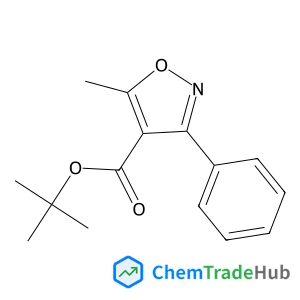
2-Methyl-2-propanyl 5-methyl-3-phenyl-1,2-oxazole-4-carboxylate
CAS Number:
211429-79-7
Molecular Formula:
C15H17NO3
Recommended Suppliers




Disclaimer
This page provides academic journal information for reference and research purposes only. We are not affiliated with any journal publishers and do not handle publication submissions. For publication-related inquiries, please contact the respective journal publishers directly.
If you notice any inaccuracies in the information displayed, please contact us at support@chemtradehub.com. We will promptly review and address your concerns.