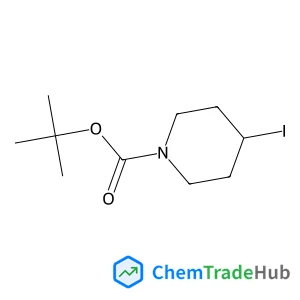
2-Methyl-2-propanyl 4-iodo-1-piperidinecarboxylate
CAS Number:
301673-14-3
Molecular Formula:
C10H18INO2
Zhe Wang, Min Guo, Gary A. Baker, Joseph R. Stetter, Lu Lin, Andrew J. Mason, Xiangqun Zeng
Current sensor devices for the detection of methane or natural gas emission are either expensive and have high power requirements or fail to provide a rapid response. This report describes an electrochemical methane sensor utilizing a non-volatile and conductive pyrrolidinium-based ionic liquid (IL) electrolyte and an innovative internal standard method for methane and oxygen dual-gas detection with high sensitivity, selectivity, and stability. At a platinum electrode in bis(trifluoromethylsulfonyl)imide (NTf2)-based ILs, methane is electro-oxidized to produce CO2 and water when an oxygen reduction process is included. The in situ generated CO2 arising from methane oxidation was shown to provide an excellent internal standard for quantification of the electrochemical oxygen sensor signal. The simultaneous quantification of both methane and oxygen in real time strengthens the reliability of the measurements by cross-validation of two ambient gases occurring within a single sample matrix and allows for the elimination of several types of random and systematic errors in the detection. We have also validated this IL-based methane sensor employing both conventional solid macroelectrodes and flexible microfabricated electrodes using single- and double-potential step chronoamperometry.
Yoshiteru Itagaki, Peng Wang, Nobuyuki Isamoto, Masaru Shiotani, Akinori Hasegawa, Magnus Jansson, Sten Lunell
DOI: 10.1039/B200437B
Lavina C. Snoek, Romano T. Kroemer, John P. Simons
DOI: 10.1039/B200059H
DOI: 10.1039/B111437A
J. D. Barr, A. J. Bell, D. O. Konn, J. Murrell, C. M. Timperley, M. J. Waters, P. Watts
DOI: 10.1039/B111192M
Luc Vereecken, Holger F. Bettinger, Jozef Peeters
DOI: 10.1039/B109452A
A. V. Larin, D. P. Vercauteren, C. Lamberti, S. Bordiga, A. Zecchina
DOI: 10.1039/B107242K
Aimo Rautiainen, Marina Lindblad, Leif B. Backman, Riikka L. Puurunen
DOI: 10.1039/B201168A
H. Vrielinck, F. Callens, P. Matthys
DOI: 10.1039/B110906P
Takashi Yamamoto, Tsunehiro Tanaka, Ryoji Kuma, Sosuke Suzuki, Fumiaki Amano, Yutaka Shimooka, Yoshiumi Kohno, Takuzo Funabiki, Satohiro Yoshida
DOI: 10.1039/B201120B
Waste containing (6-Bromo-2-naphthyl)oxy](dimethyl)(2-methyl-2-propanyl)silane (...
7-Fluoro-4-isoquinolinecarboxylic acid can be synthesized via a multi-step proce...
2,3,5,6-Tetrabromothieno[3,2-b]thiophene is a crystalline compound with a high m...
1-[4-(Benzylamino)-7,8-dihydro-5H-pyrano[4,3-d]pyrimidin-2-yl]-2-methyl-1H-indol...
The market for imidazo[5,1-d]-1,2,3,5-tetrazine-8-carboxylic acid, 3,4-dihydro-3...
3-(Triisopropylsilyl)propiolaldehyde is a synthetic organic compound with the CA...
6-Nitro-2H-1,4-benzoxazin-3(4H)-one (CAS: 81721-87-1) is subject to various regu...
Waste containing (3-Fluorophenyl)(4-{[(2-methyl-2-propanyl)oxy]carbonyl}-1-piper...
N,N'-4,4'-Biphenyldiyldiisonicotinamide is a white crystalline solid with a mole...
6-Bromo-8-fluoro-2-quinazolinol is primarily used in the pharmaceutical industry...

Analyst publishes analytical and bioanalytical research that reports premier fundamental discoveries and inventions, and the applications of those discoveries, unconfined by traditional discipline barriers.