













Which side-reactions compromise nitroxide mediated polymerization?
Literature Information
Publication Date
2013-05-16
DOI
10.1039/C3PY00534H
Impact Factor
5.582
Authors
Ganna Gryn'ova, Ching Yeh Lin, Michelle L. Coote
View Original
Abstract
The mechanism of the nitroxide mediated polymerization (NMP) is well understood, however less is known about the side-reactions that interfere and in certain cases severely compromise it. Experimental studies inevitably involve model fitting leading to at times contradictory conclusions as to which elementary side-reactions are behind the failure of a given NMP system. In the present work we use high-level quantum-chemical calculations to obtain the rate coefficients of the various side-reactions, both suggested previously and considered here for the first time, and first principles PREDICI kinetic simulations to identify the most deleterious side-reactions involved in the TEMPO, SG1 and DPAIO mediated polymerization of styrene, acrylate and methacrylate monomers. We show that the core mechanism for the thermal decomposition of alkoxyamines differs between the uni- and polymeric species, which often makes such experiments not suitable for modelling the NMP conditions. We also find that the main side-reaction responsible for the failure of TEMPO and SG1 in methacrylate homopolymerization is an intramolecular alkoxyamine decomposition (often referred to as ‘disproportionation’) via a Cope-type elimination, however in the case of SG1 the polymerization outcome is additionally affected by the equilibrium constant of alkoxyamine bond homolysis. On the basis of these findings, complemented by a thorough analysis of available experimental data, we define guidelines for minimising occurrence of the side-reactions and thus improving NMP. Finally, the accurate first principles rate parameters reported in this study should prove useful for subsequent kinetic modelling oriented at optimising different polymerization conditions.
Related Literature
Preparation of active and robust palladium nanoparticlecatalysts stabilized by diamine-functionalized mesoporous polymers
Rong Xing, Yueming Liu, Haihong Wu, Xiaohong Li, Mingyuan He, Peng Wu
2008-10-27
Communication
DOI: 10.1039/B815186E
Glycosylated asterisks are among the most potent low valency inducers of Concanavalin A aggregation
Mazen Sleiman, Annabelle Varrot, Jean-Manuel Raimundo, Marc Gingras, Peter G. Goekjian
2008-11-07
Communication
DOI: 10.1039/B814816C
Multifunctional bipolar triphenylamine/oxadiazole derivatives: highly efficient blue fluorescence, red phosphorescence host and two-color based white OLEDs
Youtian Tao, Qiang Wang, Yuan Shang, Chuluo Yang, Liang Ao, Jingui Qin, Dongge Ma, Zhigang Shuai
2008-11-20
Communication
DOI: 10.1039/B816264F
Highly regioselective ring-opening of trisubstituted aziridines by sulfur-stabilised carbanions
Santiago Carballares, Donald Craig, Christopher J. T. Hyland, Pengfei Lu, Tanya Mathie, Andrew J. P. White
2008-11-26
Communication
DOI: 10.1039/B815971H
One-phase synthesis of small gold nanoparticles coated by a horizontal porphyrin monolayer
Junya Ohyama, Yasuhiro Higuchi, Masashi Shinagawa, Hidefumi Mukai, Masahito Kodera, Kentaro Teramura, Tetsuya Shishido, Tsunehiro Tanaka
2008-10-28
Communication
DOI: 10.1039/B815100H
Photochemistry and photophysics of the tetrahedral silver(i) complex with diphosphine ligands: [Ag(dppb)2]PF6 (dppb = 1, 2-bis[diphenylphosphino]benzene)
Masahisa Osawa, Mikio Hoshino
2008-10-30
Communication
DOI: 10.1039/B813844C
A robust strategy for the preparation of libraries of metallopeptides. A new paradigm for the discovery of targeted molecular imaging and therapy agents
Andrea F. Armstrong, Nick Oakley, Shannon Parker, Patrick W. Causey, Jennifer Lemon, Alfredo Capretta, Craig Zimmerman, John Joyal, Francis Appoh, Jon Zubieta, John W. Babich, Gurmit Singh, John F. Valliant
2008-09-24
Communication
DOI: 10.1039/B810706H
Tandem conjugate addition–elimination reaction promoted by chiral pyrrolidinyl sulfonamide (CPS)‡
2008-09-24
Communication
DOI: 10.1039/B810905M
Facile synthesis of continuous Pt island networks and their electrochemical properties for methanol electrooxidation
Jitendra N. Tiwari, Fu-Ming Pan, Rajanish N . Tiwari, S.K . Nandi
2008-11-06
Communication
DOI: 10.1039/B813935K
Facile photoinduced charge separation through a cyanoacetylide bridge in a heterobimetallic Fe(ii)–Re(i) complex
Mark E. Smith, Emma L. Flynn, Mark A. Fox, Alexandre Trottier, Eckart Wrede, Dmitri S. Yufit, Judith A. K. Howard, Kate L. Ronayne, Michael Towrie, Anthony W. Parker, František Hartl, Paul J. Low
2008-10-07
Communication
DOI: 10.1039/B811357B
You might also like
Compound Q&A
What is Ethyl 3-cyclohexylpropanoate (CAS: 10094-36-7)?
Ethyl 3-cyclohexylpropanoate is a clear, colorless to light yellow liquid with a...
10094-36-7Ethyl 3-cyclohexylpr...
Compound Q&A
How should waste containing 2-(Hydroxymethyl)-5-(methoxycarbonyl)-6-methyl-4-(2-nitrophenyl)nicotinic acid (CAS: 34783-31-8) be handled?
Waste containing 2-(Hydroxymethyl)-5-(methoxycarbonyl)-6-methyl-4-(2-nitrophenyl...
34783-31-82-(Hydroxymethyl)-5-...
Compound Q&A
How should waste containing 2,4,6-Tris(pentafluoroethyl)-1,3,5-triazine (CAS: 858-46-8) be handled?
Waste containing 2,4,6-Tris(pentafluoroethyl)-1,3,5-triazine (CAS: 858-46-8) sho...
858-46-82,4,6-Tris(pentafluo...
Compound Q&A
What precautions should be taken when handling Chloroac-nle-oh (CAS: 56787-36-1)?
When handling Chloroac-nle-oh (CAS: 56787-36-1), it is essential to wear appropr...
56787-36-1Chloroac-nle-oh
Compound Q&A
What industries use Ethyl 6-phenylimidazo[2,1-b][1,3]thiazole-3-carboxylate (CAS: 752244-05-6)?
Ethyl 6-phenylimidazo[2,1-b][1,3]thiazole-3-carboxylate is primarily used in the...
752244-05-6Ethyl 6-phenylimidaz...
Compound Q&A
Are there alternatives to alpha-(2-Bromophenyl)benzylamine (CAS: 55095-15-3) in synthesis?
Alternatives to alpha-(2-Bromophenyl)benzylamine (CAS: 55095-15-3) in synthesis ...
55095-15-3alpha-(2-Bromophenyl...
Compound Q&A
How should waste containing 2-Chloro-5-methoxypyridine (CAS: 139585-48-1) be handled?
Waste containing 2-Chloro-5-methoxypyridine (CAS: 139585-48-1) should be managed...
139585-48-12-Chloro-5-methoxypy...
Compound Q&A
What industries use 1-(4-Methoxyphenyl)-2,5-dimethyl-1H-pyrrole (CAS: 5044-27-9)?
1-(4-Methoxyphenyl)-2,5-dimethyl-1H-pyrrole (CAS: 5044-27-9) is used in various ...
5044-27-91-(4-Methoxyphenyl)-...
Compound Q&A
Are there alternatives to 3-Bromo-5-(N-Boc)aminomethylisoxazole (CAS: 903131-45-3) in synthesis?
There are alternative reagents and compounds that can be used in the synthesis o...
903131-45-33-Bromo-5-(N-Boc)ami...
Compound Q&A
What is Tungsten(IV) oxide (CAS: 12036-22-5)?
Tungsten(IV) oxide, also known as tungsten dioxide, is a chemical compound with ...
12036-22-5Tungsten(IV) oxide
Source Journal
Polymer Chemistry

CiteScore:
8.6
Self-citation Rate:
7.3%
Articles per Year:
457
Polymer Chemistry welcomes submissions in all areas of polymer science that have a strong focus on macromolecular chemistry. Manuscripts may cover a broad range of fields, yet no direct application focus is required.
Recommended Compounds


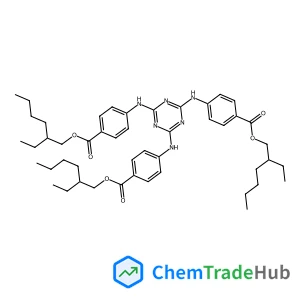
Tris(2-ethylhexyl) 4,4',4''-(1,3,5-triazine-2,4,6-triyltriimino)tribenzoate
CAS Number:
88122-99-0
Molecular Formula:
C48H66N6O6

Recommended Suppliers




Disclaimer
This page provides academic journal information for reference and research purposes only. We are not affiliated with any journal publishers and do not handle publication submissions. For publication-related inquiries, please contact the respective journal publishers directly.
If you notice any inaccuracies in the information displayed, please contact us at support@chemtradehub.com. We will promptly review and address your concerns.