












Cleaving C–H bonds with hyperthermal H2: facile chemistry to cross-link organic molecules under low chemical- and energy-loads
Literature Information
Publication Date
2013-11-21
DOI
10.1039/C3GC41460D
Impact Factor
10.182
Authors
Tomas Trebicky, Patrick Crewdson, Maxim Paliy, Igor Bello, Heng-Yong Nie, Zhi Zheng, Xiaoli Fan, Jun Yang, Changyu Tang, Hao Liu, K. W. Wong
View Original
Abstract
A facile method for cross-linking organic molecules has been developed by computational modeling, instrumentation design, and experimental research. Briefly, organic molecules are hit by H2 with controllable kinetic energy in our novel apparatus where a high flux of hyperthermal H2 is generated. When a C–H bond of the organic molecule is hit by H2 at about 20 eV, efficient kinematic energy-transfer in the H2→H collision facilitates the C–H dissociation with nearly 100% reaction probability. When H2 hits other atoms which are by nature much heavier than H2, mass disparity bars effective energy transfer and this both blocks undesirable bond dissociation and reduces unnecessary energy wastage. The recombination of the carbon radicals generated by the C–H cleavage efficiently completes the production of C–C cross-links at room temperature with no additional energy/chemicals requirements. In addition to these green chemistry merits, this new method is better than other cross-linking techniques which rely on prerequisite reactions to add cross-linkers to the organic molecules or additional reactants and additives. These promising features are validated by several cross-linking trials which demonstrate desirable mechanical, electrical, chemical, and biochemical changes while inducing no undesirable damage of chemical functionalities in the original molecules.
Related Literature
A ZnS quantum dot-based super selective fluorescent chemosensor for soluble ppb-level total arsenic [As(iii) + As(v)] in aqueous media: direct assay utilizing aggregation-enhanced emission (AEE) for analytical application
Saurav Kayal, Mintu Halder
2019-05-08
Communication
DOI: 10.1039/C9AN00516A
Fluorescence enhancement novel green analytical method for paraquat herbicide quantification based on immobilization on clay
Marina A. Dominguez, Matías Insausti, Romina Ilari, Graciela P. Zanini
2019-04-09
Paper
DOI: 10.1039/C9AN00387H
A novel label-free terbium(iii)-aptamer based aptasensor for ultrasensitive and highly specific detection of acute lymphoma leukemia cells
Siwen Wu, Nuo Yang, Liping Zhong, Yiqun Luo, Huiling Wang, Wenlin Gong, Sufang Zhou, Yanmei Li, Jian He, Haopei Cao, Yong Huang, Yongxiang Zhao
2019-05-17
Paper
DOI: 10.1039/C8AN02342E
Sub-ppm level high energy resolution fluorescence detected X-ray absorption spectroscopy of selenium in articular cartilage
O. Proux, S. Bureau, R. S. Conlan, L. W. Francis, I. M. Khan, L. Charlet, J. L. Hazemann
2019-03-28
Communication
DOI: 10.1039/C9AN00207C
Antibody modified gold nanoparticles for fast colorimetric screening of rheumatoid arthritis
Ana Matias, Tomás Calmeiro, Elvira Fortunato, Alexandra R. Fernandes, Pedro Viana Baptista
2019-04-15
Paper
DOI: 10.1039/C9AN00319C
Multiplexing cytokine analysis: towards reducing sample volume needs in clinical diagnostics
Daniel Scott, Smita Joel
2019-04-18
Paper
DOI: 10.1039/C9AN00297A
Fluorescence lifetime-based pH sensing by platinum nanoclusters
Lihua Jin, Lulu Shi, Wenjuan Shi, Zheng Meng, Li Shang, Yehua Shen
2019-04-26
Paper
DOI: 10.1039/C9AN00061E
Enhancing the colorimetric detection of H2O2 and ascorbic acid on polypyrrole coated fluconazole-functionalized POMOFs
Xiao Li, Longjiang Sun, Xiya Yang, Kunfeng Zhou, Gongguo Zhang, Zhibo Tong, Jingquan Sha
2019-03-28
Paper
DOI: 10.1039/C9AN00163H
Inkjet-printed micro-calibration standards for ultraquantitative Raman spectral cytometry
Vernon LaLone, Maria V. Fawaz, Jomar Morales-Mercado, Márcio A. Mourão, Catherine S. Snyder, Sang Yeop Kim, Andrew P. Lieberman, Theodore J. Standiford, Krishnan Raghavendran, Kerby Shedden, Anna Schwendeman, Gus R. Rosania
2019-05-16
Paper
DOI: 10.1039/C9AN00500E
You might also like
Compound Q&A
What precautions should be taken when handling 4-Methyl-6-(trifluoromethyl)quinoline (CAS: 40716-16-3)?
When handling 4-Methyl-6-(trifluoromethyl)quinoline (CAS: 40716-16-3), safety go...
40716-16-34-Methyl-6-(trifluor...
Compound Q&A
What is 4-(3,5-Difluorophenyl)aniline (CAS: 405058-00-6)?
4-(3,5-Difluorophenyl)aniline is an aromatic organic compound with the CAS numbe...
405058-00-64-(3,5-Difluoropheny...
Compound Q&A
How is 5-{[4-(Trifluoromethyl)phenyl]sulfanyl}-1,2,3-thiadiazole-4-carboxylic acid (CAS: 338982-07-3) typically synthesized?
5-{[4-(Trifluoromethyl)phenyl]sulfanyl}-1,2,3-thiadiazole-4-carboxylic acid can ...
338982-07-35-{[4-(Trifluorometh...
Compound Q&A
What is the market or research trend for 4-Benzylaniline hydrochloride (CAS: 6317-57-3)?
The market for 4-Benzylaniline hydrochloride (CAS: 6317-57-3) is steadily growin...
6317-57-34-Benzylaniline hydr...
Compound Q&A
Is [3-(Diethylsulfamoyl)phenyl]boronic acid (CAS: 871329-58-7) safe?
[3-(Diethylsulfamoyl)phenyl]boronic acid is generally considered safe when handl...
871329-58-7[3-(Diethylsulfamoyl...
Compound Q&A
What are the main uses of 3-Bromo-2,5-dimethoxyaniline (CAS: 115929-62-9)?
3-Bromo-2,5-dimethoxyaniline is mainly used in the pharmaceutical and chemical i...
115929-62-93-Bromo-2,5-dimethox...
Compound Q&A
What regulatory guidelines apply to N-Methyl-1-(5-methyl-1H-indol-3-yl)methanamine (CAS: 915922-67-7)?
N-Methyl-1-(5-methyl-1H-indol-3-yl)methanamine (CAS: 915922-67-7) is subject to ...
915922-67-7N-Methyl-1-(5-methyl...
Compound Q&A
What industries use Carbamic acid, N-[(5S)-5,6-diamino-6-oxohexyl]-, 1,1-dimethylethyl ester (CAS: 24828-96-4)?
This compound is primarily used in the pharmaceutical industry for the synthesis...
24828-96-4Carbamic acid, N-[(5...
Compound Q&A
How should 2-Methyl-2-propanyl [(1S,3R)-3-aminocyclohexyl]carbamate (CAS: 1298101-47-9) be stored?
2-Methyl-2-propanyl [(1S,3R)-3-aminocyclohexyl]carbamate (CAS: 1298101-47-9) sho...
1298101-47-92-Methyl-2-propanyl ...
Compound Q&A
What industries use Ethyl 2-bromo-4,4,4-trifluorobutanoate (CAS: 367-33-9)?
Ethyl 2-bromo-4,4,4-trifluorobutanoate (CAS: 367-33-9) is utilized in the pharma...
367-33-9Ethyl 2-bromo-4,4,4-...
Source Journal
Green Chemistry

CiteScore:
16.1
Self-citation Rate:
7.5%
Articles per Year:
944
Green Chemistry provides a unique forum for the publication of innovative research on the development of alternative green and sustainable technologies. The scope of Green Chemistry is based on, but not limited to, the definition proposed by Anastas and Warner (Green Chemistry: Theory and Practice, P T Anastas and J C Warner, Oxford University Press, Oxford, 1998). Green chemistry is the utilisation of a set of principles that reduces or eliminates the use or generation of hazardous substances in the design, manufacture and application of chemical products. Green Chemistry is at the frontiers of this continuously-evolving interdisciplinary science and publishes research that attempts to reduce the environmental impact of the chemical enterprise by developing a technology base that is inherently non-toxic to living things and the environment. Submissions on all aspects of research relating to the endeavour are welcome. The journal publishes original and significant cutting-edge research that is likely to be of wide general appeal. To be published, work must present a significant advance in green chemistry. Papers must contain a comparison with existing methods and demonstrate advantages over those methods before publication can be considered. For more information please see this Editorial. Coverage includes the following, but is not limited to: Design (e.g. biomimicry, design for degradation/recycling/reduced toxicity…) Reagents & Feedstocks (e.g. renewables, CO2, solvents, auxiliary agents, waste utilization…) Synthesis (e.g. organic, inorganic, synthetic biology…) Catalysis (e.g. homogeneous, heterogeneous, enzyme, whole cell…) Process (e.g. process design, intensification, separations, recycling, efficiency…) Energy (e.g. renewable energy, fuels, photovoltaics, fuel cells, energy storage, energy carriers…) Applications (e.g. electronics, dyes, consumer products, coatings, pharmaceuticals, preservatives, building materials, chemicals for industry/agriculture/mining…) Impact (e.g. safety, metrics, LCA, sustainability, (eco)toxicology…) Green chemistry is, by definition, a continuously-evolving frontier. Therefore, the inclusion of a particular material or technology does not, of itself, guarantee that a paper is suitable for the journal. To be suitable, the novel advance should have the potential for reduced environmental impact relative to the state of the art. Green Chemistry does not normally deal with research associated with 'end-of-pipe' or remediation issues.
Recommended Compounds
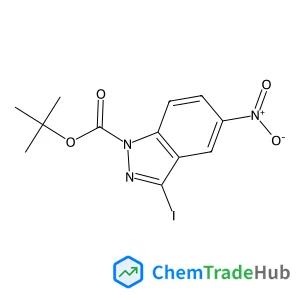
Tert-butyl 3-iodo-5-nitro-1H-indazole-1-carboxylate
CAS Number:
459133-69-8
Molecular Formula:
C12H12IN3O4
![Methyl 3-({2'-[(E)-(hydroxyhydrazono)methyl]-4-biphenylyl}methyl)-2-oxo-2,3-dihydro-1H-benzimidazole-4-carboxylate structure](https://static.chemtradehub.com/structs/149/1499167-72-4-034a.webp "Methyl 3-({2'-[(E)-(hydroxyhydrazono)methyl]-4-biphenylyl}methyl)-2-oxo-2,3-dihydro-1H-benzimidazole-4-carboxylate structure")
Methyl 3-({2'-[(E)-(hydroxyhydrazono)methyl]-4-biphenylyl}methyl)-2-oxo-2,3-dihydro-1H-benzimidazole-4-carboxylate
CAS Number:
1499167-72-4
Molecular Formula:
C23H20N4O4
Recommended Suppliers





Disclaimer
This page provides academic journal information for reference and research purposes only. We are not affiliated with any journal publishers and do not handle publication submissions. For publication-related inquiries, please contact the respective journal publishers directly.
If you notice any inaccuracies in the information displayed, please contact us at support@chemtradehub.com. We will promptly review and address your concerns.