












Evaluation of deep eutectic solvent–water binary mixtures for lipase-catalyzed lipophilization of phenolic acids
Literature Information
Publication Date
2013-06-24
DOI
10.1039/C3GC40899J
Impact Factor
10.182
Authors
Erwann Durand, Jérôme Lecomte, Bruno Baréa, Eric Dubreucq, Robert Lortie, Pierre Villeneuve
View Original
Abstract
This work reports the first lipase-catalyzed reactions between substrates of different polarities using deep eutectic solvents as a medium. The model reaction consisted of a lipophilization process based on the alcoholysis of phenolic esters using immobilized Candida antarctica lipase B as a biocatalyst. Results showed that water could dramatically improve the lipase activity and change the reactivity of phenolic substrates. Indeed, very low conversions (<2%) were observed in pure DES, whereas in DES–water binary mixtures, quantitative conversions were achieved. After investigating the role of various parameters, such as the substrate concentration and ratio, pH or thermodynamic activity of water, the effect of the presence of water in pure DES based on urea or glycerol was discussed. In this paper, we propose new perspectives for the enzymatic modification of polar substrates using this novel generation of green, inexpensive and easy-to-handle solvents.
Related Literature
Acid-promoted denitrogenative Pd-catalyzed addition of arylhydrazines with nitriles at room temperature
Kai Cheng, Guofang Wang, Mengting Meng, Chenze Qi
2016-12-13
Research Article
DOI: 10.1039/C6QO00634E
Effect of Lewis acid bulkiness on the stereoselectivity of Diels–Alder reactions between acyclic dienes and α,β-enals
Israel Fernández
2017-04-17
Research Article
DOI: 10.1039/C7QO00154A
Mechanistic studies for dirhodium-catalyzed chemoselective oxidative amination of alkynyl-tethered sulfamates
Dong Pan, Yin Wei
2019-02-19
Research Article
DOI: 10.1039/C9QO00050J
Regioselective Zn(OAc)2-catalyzed azide–alkyne cycloaddition in water: the green click-chemistry
Maria A. Morozova, Mekhman S. Yusubov, Václav Eigner, Alexander A. Bondarev, Akio Saito, Marina E. Trusova, Pavel S. Postnikov
2017-02-08
Research Article
DOI: 10.1039/C6QO00787B
Additive-free regio- and diastereoselective construction of fully-substituted isoxazolidines employing diazo compounds
Ekta Gupta, Mohd Khalid Zaheer, Ruchir Kant
2019-02-21
Research Article
DOI: 10.1039/C8QO01421C
Synthesis of a figure-eight azahelicene dimer with high emission and CPL properties
Ayako Ushiyama, Satoru Hiroto, Junpei Yuasa, Tsuyoshi Kawai, Hiroshi Shinokubo
2016-11-01
Research Article
DOI: 10.1039/C6QO00629A
Radical cation and dication of a 4H-dithieno[2,3-b:3′,2′-e][1,4]-thiazine‡
Arno Schneeweis, Andreas Neidlinger, Guido J. Reiss, Walter Frank, Katja Heinze, Thomas J. J. Müller
2017-04-04
Research Article
DOI: 10.1039/C7QO00188F
Visible light photocatalytic acyldifluoroalkylation of unactivated alkenes for the direct synthesis of gem-difluorinated ketones
Yulu Zhou, Zhimin Xiong, Jiayan Qiu, Lichun Kong, Gangguo Zhu
2019-02-26
Research Article
DOI: 10.1039/C9QO00136K
A concise approach for determining the relative configuration of H-7 and H-8 in 8,4′-oxyneolignans by 1H NMR spectroscopy
Ya-Nan Yang, Bing Han, Peng-Fei Yang, Zi-Ming Feng, Jian-Shuang Jiang, Pei-Cheng Zhang
2018-11-23
Research Article
DOI: 10.1039/C8QO01155A
Synthesis of 2,3-diaza-anthraquinones via the bidentate Lewis acid catalysed inverse electron-demand Diels–Alder (IEDDA) reaction
Longcheng Hong, Sebastian Ahles, Marcel A. Strauss, Christian Logemann, Hermann A. Wegner
2017-04-05
Research Article
DOI: 10.1039/C7QO00172J
You might also like
Compound Q&A
What precautions should be taken when handling 4-Methyl-6-(trifluoromethyl)quinoline (CAS: 40716-16-3)?
When handling 4-Methyl-6-(trifluoromethyl)quinoline (CAS: 40716-16-3), safety go...
40716-16-34-Methyl-6-(trifluor...
Compound Q&A
What is 4-(3,5-Difluorophenyl)aniline (CAS: 405058-00-6)?
4-(3,5-Difluorophenyl)aniline is an aromatic organic compound with the CAS numbe...
405058-00-64-(3,5-Difluoropheny...
Compound Q&A
How is 5-{[4-(Trifluoromethyl)phenyl]sulfanyl}-1,2,3-thiadiazole-4-carboxylic acid (CAS: 338982-07-3) typically synthesized?
5-{[4-(Trifluoromethyl)phenyl]sulfanyl}-1,2,3-thiadiazole-4-carboxylic acid can ...
338982-07-35-{[4-(Trifluorometh...
Compound Q&A
What is the market or research trend for 4-Benzylaniline hydrochloride (CAS: 6317-57-3)?
The market for 4-Benzylaniline hydrochloride (CAS: 6317-57-3) is steadily growin...
6317-57-34-Benzylaniline hydr...
Compound Q&A
Is [3-(Diethylsulfamoyl)phenyl]boronic acid (CAS: 871329-58-7) safe?
[3-(Diethylsulfamoyl)phenyl]boronic acid is generally considered safe when handl...
871329-58-7[3-(Diethylsulfamoyl...
Compound Q&A
What are the main uses of 3-Bromo-2,5-dimethoxyaniline (CAS: 115929-62-9)?
3-Bromo-2,5-dimethoxyaniline is mainly used in the pharmaceutical and chemical i...
115929-62-93-Bromo-2,5-dimethox...
Compound Q&A
What regulatory guidelines apply to N-Methyl-1-(5-methyl-1H-indol-3-yl)methanamine (CAS: 915922-67-7)?
N-Methyl-1-(5-methyl-1H-indol-3-yl)methanamine (CAS: 915922-67-7) is subject to ...
915922-67-7N-Methyl-1-(5-methyl...
Compound Q&A
What industries use Carbamic acid, N-[(5S)-5,6-diamino-6-oxohexyl]-, 1,1-dimethylethyl ester (CAS: 24828-96-4)?
This compound is primarily used in the pharmaceutical industry for the synthesis...
24828-96-4Carbamic acid, N-[(5...
Compound Q&A
How should 2-Methyl-2-propanyl [(1S,3R)-3-aminocyclohexyl]carbamate (CAS: 1298101-47-9) be stored?
2-Methyl-2-propanyl [(1S,3R)-3-aminocyclohexyl]carbamate (CAS: 1298101-47-9) sho...
1298101-47-92-Methyl-2-propanyl ...
Compound Q&A
What industries use Ethyl 2-bromo-4,4,4-trifluorobutanoate (CAS: 367-33-9)?
Ethyl 2-bromo-4,4,4-trifluorobutanoate (CAS: 367-33-9) is utilized in the pharma...
367-33-9Ethyl 2-bromo-4,4,4-...
Source Journal
Green Chemistry

CiteScore:
16.1
Self-citation Rate:
7.5%
Articles per Year:
944
Green Chemistry provides a unique forum for the publication of innovative research on the development of alternative green and sustainable technologies. The scope of Green Chemistry is based on, but not limited to, the definition proposed by Anastas and Warner (Green Chemistry: Theory and Practice, P T Anastas and J C Warner, Oxford University Press, Oxford, 1998). Green chemistry is the utilisation of a set of principles that reduces or eliminates the use or generation of hazardous substances in the design, manufacture and application of chemical products. Green Chemistry is at the frontiers of this continuously-evolving interdisciplinary science and publishes research that attempts to reduce the environmental impact of the chemical enterprise by developing a technology base that is inherently non-toxic to living things and the environment. Submissions on all aspects of research relating to the endeavour are welcome. The journal publishes original and significant cutting-edge research that is likely to be of wide general appeal. To be published, work must present a significant advance in green chemistry. Papers must contain a comparison with existing methods and demonstrate advantages over those methods before publication can be considered. For more information please see this Editorial. Coverage includes the following, but is not limited to: Design (e.g. biomimicry, design for degradation/recycling/reduced toxicity…) Reagents & Feedstocks (e.g. renewables, CO2, solvents, auxiliary agents, waste utilization…) Synthesis (e.g. organic, inorganic, synthetic biology…) Catalysis (e.g. homogeneous, heterogeneous, enzyme, whole cell…) Process (e.g. process design, intensification, separations, recycling, efficiency…) Energy (e.g. renewable energy, fuels, photovoltaics, fuel cells, energy storage, energy carriers…) Applications (e.g. electronics, dyes, consumer products, coatings, pharmaceuticals, preservatives, building materials, chemicals for industry/agriculture/mining…) Impact (e.g. safety, metrics, LCA, sustainability, (eco)toxicology…) Green chemistry is, by definition, a continuously-evolving frontier. Therefore, the inclusion of a particular material or technology does not, of itself, guarantee that a paper is suitable for the journal. To be suitable, the novel advance should have the potential for reduced environmental impact relative to the state of the art. Green Chemistry does not normally deal with research associated with 'end-of-pipe' or remediation issues.
Recommended Compounds
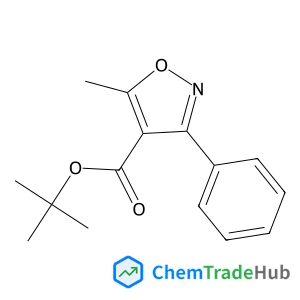
2-Methyl-2-propanyl 5-methyl-3-phenyl-1,2-oxazole-4-carboxylate
CAS Number:
211429-79-7
Molecular Formula:
C15H17NO3
![Methyl 3-({2'-[(E)-(hydroxyhydrazono)methyl]-4-biphenylyl}methyl)-2-oxo-2,3-dihydro-1H-benzimidazole-4-carboxylate structure](https://static.chemtradehub.com/structs/149/1499167-72-4-034a.webp "Methyl 3-({2'-[(E)-(hydroxyhydrazono)methyl]-4-biphenylyl}methyl)-2-oxo-2,3-dihydro-1H-benzimidazole-4-carboxylate structure")
Methyl 3-({2'-[(E)-(hydroxyhydrazono)methyl]-4-biphenylyl}methyl)-2-oxo-2,3-dihydro-1H-benzimidazole-4-carboxylate
CAS Number:
1499167-72-4
Molecular Formula:
C23H20N4O4
Recommended Suppliers






Disclaimer
This page provides academic journal information for reference and research purposes only. We are not affiliated with any journal publishers and do not handle publication submissions. For publication-related inquiries, please contact the respective journal publishers directly.
If you notice any inaccuracies in the information displayed, please contact us at support@chemtradehub.com. We will promptly review and address your concerns.