


Carboxylation of terminal alkynes at ambient CO2 pressure in ethylene carbonate
Literature Information
Publication Date
2013-07-01
DOI
10.1039/C3GC40896E
Impact Factor
10.182
Authors
Bing Yu, Zhen-Feng Diao, Chun-Xiang Guo, Chun-Lai Zhong, Liang-Nian He, Ya-Nan Zhao, Qing-Wen Song, An-Hua Liu, Jin-Quan Wang
View Original
Abstract
The CuI-catalyzed carboxylation of terminal alkynes with CO2 and alkyl halides using ethylene carbonate as the solvent under mild conditions was studied. DFT calculations reveal that the energy barrier for CO2 insertion into the sp-hybridized Cu–C bond could be reduced by employing ethylene carbonate as the solvent. Notably, the procedure was conducted under ambient CO2 pressure without any external ligands. A broad range of substrates with electron-withdrawing groups or electron-donating groups gave the corresponding products in reasonable yields.
Recommended Journals

Critical Reviews in Solid State and Materials Sciences

NDT & E International

Atomization and Sprays

Journal of the Indian Institute of Science

Polycyclic Aromatic Compounds

Main Group Chemistry

Biocatalysis and Biotransformation

Herald of the Russian Academy of Sciences

Bioorganic & Medicinal Chemistry

Colloid Journal
Related Literature
The direct decarboxylative allylation of N-arylglycine derivatives by photoredox catalysis
Yingqian Duan, Muliang Zhang, Rehanguli Ruzi, Zhongkai Wu
2016-12-26
Research Article
DOI: 10.1039/C6QO00711B
Asymmetric organocatalytic conjugated addition of pyrazolin-5-ones to ortho-quinomethanes: construction of vicinal tertiary and all-carbon quaternary stereocenters
Ming-Ming Chu, Suo-Suo Qi, Wan-Zhen Ju, Yi-Feng Wang, Xue-Yang Chen, Dan-Qian Xu, Zhen-Yuan Xu
2019-02-27
Research Article
DOI: 10.1039/C9QO00011A
A general synthesis of unnatural α-amino acids by iron-catalysed olefin–olefin coupling via generated radicals
Nadezhda V. Stoletova, Vladislav I. Kovalev, Tat'yana F. Savel'yeva, Victor I. Maleev
2019-02-18
Research Article
DOI: 10.1039/C9QO00108E
Selective deprotonation of tetra[3,4]thienylene in the presence of n-BuLi
Bingbing Li, Chunli Li, Zhiying Ma, Li Xu, Hua Wang
2017-02-06
Research Article
DOI: 10.1039/C6QO00754F
Polycyclic heteroaromatic hydrocarbons containing a benzoisoindole core
Marcus Richter, Karl Sebastian Schellhammer, Peter Machata, Gianaurelio Cuniberti, Alexey Popov, Frank Ortmann, Reinhard Berger, Klaus Müllen, Xinliang Feng
2017-04-04
Research Article
DOI: 10.1039/C7QO00180K
An efficient synthesis of fluoro-neplanocin A analogs using electrophilic fluorination and palladium-catalyzed dehydrosilylation
Dnyandev B. Jarhad, Min Hwan Jang, Young Sup Shin, Hong-Rae Kim, Young Eum Hyun, Ji-seong Yoon, Lak Shin Jeong
2019-02-12
Research Article
DOI: 10.1039/C9QO00099B
Poly[2(6)-aminoazulene]: synthesis, photophysical properties, and proton conductivity
Ian Cheng-Yi Hou, Vijayendra Shetti, Shou-Ling Huang, Kun-Lin Liu, Chi-Yang Chao, Song-Cheng Lin, You-Jen Lin, Li-Yin Chen, Tien-Yau Luh
2017-03-06
Research Article
DOI: 10.1039/C7QO00087A
Unexpected formation of [5]helicenes from hexaarylbenzenes containing pyrrole moieties
Felix Ammon, Stephanie Theresia Sauer, Rainer Lippert, Dominik Lungerich, David Reger, Frank Hampel, Norbert Jux
2017-03-23
Research Article
DOI: 10.1039/C7QO00112F
Mechanistic insights into intermolecular cyclization of ring-fused benzocyclobutenols with alkynes catalyzed by [{Ir(OMe)COD}2]
Yang Zhao, Ping Wang, Yun Gao, Chen Zhu, Wei Liu, Yong Wang
2019-02-04
Research Article
DOI: 10.1039/C8QO01371C
You might also like
Compound Q&A
What precautions should be taken when handling 4-Methyl-6-(trifluoromethyl)quinoline (CAS: 40716-16-3)?
When handling 4-Methyl-6-(trifluoromethyl)quinoline (CAS: 40716-16-3), safety go...
40716-16-34-Methyl-6-(trifluor...
Compound Q&A
What is 4-(3,5-Difluorophenyl)aniline (CAS: 405058-00-6)?
4-(3,5-Difluorophenyl)aniline is an aromatic organic compound with the CAS numbe...
405058-00-64-(3,5-Difluoropheny...
Compound Q&A
How is 5-{[4-(Trifluoromethyl)phenyl]sulfanyl}-1,2,3-thiadiazole-4-carboxylic acid (CAS: 338982-07-3) typically synthesized?
5-{[4-(Trifluoromethyl)phenyl]sulfanyl}-1,2,3-thiadiazole-4-carboxylic acid can ...
338982-07-35-{[4-(Trifluorometh...
Compound Q&A
What is the market or research trend for 4-Benzylaniline hydrochloride (CAS: 6317-57-3)?
The market for 4-Benzylaniline hydrochloride (CAS: 6317-57-3) is steadily growin...
6317-57-34-Benzylaniline hydr...
Compound Q&A
Is [3-(Diethylsulfamoyl)phenyl]boronic acid (CAS: 871329-58-7) safe?
[3-(Diethylsulfamoyl)phenyl]boronic acid is generally considered safe when handl...
871329-58-7[3-(Diethylsulfamoyl...
Compound Q&A
What are the main uses of 3-Bromo-2,5-dimethoxyaniline (CAS: 115929-62-9)?
3-Bromo-2,5-dimethoxyaniline is mainly used in the pharmaceutical and chemical i...
115929-62-93-Bromo-2,5-dimethox...
Compound Q&A
What regulatory guidelines apply to N-Methyl-1-(5-methyl-1H-indol-3-yl)methanamine (CAS: 915922-67-7)?
N-Methyl-1-(5-methyl-1H-indol-3-yl)methanamine (CAS: 915922-67-7) is subject to ...
915922-67-7N-Methyl-1-(5-methyl...
Compound Q&A
What industries use Carbamic acid, N-[(5S)-5,6-diamino-6-oxohexyl]-, 1,1-dimethylethyl ester (CAS: 24828-96-4)?
This compound is primarily used in the pharmaceutical industry for the synthesis...
24828-96-4Carbamic acid, N-[(5...
Compound Q&A
How should 2-Methyl-2-propanyl [(1S,3R)-3-aminocyclohexyl]carbamate (CAS: 1298101-47-9) be stored?
2-Methyl-2-propanyl [(1S,3R)-3-aminocyclohexyl]carbamate (CAS: 1298101-47-9) sho...
1298101-47-92-Methyl-2-propanyl ...
Compound Q&A
What industries use Ethyl 2-bromo-4,4,4-trifluorobutanoate (CAS: 367-33-9)?
Ethyl 2-bromo-4,4,4-trifluorobutanoate (CAS: 367-33-9) is utilized in the pharma...
367-33-9Ethyl 2-bromo-4,4,4-...
Source Journal
Green Chemistry

CiteScore:
16.1
Self-citation Rate:
7.5%
Articles per Year:
944
Green Chemistry provides a unique forum for the publication of innovative research on the development of alternative green and sustainable technologies. The scope of Green Chemistry is based on, but not limited to, the definition proposed by Anastas and Warner (Green Chemistry: Theory and Practice, P T Anastas and J C Warner, Oxford University Press, Oxford, 1998). Green chemistry is the utilisation of a set of principles that reduces or eliminates the use or generation of hazardous substances in the design, manufacture and application of chemical products. Green Chemistry is at the frontiers of this continuously-evolving interdisciplinary science and publishes research that attempts to reduce the environmental impact of the chemical enterprise by developing a technology base that is inherently non-toxic to living things and the environment. Submissions on all aspects of research relating to the endeavour are welcome. The journal publishes original and significant cutting-edge research that is likely to be of wide general appeal. To be published, work must present a significant advance in green chemistry. Papers must contain a comparison with existing methods and demonstrate advantages over those methods before publication can be considered. For more information please see this Editorial. Coverage includes the following, but is not limited to: Design (e.g. biomimicry, design for degradation/recycling/reduced toxicity…) Reagents & Feedstocks (e.g. renewables, CO2, solvents, auxiliary agents, waste utilization…) Synthesis (e.g. organic, inorganic, synthetic biology…) Catalysis (e.g. homogeneous, heterogeneous, enzyme, whole cell…) Process (e.g. process design, intensification, separations, recycling, efficiency…) Energy (e.g. renewable energy, fuels, photovoltaics, fuel cells, energy storage, energy carriers…) Applications (e.g. electronics, dyes, consumer products, coatings, pharmaceuticals, preservatives, building materials, chemicals for industry/agriculture/mining…) Impact (e.g. safety, metrics, LCA, sustainability, (eco)toxicology…) Green chemistry is, by definition, a continuously-evolving frontier. Therefore, the inclusion of a particular material or technology does not, of itself, guarantee that a paper is suitable for the journal. To be suitable, the novel advance should have the potential for reduced environmental impact relative to the state of the art. Green Chemistry does not normally deal with research associated with 'end-of-pipe' or remediation issues.
Recommended Compounds
![2-[(5Z,8Z,11Z,14Z)-5,8,11,14-Icosatetraen-1-yloxy]-1,3-propanediol structure](https://static.chemtradehub.com/structs/222/222723-55-9-0348.webp "2-[(5Z,8Z,11Z,14Z)-5,8,11,14-Icosatetraen-1-yloxy]-1,3-propanediol structure")
2-[(5Z,8Z,11Z,14Z)-5,8,11,14-Icosatetraen-1-yloxy]-1,3-propanediol
CAS Number:
222723-55-9
Molecular Formula:
C23H40O3
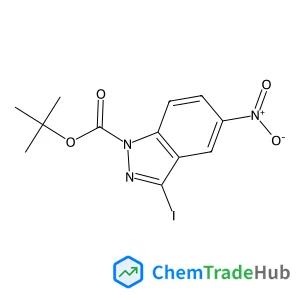
Tert-butyl 3-iodo-5-nitro-1H-indazole-1-carboxylate
CAS Number:
459133-69-8
Molecular Formula:
C12H12IN3O4
Recommended Suppliers




Disclaimer
This page provides academic journal information for reference and research purposes only. We are not affiliated with any journal publishers and do not handle publication submissions. For publication-related inquiries, please contact the respective journal publishers directly.
If you notice any inaccuracies in the information displayed, please contact us at support@chemtradehub.com. We will promptly review and address your concerns.