












Front cover
Literature Information
Publication Date
DOI
10.1039/C3CP90093B
Impact Factor
3.676
Authors
View Original
Abstract
A graphical abstract is available for this content
Related Literature
Large ferroelectric polarization in the new double perovskite NaLaMnWO6 induced by non-polar instabilities
T. Fukushima, A. Stroppa, S. Picozzi, J. M. Perez-Mato
2011-06-06
Paper
DOI: 10.1039/C1CP20626E
Nature of adhesion of condensed organic films on platinum by first-principles simulations
Slimane Laref, Yan Li, Marie-Laure Bocquet, Françoise Delbecq, Philippe Sautet, David Loffreda
2011-02-22
Perspective
DOI: 10.1039/C0CP02285C
The protonation state of small carboxylic acids at the water surface from photoelectron spectroscopy
Niklas Ottosson, Erik Wernersson, Johan Söderström, Wandared Pokapanich, Susanna Kaufmann, Svante Svensson, Ingmar Persson, Gunnar Öhrwall, Olle Björneholm
2011-06-01
Paper
DOI: 10.1039/C1CP20245F
Trends in water monomer adsorption and dissociation on flat insulating surfaces
Xiao Liang Hu, Jiří Klimeš, Angelos Michaelides
2011-06-08
Paper
DOI: 10.1039/C1CP20846B
Closely adjacent gold nanoparticles linked by chemisorption of neutral rhodamine 123 molecules providing enormous SERS intensity
Toru Yajima, Yingying Yu, Masayuki Futamata
2011-06-08
Paper
DOI: 10.1039/C1CP00046B
A combined experimental inelastic neutron scattering, Raman and ab initio lattice dynamics study of α-lithium amidoborane
A. J. Ramirez-Cuesta, Keith Refson, Peter P. Edwards, William I. F. David
2011-06-02
Paper
DOI: 10.1039/C1CP20587K
The influence of volume fractions on the phase behaviors of linear A(BC)nBA′ multiblock terpolymers
An-Chang Shi
2011-06-08
Paper
DOI: 10.1039/C1CP20633H
Towards experimental determination of conical intersection properties: a twin state based comparison with bound excited states
Shmuel Zilberg, Yehuda Haas
2011-05-27
Paper
DOI: 10.1039/C1CP20268E
Modification of the ZnO(0001)–Zn surface under reducing conditions
Johannes C. van den Heuvel
2011-06-20
Paper
DOI: 10.1039/C1CP20330D
You might also like
Compound Q&A
What are the main uses of 1H-Indazole-6-carbonitrile (CAS: 141290-59-7)?
1H-Indazole-6-carbonitrile finds applications in pharmaceuticals, where it serve...
141290-59-71H-Indazole-6-carbon...
Compound Q&A
How should waste containing Dioctyl (2E)-2-butenedioate (CAS: 2997-85-5) be handled?
Waste containing Dioctyl (2E)-2-butenedioate (CAS: 2997-85-5) should be collecte...
2997-85-5Dioctyl (2E)-2-buten...
Compound Q&A
What industries use Sodium [(1,2-benzoxazol-3-ylmethyl)sulfonyl]azanide (CAS: 68291-98-5)?
Sodium [(1,2-benzoxazol-3-ylmethyl)sulfonyl]azanide is primarily used in pharmac...
68291-98-5Sodium [(1,2-benzoxa...
Compound Q&A
Are there alternatives to Dimethyl 4-(4,4,5,5-tetramethyl-1,3,2-dioxaborolan-2-yl)-2,6-pyridinedicarboxylate (CAS: 741709-66-0) in synthesis?
Dimethyl 4-(4,4,5,5-tetramethyl-1,3,2-dioxaborolan-2-yl)-2,6-pyridinedicarboxyla...
741709-66-0Dimethyl 4-(4,4,5,5-...
Compound Q&A
How should waste containing 2-Fluoro-6-hydrazinopyridine (CAS: 80714-39-2) be handled?
Waste containing 2-Fluoro-6-hydrazinopyridine (CAS: 80714-39-2) should be manage...
80714-39-22-Fluoro-6-hydrazino...
Compound Q&A
What is 6-Formyl-2-pyridinecarboxylic acid (CAS: 499214-11-8)?
6-Formyl-2-pyridinecarboxylic acid is an organic compound with the molecular for...
499214-11-86-Formyl-2-pyridinec...
Compound Q&A
What is the market or research trend for 3-(3,4-dimethoxyphenyl)-2,5-dimethyl-N-(2-morpholin-4-ylethyl)pyrazolo[1,5-a]pyrimidin-7-amine (CAS: 900874-91-1)?
Research trends for this compound indicate a focus on its potential applications...
900874-91-13-(3,4-dimethoxyphen...
Compound Q&A
How is 9H-Tribenzo[b,d,f]azepine (CAS: 29875-73-8) typically synthesized?
9H-Tribenzo[b,d,f]azepine is typically synthesized via a multi-step process invo...
29875-73-89H-Tribenzo[b,d,f]az...
Compound Q&A
How is 1-Cyclopropyl-7-ethoxy-6-fluoro-8-methoxy-4-oxo-1,4-dihydro-3-quinolinecarboxylic acid (CAS: 1797982-51-4) typically synthesized?
1-Cyclopropyl-7-ethoxy-6-fluoro-8-methoxy-4-oxo-1,4-dihydro-3-quinolinecarboxyli...
1797982-51-41-Cyclopropyl-7-etho...
Compound Q&A
How should waste containing Methyl 3-oxo-1,2,3,4-tetrahydro-6-quinoxalinecarboxylate (CAS: 671820-52-3) be handled?
Waste containing Methyl 3-oxo-1,2,3,4-tetrahydro-6-quinoxalinecarboxylate (CAS: ...
671820-52-3Methyl 3-oxo-1,2,3,4...
Source Journal
Physical Chemistry Chemical Physics

CiteScore:
5.5
Self-citation Rate:
10.3%
Articles per Year:
3036
Physical Chemistry Chemical Physics (PCCP) is an international journal co-owned by 19 physical chemistry and physics societies from around the world. This journal publishes original, cutting-edge research in physical chemistry, chemical physics and biophysical chemistry. To be suitable for publication in PCCP, articles must include significant innovation and/or insight into physical chemistry; this is the most important criterion that reviewers and Editors will judge against when evaluating submissions. The journal has a broad scope and welcomes contributions spanning experiment, theory, computation and data science. Topical coverage includes spectroscopy, dynamics, kinetics, statistical mechanics, thermodynamics, electrochemistry, catalysis, surface science, quantum mechanics, quantum computing and machine learning. Interdisciplinary research areas such as polymers and soft matter, materials, nanoscience, energy, surfaces/interfaces, and biophysical chemistry are welcomed if they demonstrate significant innovation and/or insight into physical chemistry. Joined experimental/theoretical studies are particularly appreciated when complementary and based on up-to-date approaches.
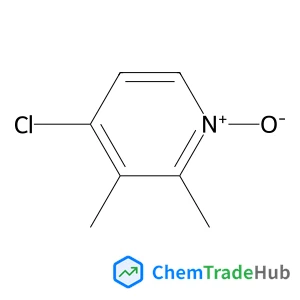
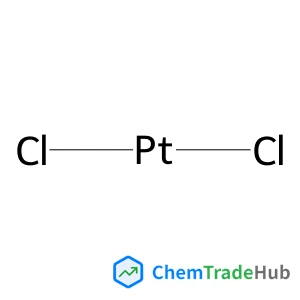
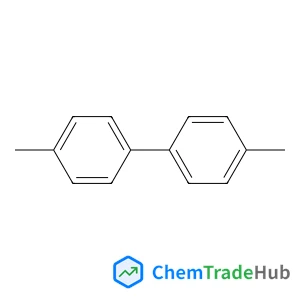
Recommended Compounds
Recommended Suppliers





Disclaimer
This page provides academic journal information for reference and research purposes only. We are not affiliated with any journal publishers and do not handle publication submissions. For publication-related inquiries, please contact the respective journal publishers directly.
If you notice any inaccuracies in the information displayed, please contact us at support@chemtradehub.com. We will promptly review and address your concerns.