












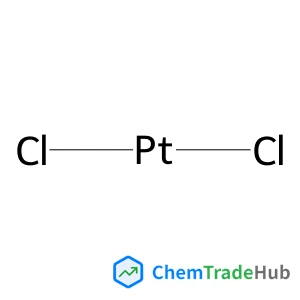
Nature of adhesion of condensed organic films on platinum by first-principles simulations
Literature Information
Publication Date
2011-02-22
DOI
10.1039/C0CP02285C
Impact Factor
3.676
Authors
Slimane Laref, Yan Li, Marie-Laure Bocquet, Françoise Delbecq, Philippe Sautet, David Loffreda
View Original
Abstract
Understanding the nature of the adhesion of an organic liquid on a metal surface is of paramount importance for elucidating the stability and chemical reactivity at these complex interfaces. However, to date, the morphology, layering and chemical properties at organic liquid metal interfaces have been rarely known. Using semi-empirical dispersion corrected density functional theory calculations and ab initio molecular dynamics simulations, we show that carbon tetrachloride and ethanol films confined to a platinum surface alter their intrinsic properties and exhibit interfacial reactivity. A few interface carbon tetrachloride (ethanol) molecules adsorb dissociatively (molecularly) on platinum thanks to the surrounding medium. The adsorption strength of the interfacial molecules is consequently increased in the condensed phase as compared to the gas phase. This remarkable effect is rationalized by an interaction energy decomposition model and an electrostatic potential analysis.
Related Literature
Dye chemistry with time-dependent density functional theory
Adèle D. Laurent
2014-01-30
Perspective
DOI: 10.1039/C3CP55336A
Catalytic oxygen activation versus autoxidation for industrial applications: a physicochemical approach
Xi Liu, Yulia Ryabenkova, Marco Conte
2014-09-26
Perspective
DOI: 10.1039/C4CP03568B
Density functional tight binding: values of semi-empirical methods in an ab initio era
Qiang Cui, Marcus Elstner
2014-05-13
Perspective
DOI: 10.1039/C4CP00908H
Vaporization of the prototypical ionic liquid BMImNTf2 under equilibrium conditions: a multitechnique study
Bruno Brunetti, Andrea Ciccioli, Guido Gigli, Nicolaemanuele Misceo, Luana Tanzi, Stefano Vecchio Ciprioti
2014-06-09
Paper
DOI: 10.1039/C4CP01673D
Surface mediated chiral interactions between cyclodextrins and propranolol enantiomers: a SERS and DFT study
Rares Stiufiuc, Cristian Iacovita, Gabriela Stiufiuc, Ede Bodoki, Vasile Chis, Constantin M. Lucaciu
2014-11-17
Paper
DOI: 10.1039/C4CP03413A
Coverage dependent adsorption and co-adsorption of CO and H2 on the CdI2-antitype metallic Mo2C(001) surface‡
Tao Wang, Jianguo Wang, Matthias Beller
2014-11-27
Paper
DOI: 10.1039/C4CP04331F
Photodesorption of water from rutile(110): ab initio calculation of five-dimensional potential energy surfaces of ground and excited electronic states and wave packet studies
Jan Mitschker, Thorsten Klüner
2014-11-14
Paper
DOI: 10.1039/C4CP04593A
SO2 – yet another two-faced ligand
Jingbai Li, Andrey Yu. Rogachev
2014-12-01
Paper
DOI: 10.1039/C4CP04208E
You might also like
Compound Q&A
What are the main uses of 1H-Indazole-6-carbonitrile (CAS: 141290-59-7)?
1H-Indazole-6-carbonitrile finds applications in pharmaceuticals, where it serve...
141290-59-71H-Indazole-6-carbon...
Compound Q&A
How should waste containing Dioctyl (2E)-2-butenedioate (CAS: 2997-85-5) be handled?
Waste containing Dioctyl (2E)-2-butenedioate (CAS: 2997-85-5) should be collecte...
2997-85-5Dioctyl (2E)-2-buten...
Compound Q&A
What industries use Sodium [(1,2-benzoxazol-3-ylmethyl)sulfonyl]azanide (CAS: 68291-98-5)?
Sodium [(1,2-benzoxazol-3-ylmethyl)sulfonyl]azanide is primarily used in pharmac...
68291-98-5Sodium [(1,2-benzoxa...
Compound Q&A
Are there alternatives to Dimethyl 4-(4,4,5,5-tetramethyl-1,3,2-dioxaborolan-2-yl)-2,6-pyridinedicarboxylate (CAS: 741709-66-0) in synthesis?
Dimethyl 4-(4,4,5,5-tetramethyl-1,3,2-dioxaborolan-2-yl)-2,6-pyridinedicarboxyla...
741709-66-0Dimethyl 4-(4,4,5,5-...
Compound Q&A
How should waste containing 2-Fluoro-6-hydrazinopyridine (CAS: 80714-39-2) be handled?
Waste containing 2-Fluoro-6-hydrazinopyridine (CAS: 80714-39-2) should be manage...
80714-39-22-Fluoro-6-hydrazino...
Compound Q&A
What is 6-Formyl-2-pyridinecarboxylic acid (CAS: 499214-11-8)?
6-Formyl-2-pyridinecarboxylic acid is an organic compound with the molecular for...
499214-11-86-Formyl-2-pyridinec...
Compound Q&A
What is the market or research trend for 3-(3,4-dimethoxyphenyl)-2,5-dimethyl-N-(2-morpholin-4-ylethyl)pyrazolo[1,5-a]pyrimidin-7-amine (CAS: 900874-91-1)?
Research trends for this compound indicate a focus on its potential applications...
900874-91-13-(3,4-dimethoxyphen...
Compound Q&A
How is 9H-Tribenzo[b,d,f]azepine (CAS: 29875-73-8) typically synthesized?
9H-Tribenzo[b,d,f]azepine is typically synthesized via a multi-step process invo...
29875-73-89H-Tribenzo[b,d,f]az...
Compound Q&A
How is 1-Cyclopropyl-7-ethoxy-6-fluoro-8-methoxy-4-oxo-1,4-dihydro-3-quinolinecarboxylic acid (CAS: 1797982-51-4) typically synthesized?
1-Cyclopropyl-7-ethoxy-6-fluoro-8-methoxy-4-oxo-1,4-dihydro-3-quinolinecarboxyli...
1797982-51-41-Cyclopropyl-7-etho...
Compound Q&A
How should waste containing Methyl 3-oxo-1,2,3,4-tetrahydro-6-quinoxalinecarboxylate (CAS: 671820-52-3) be handled?
Waste containing Methyl 3-oxo-1,2,3,4-tetrahydro-6-quinoxalinecarboxylate (CAS: ...
671820-52-3Methyl 3-oxo-1,2,3,4...
Source Journal
Physical Chemistry Chemical Physics

CiteScore:
5.5
Self-citation Rate:
10.3%
Articles per Year:
3036
Physical Chemistry Chemical Physics (PCCP) is an international journal co-owned by 19 physical chemistry and physics societies from around the world. This journal publishes original, cutting-edge research in physical chemistry, chemical physics and biophysical chemistry. To be suitable for publication in PCCP, articles must include significant innovation and/or insight into physical chemistry; this is the most important criterion that reviewers and Editors will judge against when evaluating submissions. The journal has a broad scope and welcomes contributions spanning experiment, theory, computation and data science. Topical coverage includes spectroscopy, dynamics, kinetics, statistical mechanics, thermodynamics, electrochemistry, catalysis, surface science, quantum mechanics, quantum computing and machine learning. Interdisciplinary research areas such as polymers and soft matter, materials, nanoscience, energy, surfaces/interfaces, and biophysical chemistry are welcomed if they demonstrate significant innovation and/or insight into physical chemistry. Joined experimental/theoretical studies are particularly appreciated when complementary and based on up-to-date approaches.
Recommended Compounds
Recommended Suppliers





Disclaimer
This page provides academic journal information for reference and research purposes only. We are not affiliated with any journal publishers and do not handle publication submissions. For publication-related inquiries, please contact the respective journal publishers directly.
If you notice any inaccuracies in the information displayed, please contact us at support@chemtradehub.com. We will promptly review and address your concerns.