












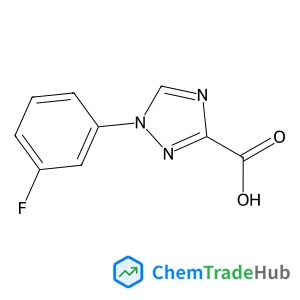
1-(3-Fluorophenyl)-1H-1,2,4-triazole-3-carboxylic acid
CAS Number:
1292369-51-7
Molecular Formula:
C9H6FN3O2
Anders Hansson, Fernando de B. Mota, Roberto Rivelino
After the success of graphene, several two-dimensional (2D) layers have been proposed and investigated both theoretically and experimentally in order to evaluate their structural stability and possible applications of these unusual materials in electronics. Except for graphene, only silicon and germanium were predicted to form semi-metallic honeycomb monolayers, while most of the binary graphene-like compounds are all semiconductors. These predictions have been corroborated for several 2D structures experimentally synthesized. Considering the possibility of finding other candidates in this realm, exhibiting exceptional electron mobility, we have explored low-dimensional silicon–boron compounds containing planar sp2-bonding silicon atoms, through first-principles density-functional theory calculations. We have demonstrated that the so-called h-SiB sheet, which is a structural analogue of 2D honeycomb binary compounds, exhibits good structural stability, compared to the structure of silicene, for example, and predicted that this structure is also able to roll up into thermally stable single-walled silicon–boron nanotubes. The h-SiB sheet exhibits a delocalized charge density like in graphene, but the partially filled π band and two highest occupied σ bands are above the Fermi level, leading to the metallic behaviour of this SiB sheet. In this sense, we perform first-principles electron transport calculations, based on the nonequilibrium Green's function formalism, which has demonstrated that h-SiB exhibits higher transmission around the Fermi energy than the transmission in graphene. Our results indicate the unusual conductivity of this new material and open up new possibilities for the realization of metallic graphene-like systems for electronic transport in low dimensions.
Olalla Nieto Faza, Carlos Silva López, Rosana Álvarez, Ángel R. de Lera
DOI: 10.1039/B506601H
Nina Gommermann, Paul Knochel
DOI: 10.1039/B507810E
Ramsey Ida, Gang Wu
DOI: 10.1039/B505674H
Hiroyuki Katayama, Hiroshi Yari, Masaki Tanaka, Fumiyuki Ozawa
DOI: 10.1039/B504436G
Riichi Miyamoto, Rika Tanaka Hamazawa, Masakazu Hirotsu, Takanori Nishioka, Isamu Kinoshita, L. James Wright
DOI: 10.1039/B505681K
Carl Henrik Görbitz, Mette Nilsen, Kai Szeto, Linda Wibecke Tangen
DOI: 10.1039/B504976H
Jeane Bordini, Peter C. Ford, Elia Tfouni
DOI: 10.1039/B507407J
Chantal Gondran, Olivier Renaudet, Pascal Dumy, Hugues Driguez, Sébastien Fort, Serge Cosnier
DOI: 10.1039/B506699A
Yu Liu, Ying-Wei Yang, Yong Chen
DOI: 10.1039/B507650A
Waste containing N-Methoxy-N-methyl-1,3-thiazole-5-carboxamide (CAS: 898825-89-3...
N-(4-Biphenylyl)dibenzo[b,d]furan-4-amine should be stored in a tightly sealed c...
The market for 3-Acetamido-5-amino-2,4,6-triiodobenzoic acid (CAS: 1713-07-1) is...
Benzyl 2-O-acetyl-3,4,6-tri-O-benzyl-beta-D-galactopyranoside (CAS: 61820-03-9) ...
2-Ethylpiperazine dihydrochloride (CAS: 438050-52-3) is regulated under the Glob...
1,1'-[1,3-Phenylenebis(methylene)]bis(3-methyl-1H-pyrrole-2,5-dione) (CAS: 11946...
Several alternatives can be used in the synthesis of 5-Fluoro-2-(1-pyrrolidinyl)...
Proper personal protective equipment (PPE) must be worn when handling this compo...
When handling 6-Bromoimidazo[1,2-a]pyridin-8-amine, it is important to wear appr...
Alternatives to (2S,4R)-4-(4-Nitrobenzyl)pyrrolidine-2-carboxylic acid hydrochlo...

Physical Chemistry Chemical Physics (PCCP) is an international journal co-owned by 19 physical chemistry and physics societies from around the world. This journal publishes original, cutting-edge research in physical chemistry, chemical physics and biophysical chemistry. To be suitable for publication in PCCP, articles must include significant innovation and/or insight into physical chemistry; this is the most important criterion that reviewers and Editors will judge against when evaluating submissions. The journal has a broad scope and welcomes contributions spanning experiment, theory, computation and data science. Topical coverage includes spectroscopy, dynamics, kinetics, statistical mechanics, thermodynamics, electrochemistry, catalysis, surface science, quantum mechanics, quantum computing and machine learning. Interdisciplinary research areas such as polymers and soft matter, materials, nanoscience, energy, surfaces/interfaces, and biophysical chemistry are welcomed if they demonstrate significant innovation and/or insight into physical chemistry. Joined experimental/theoretical studies are particularly appreciated when complementary and based on up-to-date approaches.
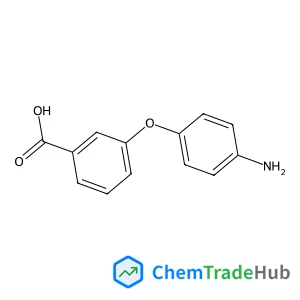
![[(5-Methyl-1,3,4-thiadiazol-2-yl)sulfanyl]acetic acid structure](https://static.chemtradehub.com/structs/509/50918-26-8-4ce8.webp "[(5-Methyl-1,3,4-thiadiazol-2-yl)sulfanyl]acetic acid structure")
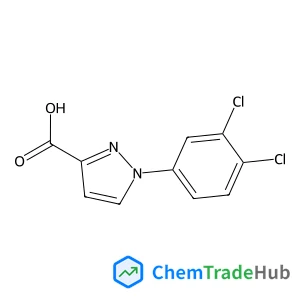
![2-Methyl-2-propanyl {3-[4-(4,4,5,5-tetramethyl-1,3,2-dioxaborolan-2-yl)phenyl]-3-oxetanyl}carbamate structure](https://static.chemtradehub.com/structs/127/1279090-25-3-1b84.webp "2-Methyl-2-propanyl {3-[4-(4,4,5,5-tetramethyl-1,3,2-dioxaborolan-2-yl)phenyl]-3-oxetanyl}carbamate structure")





