












![N-[2-(2-Pyridinyl)ethyl]-1-propanamine structure](https://static.chemtradehub.com/structs/554/55496-57-6-22b4.webp "N-[2-(2-Pyridinyl)ethyl]-1-propanamine structure")
Plasmon spectroscopy of small indium–silver clusters: monitoring the indium shell oxidation
Literature Information
Publication Date
2014-01-30
DOI
10.1039/C3CP55135K
Impact Factor
3.676
Authors
Emmanuel Cottancin, Cyril Langlois, Jean Lermé, Michel Broyer, Marie-Ange Lebeault, Michel Pellarin
View Original
Abstract
Owing to the very different electrovalences of indium and silver, nanoparticles made of these elements are among the simplest examples of hybrid plasmonic systems retaining a full metallic character. The optical properties of small indium–silver clusters are investigated here for the first time in relation to their structural characterization. They are produced in the gas phase by a laser vaporization source and co-deposited in a silica matrix. The optical absorption of fresh samples is dominated by a strong surface plasmon resonance (SPR) in the near UV, in an intermediate position between those of pure elements. A combination of SPR analysis and electron microscopy imaging provides evidence for the favourable surface segregation of indium. After a prolonged exposure to ambient air and because of the silica matrix porosity, changes in the SPR reflect the spontaneous formation of a dielectric indium oxide shell around a metallic silver core. The metallic character of indium can nevertheless be recovered by annealing under a reducing atmosphere. The reversibility of these processes is directly mirrored in optical measurements through SPR shifts and broadenings as supported by multi-shell Mie theory calculations. By controlling their oxidation level, In–Ag clusters can be considered as new candidates to extend SPR spectroscopy in the UV range and model plasmonic systems consisting of a silver particle of potentially very small size, fully protected by a dielectric oxide shell.
Related Literature
Enzymatically catalytic signal tracing by a glucose oxidase and ferrocene dually functionalized nanoporous gold nanoprobe for ultrasensitive electrochemical measurement of a tumor biomarker
Hui Cheng, Lingling Xu, Haili Zhang, Guosong Lai
2016-05-04
Paper
DOI: 10.1039/C6AN00651E
Highly sensitive detection of cancer-related genes based on complete fluorescence restoration of a molecular beacon with a functional overhang
Feng Li, Ying-Ying Zhou, Ting Peng, Huo Xu, Rong-Bo Zhang, Hui Zhao, Zheng-yong Wang, Jian-Xin Lv, Zai-Sheng Wu, Zhi-Fa Shen
2016-05-11
Paper
DOI: 10.1039/C6AN00898D
Interface engineering of microelectrodes toward ultrasensitive monitoring of β-amyloid peptides in cerebrospinal fluid in Alzheimer's disease
Shushu Ding, Yunxia Xu, Qi Liu, Hui Gu, Anwei Zhu, Guoyue Shi
2020-01-13
Paper
DOI: 10.1039/C9AN02285F
Gadolinium-based MRI contrast agent for the detection of tyrosinase
Hyewon Seo
2019-12-17
Communication
DOI: 10.1039/C9AN02213A
An aggregation-induced emission luminogen combined with a cyanoacrylate fuming method for latent fingerprint analysis
Xiaodong Jin, Hao Wang, Ran Xin, Yining Ma, Guoping Wu, Tongxiang Xu, Xiaowei Xia, Shifan Wang, Rongliang Ma
2020-01-07
Paper
DOI: 10.1039/C9AN02158B
A twin enrichment method based on dispersive liquid–liquid microextraction and field-amplified sample injection for the simultaneous determination of sulfonamides
Shixuan Yang, Zhihua Song, Jinhua Li, Qiaocui Shi, Huiyan You, Huitao Liu, Min Lv, Lingxin Chen
2020-01-13
Paper
DOI: 10.1039/C9AN02127B
Surface-enhanced spatially-offset Raman spectroscopy (SESORS) for detection of neurochemicals through the skull at physiologically relevant concentrations
Amber S. Moody, Taylor D. Payne, Brian A. Barth, Bhavya Sharma
2020-01-16
Paper
DOI: 10.1039/C9AN01708A
Optical biosensors: an exhaustive and comprehensive review
Chen Chen, Junsheng Wang
2020-01-06
Critical Review
DOI: 10.1039/C9AN01998G
Monitoring drug–lipid membrane interactions via a molecular rotor probe
Qinqin Xu, Tao Zhao, Zhihua Sun
2016-05-23
Paper
DOI: 10.1039/C6AN00721J
Correction: Total viable bacterial count using a real time all-fibre spectroscopic system
2016-07-07
Correction
DOI: 10.1039/C6AN90038K
You might also like
Compound Q&A
What precautions should be taken when handling lithium chloride hydrate (1:1:1) (CAS: 16712-20-2)?
When handling lithium chloride hydrate (1:1:1) (CAS: 16712-20-2), it is importan...
16712-20-2Lithium chloride hyd...
Compound Q&A
Is 4-(4H-1,2,4-Triazol-4-yl)piperidine (CAS: 690261-92-8) safe?
4-(4H-1,2,4-Triazol-4-yl)piperidine is generally considered safe for use in phar...
690261-92-84-(4H-1,2,4-Triazol-...
Compound Q&A
How should waste containing 1,3-Thiazole-2-carboxamide (CAS: 16733-85-0) be handled?
Waste containing 1,3-Thiazole-2-carboxamide (CAS: 16733-85-0) should be collecte...
16733-85-01,3-Thiazole-2-carbo...
Compound Q&A
What regulatory guidelines apply to 5-(Difluoromethyl)-2-fluorobenzonitrile (CAS: 934175-58-3)?
5-(Difluoromethyl)-2-fluorobenzonitrile (CAS: 934175-58-3) is subject to regulat...
934175-58-35-(Difluoromethyl)-2...
Compound Q&A
How is Methyl 3-acetamido-2-thiophenecarboxylate (CAS: 22288-79-5) typically synthesized?
Methyl 3-acetamido-2-thiophenecarboxylate can be synthesized by the reaction of ...
22288-79-5Methyl 3-acetamido-2...
Compound Q&A
What is 4-Isoquinolinecarbonitrile (CAS: 34846-65-6)?
4-Isoquinolinecarbonitrile is a chemical compound with the CAS number 34846-65-6...
34846-65-64-Isoquinolinecarbon...
Compound Q&A
How should Methyl 1H-1,2,3-triazole-4-carboxylate (CAS: 877309-59-6) be stored?
Store Methyl 1H-1,2,3-triazole-4-carboxylate (CAS: 877309-59-6) in a cool, dry p...
877309-59-6Methyl 1H-1,2,3-tria...
Compound Q&A
What regulatory guidelines apply to 6-Bromo[1,3]thiazolo[5,4-b]pyridin-2-amine (CAS: 1160791-13-8)?
6-Bromo[1,3]thiazolo[5,4-b]pyridin-2-amine (CAS: 1160791-13-8) is subject to the...
1160791-13-86-Bromo[1,3]thiazolo...
Compound Q&A
Is (2S,3S)-2-Ammonio-3-(3,4-dihydroxyphenyl)-3-hydroxypropanoate (CAS: 23651-95-8) safe?
(2S,3S)-2-Ammonio-3-(3,4-dihydroxyphenyl)-3-hydroxypropanoate (CAS: 23651-95-8) ...
23651-95-8(2S,3S)-2-Ammonio-3-...
Compound Q&A
What are the physical and chemical properties of 7-bromo-3-methyl-3,4-dihydroquinazolin-4-one (CAS: 1293987-84-4)?
7-Bromo-3-methyl-3,4-dihydroquinazolin-4-one is a solid with a crystalline form....
1293987-84-47-bromo-3-methyl-3,4...
Source Journal
Physical Chemistry Chemical Physics

CiteScore:
5.5
Self-citation Rate:
10.3%
Articles per Year:
3036
Physical Chemistry Chemical Physics (PCCP) is an international journal co-owned by 19 physical chemistry and physics societies from around the world. This journal publishes original, cutting-edge research in physical chemistry, chemical physics and biophysical chemistry. To be suitable for publication in PCCP, articles must include significant innovation and/or insight into physical chemistry; this is the most important criterion that reviewers and Editors will judge against when evaluating submissions. The journal has a broad scope and welcomes contributions spanning experiment, theory, computation and data science. Topical coverage includes spectroscopy, dynamics, kinetics, statistical mechanics, thermodynamics, electrochemistry, catalysis, surface science, quantum mechanics, quantum computing and machine learning. Interdisciplinary research areas such as polymers and soft matter, materials, nanoscience, energy, surfaces/interfaces, and biophysical chemistry are welcomed if they demonstrate significant innovation and/or insight into physical chemistry. Joined experimental/theoretical studies are particularly appreciated when complementary and based on up-to-date approaches.
Recommended Compounds
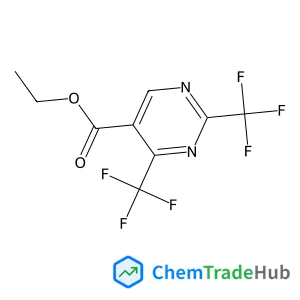
Ethyl 2,4-bis(trifluoromethyl)-5-pyrimidinecarboxylate
CAS Number:
188781-15-9
Molecular Formula:
C9H6F6N2O2
![6,6-Dimethylbicyclo[3.1.1]hept-2-ene-2-carbaldehyde structure](https://static.chemtradehub.com/structs/564/564-94-3-e746.webp "6,6-Dimethylbicyclo[3.1.1]hept-2-ene-2-carbaldehyde structure")
![5,10-Dihydroindeno[2,1-a]indene structure](https://static.chemtradehub.com/structs/654/6543-29-9-71ca.webp "5,10-Dihydroindeno[2,1-a]indene structure")
Recommended Suppliers






Disclaimer
This page provides academic journal information for reference and research purposes only. We are not affiliated with any journal publishers and do not handle publication submissions. For publication-related inquiries, please contact the respective journal publishers directly.
If you notice any inaccuracies in the information displayed, please contact us at support@chemtradehub.com. We will promptly review and address your concerns.