













Indentation-formed nanocontacts: an atomic-scale perspective
Literature Information
Publication Date
2014-03-17
DOI
10.1039/C3CP54869D
Impact Factor
3.676
Authors
William Paul, David Oliver, Peter Grütter
View Original
Abstract
One-to-one comparisons between indentation experiments and atomistic modelling have until recently been hampered by the discrepancy in length scales of the two approaches. Here, we review progress in atomic-scale nanoindentation experiments employing scanning probe techniques to achieve depth-sensing indentation and field ion microscopy to permit detailed indenter characterization. This perspective addresses both mechanical (dislocation nucleation, defect structures, adhesion, indenter effects) and electronic (interface, disorder, and vacancy scattering) properties of indentation-formed contacts.
Related Literature
Immobilization of Mn(i) and Ru(ii) polypyridyl complexes on TiO2 nanoparticles for selective photoreduction of CO2 to formic acid
Matthew Stanbury, Sylvie Chardon-Noblat, Jean-Marie Mouesca, Vincent Maurel, Jérôme Chauvin
2019-10-22
Communication
DOI: 10.1039/C9CC05129E
Solvent pulse desorption on-line solid-phase extraction combined with high-performance liquid chromatographic determination of 14 sulfonamides in environmental water samples
Feng-Chun Hsieh, Jia-Lin Wang, Youn-Yuen Shu
2019-08-09
Paper
DOI: 10.1039/C9AY01142K
Droplet incubation and splitting in open microfluidic channels
Samuel B. Berry, Jing J. Lee, Jean Berthier, Erwin Berthier
2019-08-28
Paper
DOI: 10.1039/C9AY00758J
Homopropargyl as a new recognition moiety of a fluorescent probe for detection of palladium in living cells
Miao Chen, Xianhui Wang, Nannan Wang, Xin Ji, Jinling He, Jian Zhang
2019-07-15
Paper
DOI: 10.1039/C9AY00844F
Photo-responsive MOFs: light-induced switching of porous single crystals containing a photochromic diarylethene
Ian M. Walton, Jordan M. Cox, Jarrett A. Coppin, Crysania M. Linderman, Dinesh G. (Dan) Patel, Jason B. Benedict
2013-07-22
Communication
DOI: 10.1039/C3CC44119A
Lab on paper: assay of beta-lactam pharmaceuticals by redox titration
Mercy W. Maina, Phelix Makoto Were, Jamie L. Luther, Sarah L. Bliese, Nils Oberhof, Doaa Aldulaimi, Marya Lieberman
2019-09-02
Paper
DOI: 10.1039/C9AY01547G
Multidimensional scaling assisted Fourier-transform infrared spectroscopic analysis of fruit wine samples: introducing a novel analytical approach
Keshav Kumar, Anja Giehl, Ralf Schweiggert, Claus-Dieter Patz
2019-07-25
Paper
DOI: 10.1039/C9AY01425J
Unsorted single walled carbon nanotubes enabled the fabrication of high performance organic thin film transistors with low cost metal electrodes
Shiping Zhu, Tony Wigglesworth, Yiliang Wu
2013-07-26
Communication
DOI: 10.1039/C3CC43920H
Development and prospects of microfluidic platforms for sperm inspection
2019-08-13
Minireview
DOI: 10.1039/C9AY01641D
You might also like
Compound Q&A
What are the main uses of 1H-Indazole-6-carbonitrile (CAS: 141290-59-7)?
1H-Indazole-6-carbonitrile finds applications in pharmaceuticals, where it serve...
141290-59-71H-Indazole-6-carbon...
Compound Q&A
How should waste containing Dioctyl (2E)-2-butenedioate (CAS: 2997-85-5) be handled?
Waste containing Dioctyl (2E)-2-butenedioate (CAS: 2997-85-5) should be collecte...
2997-85-5Dioctyl (2E)-2-buten...
Compound Q&A
What industries use Sodium [(1,2-benzoxazol-3-ylmethyl)sulfonyl]azanide (CAS: 68291-98-5)?
Sodium [(1,2-benzoxazol-3-ylmethyl)sulfonyl]azanide is primarily used in pharmac...
68291-98-5Sodium [(1,2-benzoxa...
Compound Q&A
Are there alternatives to Dimethyl 4-(4,4,5,5-tetramethyl-1,3,2-dioxaborolan-2-yl)-2,6-pyridinedicarboxylate (CAS: 741709-66-0) in synthesis?
Dimethyl 4-(4,4,5,5-tetramethyl-1,3,2-dioxaborolan-2-yl)-2,6-pyridinedicarboxyla...
741709-66-0Dimethyl 4-(4,4,5,5-...
Compound Q&A
How should waste containing 2-Fluoro-6-hydrazinopyridine (CAS: 80714-39-2) be handled?
Waste containing 2-Fluoro-6-hydrazinopyridine (CAS: 80714-39-2) should be manage...
80714-39-22-Fluoro-6-hydrazino...
Compound Q&A
What is 6-Formyl-2-pyridinecarboxylic acid (CAS: 499214-11-8)?
6-Formyl-2-pyridinecarboxylic acid is an organic compound with the molecular for...
499214-11-86-Formyl-2-pyridinec...
Compound Q&A
What is the market or research trend for 3-(3,4-dimethoxyphenyl)-2,5-dimethyl-N-(2-morpholin-4-ylethyl)pyrazolo[1,5-a]pyrimidin-7-amine (CAS: 900874-91-1)?
Research trends for this compound indicate a focus on its potential applications...
900874-91-13-(3,4-dimethoxyphen...
Compound Q&A
How is 9H-Tribenzo[b,d,f]azepine (CAS: 29875-73-8) typically synthesized?
9H-Tribenzo[b,d,f]azepine is typically synthesized via a multi-step process invo...
29875-73-89H-Tribenzo[b,d,f]az...
Compound Q&A
How is 1-Cyclopropyl-7-ethoxy-6-fluoro-8-methoxy-4-oxo-1,4-dihydro-3-quinolinecarboxylic acid (CAS: 1797982-51-4) typically synthesized?
1-Cyclopropyl-7-ethoxy-6-fluoro-8-methoxy-4-oxo-1,4-dihydro-3-quinolinecarboxyli...
1797982-51-41-Cyclopropyl-7-etho...
Compound Q&A
How should waste containing Methyl 3-oxo-1,2,3,4-tetrahydro-6-quinoxalinecarboxylate (CAS: 671820-52-3) be handled?
Waste containing Methyl 3-oxo-1,2,3,4-tetrahydro-6-quinoxalinecarboxylate (CAS: ...
671820-52-3Methyl 3-oxo-1,2,3,4...
Source Journal
Physical Chemistry Chemical Physics

CiteScore:
5.5
Self-citation Rate:
10.3%
Articles per Year:
3036
Physical Chemistry Chemical Physics (PCCP) is an international journal co-owned by 19 physical chemistry and physics societies from around the world. This journal publishes original, cutting-edge research in physical chemistry, chemical physics and biophysical chemistry. To be suitable for publication in PCCP, articles must include significant innovation and/or insight into physical chemistry; this is the most important criterion that reviewers and Editors will judge against when evaluating submissions. The journal has a broad scope and welcomes contributions spanning experiment, theory, computation and data science. Topical coverage includes spectroscopy, dynamics, kinetics, statistical mechanics, thermodynamics, electrochemistry, catalysis, surface science, quantum mechanics, quantum computing and machine learning. Interdisciplinary research areas such as polymers and soft matter, materials, nanoscience, energy, surfaces/interfaces, and biophysical chemistry are welcomed if they demonstrate significant innovation and/or insight into physical chemistry. Joined experimental/theoretical studies are particularly appreciated when complementary and based on up-to-date approaches.
Recommended Compounds


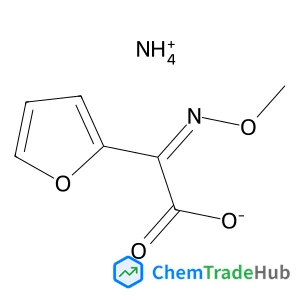
Ammonium (Z)-2-(furan-2-yl)-2-(methoxyimino)acetate
CAS Number:
97148-39-5
Molecular Formula:
C7H10N2O4
Recommended Suppliers





Disclaimer
This page provides academic journal information for reference and research purposes only. We are not affiliated with any journal publishers and do not handle publication submissions. For publication-related inquiries, please contact the respective journal publishers directly.
If you notice any inaccuracies in the information displayed, please contact us at support@chemtradehub.com. We will promptly review and address your concerns.