












Copper–amyloid-β complex may catalyze peroxynitrite production in brain: evidence from molecular modeling
Literature Information
Publication Date
2014-01-15
DOI
10.1039/C3CP54839B
Impact Factor
3.676
Authors
Ilaria Ciofini, Li Rao, Christian Amatore
View Original
Abstract
Rationalization of the origin of peroxynitrite-related damages in the brain of Alzheimer's disease (AD) patients linking to functional hyperemia, inexplicable on the basis of the accepted hydrogen peroxide catalytic route, is here provided by molecular modeling. The present theoretical work indeed strongly supports the facile occurrence of an Aβ-catalyzed generation of peroxynitrite in the brain, alternative to the already accepted H2O2-route, whenever ascorbate, dioxygen and nitric oxide are present near Cu–Aβ complexes without the necessity of generating short-lived superoxide ions. The proposed route requires nitric oxide and dioxygen to be simultaneously present at sufficiently high concentrations near Cu–Aβ complexes, requirement which is frequently fulfilled in brain during functional hyperemia. Conversely, hydrogen peroxide would be produced during resting phases.
Related Literature
Theoretical studies on FGFR isoform selectivity of FGFR1/FGFR4 inhibitors by molecular dynamics simulations and free energy calculations
Weitao Fu, Lingfeng Chen, Zhe Wang, Chao Wu, Qinqin Xia, Zhiguo Liu, Jianmin Zhou, Guang Liang, Yuepiao Cai
2017-01-04
Paper
DOI: 10.1039/C6CP07964D
Energy decomposition analysis in an adiabatic picture
Yuezhi Mao, Paul R. Horn
2017-02-01
Paper
DOI: 10.1039/C6CP08039A
Tuning calcium biosensors with a single-site mutation: structural dynamics insights from femtosecond Raman spectroscopy
Sean R. Tachibana, Longteng Tang, Yanli Wang, Weimin Liu
2017-02-13
Paper
DOI: 10.1039/C6CP08821J
Dissipation of the excess energy of the adsorbate-thermalization via electron transfer
Pawel Strak, Konrad Sakowski, Stanislaw Krukowski
2017-03-10
Paper
DOI: 10.1039/C7CP00235A
Consecutive reactions of small, free tantalum clusters with dioxygen controlled by relaxation dynamics
J. F. Eckhard, D. Neuwirth, C. Panosetti, H. Oberhofer, K. Reuter, M. Tschurl, U. Heiz
2017-01-26
Paper
DOI: 10.1039/C6CP07631A
Solid–liquid and liquid–solid transitions in metal nanoparticles
2017-01-23
Paper
DOI: 10.1039/C6CP08606C
Erbium ion implantation into diamond – measurement and modelling of the crystal structure
Pavla Nekvindová, David Sedmidubský, Michal Hušák, Zdeněk Remeš, Marián Varga, Alexander Kromka, Roman Böttger, Jiří Oswald
2017-01-26
Paper
DOI: 10.1039/C6CP08851A
Tuning the ambipolar charge transport properties of tricyanovinyl-substituted carbazole-based materials
Marta Reig, Dmytro Volyniuk, Juozas V. Grazulevicius, Dolores Velasco
2017-02-03
Paper
DOI: 10.1039/C6CP08078B
Wet chemical etching induced stress relaxed nanostructures on polar & non-polar epitaxial GaN films
Abhiram Gundimeda, Bhasker Gahtori, Nita Dilawar, Ved Varun Aggarwal, Manju Singh, Rajib Rakshit
2017-03-07
Paper
DOI: 10.1039/C7CP00380C
You might also like
Compound Q&A
What are the main uses of 1H-Indazole-6-carbonitrile (CAS: 141290-59-7)?
1H-Indazole-6-carbonitrile finds applications in pharmaceuticals, where it serve...
141290-59-71H-Indazole-6-carbon...
Compound Q&A
How should waste containing Dioctyl (2E)-2-butenedioate (CAS: 2997-85-5) be handled?
Waste containing Dioctyl (2E)-2-butenedioate (CAS: 2997-85-5) should be collecte...
2997-85-5Dioctyl (2E)-2-buten...
Compound Q&A
What industries use Sodium [(1,2-benzoxazol-3-ylmethyl)sulfonyl]azanide (CAS: 68291-98-5)?
Sodium [(1,2-benzoxazol-3-ylmethyl)sulfonyl]azanide is primarily used in pharmac...
68291-98-5Sodium [(1,2-benzoxa...
Compound Q&A
Are there alternatives to Dimethyl 4-(4,4,5,5-tetramethyl-1,3,2-dioxaborolan-2-yl)-2,6-pyridinedicarboxylate (CAS: 741709-66-0) in synthesis?
Dimethyl 4-(4,4,5,5-tetramethyl-1,3,2-dioxaborolan-2-yl)-2,6-pyridinedicarboxyla...
741709-66-0Dimethyl 4-(4,4,5,5-...
Compound Q&A
How should waste containing 2-Fluoro-6-hydrazinopyridine (CAS: 80714-39-2) be handled?
Waste containing 2-Fluoro-6-hydrazinopyridine (CAS: 80714-39-2) should be manage...
80714-39-22-Fluoro-6-hydrazino...
Compound Q&A
What is 6-Formyl-2-pyridinecarboxylic acid (CAS: 499214-11-8)?
6-Formyl-2-pyridinecarboxylic acid is an organic compound with the molecular for...
499214-11-86-Formyl-2-pyridinec...
Compound Q&A
What is the market or research trend for 3-(3,4-dimethoxyphenyl)-2,5-dimethyl-N-(2-morpholin-4-ylethyl)pyrazolo[1,5-a]pyrimidin-7-amine (CAS: 900874-91-1)?
Research trends for this compound indicate a focus on its potential applications...
900874-91-13-(3,4-dimethoxyphen...
Compound Q&A
How is 9H-Tribenzo[b,d,f]azepine (CAS: 29875-73-8) typically synthesized?
9H-Tribenzo[b,d,f]azepine is typically synthesized via a multi-step process invo...
29875-73-89H-Tribenzo[b,d,f]az...
Compound Q&A
How is 1-Cyclopropyl-7-ethoxy-6-fluoro-8-methoxy-4-oxo-1,4-dihydro-3-quinolinecarboxylic acid (CAS: 1797982-51-4) typically synthesized?
1-Cyclopropyl-7-ethoxy-6-fluoro-8-methoxy-4-oxo-1,4-dihydro-3-quinolinecarboxyli...
1797982-51-41-Cyclopropyl-7-etho...
Compound Q&A
How should waste containing Methyl 3-oxo-1,2,3,4-tetrahydro-6-quinoxalinecarboxylate (CAS: 671820-52-3) be handled?
Waste containing Methyl 3-oxo-1,2,3,4-tetrahydro-6-quinoxalinecarboxylate (CAS: ...
671820-52-3Methyl 3-oxo-1,2,3,4...
Source Journal
Physical Chemistry Chemical Physics

CiteScore:
5.5
Self-citation Rate:
10.3%
Articles per Year:
3036
Physical Chemistry Chemical Physics (PCCP) is an international journal co-owned by 19 physical chemistry and physics societies from around the world. This journal publishes original, cutting-edge research in physical chemistry, chemical physics and biophysical chemistry. To be suitable for publication in PCCP, articles must include significant innovation and/or insight into physical chemistry; this is the most important criterion that reviewers and Editors will judge against when evaluating submissions. The journal has a broad scope and welcomes contributions spanning experiment, theory, computation and data science. Topical coverage includes spectroscopy, dynamics, kinetics, statistical mechanics, thermodynamics, electrochemistry, catalysis, surface science, quantum mechanics, quantum computing and machine learning. Interdisciplinary research areas such as polymers and soft matter, materials, nanoscience, energy, surfaces/interfaces, and biophysical chemistry are welcomed if they demonstrate significant innovation and/or insight into physical chemistry. Joined experimental/theoretical studies are particularly appreciated when complementary and based on up-to-date approaches.
Recommended Compounds
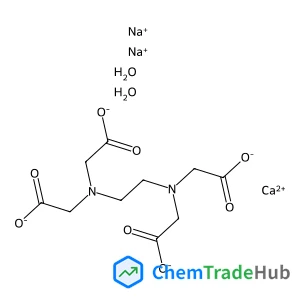
EthylenediaminetetraaceticacidcalciumDisodiumsalthydrate
CAS Number:
23411-34-9
Molecular Formula:
C10H16CaN2Na2O10
![N-[(9H-Fluoren-9-ylmethoxy)carbonyl]serine structure](https://static.chemtradehub.com/structs/737/73724-45-5-b0dc.webp "N-[(9H-Fluoren-9-ylmethoxy)carbonyl]serine structure")
Recommended Suppliers





Disclaimer
This page provides academic journal information for reference and research purposes only. We are not affiliated with any journal publishers and do not handle publication submissions. For publication-related inquiries, please contact the respective journal publishers directly.
If you notice any inaccuracies in the information displayed, please contact us at support@chemtradehub.com. We will promptly review and address your concerns.