


Structural dynamics effects on the ultrafast chemical bond cleavage of a photodissociation reaction
Literature Information
Publication Date
2013-12-24
DOI
10.1039/C3CP54677B
Impact Factor
3.676
Authors
María E. Corrales, Garikoitz Balerdi, Rebeca de Nalda, Luis Bañares, Ahmed H. Zewail
View Original
Abstract
The correlation between chemical structure and dynamics has been explored in a series of molecules with increasing structural complexity in order to investigate its influence on bond cleavage reaction times in a photodissociation event. Femtosecond time-resolved velocity map imaging spectroscopy reveals specificity of the ultrafast carbon–iodine (C–I) bond breakage for a series of linear (unbranched) and branched alkyl iodides, due to the interplay between the pure reaction coordinate and the rest of the degrees of freedom associated with the molecular structure details. Full-dimension time-resolved dynamics calculations support the experimental evidence and provide insight into the structure–dynamics relationship to understand structural control on time-resolved reactivity.
Recommended Journals

Heteroatom Chemistry

Bioorganic & Medicinal Chemistry Letters

Acta Metallurgica Sinica-English Letters

Colloid Journal

Cellulose

Journal of the Indian Institute of Science

NDT & E International

Polycyclic Aromatic Compounds

Critical Reviews in Solid State and Materials Sciences

Biocatalysis and Biotransformation
Related Literature
Cathodic electrochemical activation of Co3O4 nanoarrays: a smart strategy to significantly boost the hydrogen evolution activity
Li Yang, Huang Zhou, Xin Qin, Xiaodong Guo, Guanwei Cui, Abdullah M. Asiri, Xuping Sun
2018-01-31
Communication
DOI: 10.1039/C7CC09416G
Copper-catalyzed 1,1-arylalkylation of terminal alkynes with diazo esters and organoboronic acids
Weiya Pu, Xueru Liu, Jinye Sun, Mengxing Cui
2019-10-17
Communication
DOI: 10.1039/C9CC07461A
Stepwise isolation of low-valent, low-coordinate Sn and Pb mono- and dications in the coordination sphere of platinum
Holger Braunschweig, Mehmet Ali Celik, Rian D. Dewhurst, Magdalena Heid, Florian Hupp, Sakya S. Sen
2014-10-15
Edge Article
DOI: 10.1039/C4SC02948H
Decontaminating chemically contaminated residential premise plumbing systems by flushing
K. S. Casteloes, R. H. Brazeau, A. J. Whelton
2015-08-10
Paper
DOI: 10.1039/C5EW00118H
High-efficiency electrocatalyst for N2 conversion to NH3 based on Au nanoparticles loaded on defective WO3−x
Youzeng Li, Pengfei Yan, Jun Chen, Yumei Ren, Yannan Zhou, Tianpei Ge, Jun Chen
2019-10-02
Communication
DOI: 10.1039/C9CC06550D
The role of charge in 1,2,3-triazol(ium)-based halogen bonding activators
Alexander Dreger, Elric Engelage, Bert Mallick, Paul D. Beer, Stefan M. Huber
2018-04-04
Communication
DOI: 10.1039/C8CC00527C
Electrochemical determination of bisphenol A using a polyacrylamide–multiwalled carbon nanotube-modified glassy carbon electrode
Jian Han, Faying Li, Liping Jiang, Kai Li, Yunhui Dong, Yueyun Li
2015-08-13
Paper
DOI: 10.1039/C5AY02058A
β-Functionalized trans-A2B2 push–pull tetrabenzoporphyrins
Siddhartha Kumar, Xiaoqin Jiang, Wenqian Shan, R. G. Waruna Jinadasa, Karl M. Kadish, Hong Wang
2018-02-28
Communication
DOI: 10.1039/C7CC09743C
Sensing of citrulline modifications in histone peptides by deep cavitand hosts
Adam D. Gill, Briana L. Hickey, Siwen Wang
2019-10-11
Communication
DOI: 10.1039/C9CC07002H
You might also like
Compound Q&A
What are the main uses of 1H-Indazole-6-carbonitrile (CAS: 141290-59-7)?
1H-Indazole-6-carbonitrile finds applications in pharmaceuticals, where it serve...
141290-59-71H-Indazole-6-carbon...
Compound Q&A
How should waste containing Dioctyl (2E)-2-butenedioate (CAS: 2997-85-5) be handled?
Waste containing Dioctyl (2E)-2-butenedioate (CAS: 2997-85-5) should be collecte...
2997-85-5Dioctyl (2E)-2-buten...
Compound Q&A
What industries use Sodium [(1,2-benzoxazol-3-ylmethyl)sulfonyl]azanide (CAS: 68291-98-5)?
Sodium [(1,2-benzoxazol-3-ylmethyl)sulfonyl]azanide is primarily used in pharmac...
68291-98-5Sodium [(1,2-benzoxa...
Compound Q&A
Are there alternatives to Dimethyl 4-(4,4,5,5-tetramethyl-1,3,2-dioxaborolan-2-yl)-2,6-pyridinedicarboxylate (CAS: 741709-66-0) in synthesis?
Dimethyl 4-(4,4,5,5-tetramethyl-1,3,2-dioxaborolan-2-yl)-2,6-pyridinedicarboxyla...
741709-66-0Dimethyl 4-(4,4,5,5-...
Compound Q&A
How should waste containing 2-Fluoro-6-hydrazinopyridine (CAS: 80714-39-2) be handled?
Waste containing 2-Fluoro-6-hydrazinopyridine (CAS: 80714-39-2) should be manage...
80714-39-22-Fluoro-6-hydrazino...
Compound Q&A
What is 6-Formyl-2-pyridinecarboxylic acid (CAS: 499214-11-8)?
6-Formyl-2-pyridinecarboxylic acid is an organic compound with the molecular for...
499214-11-86-Formyl-2-pyridinec...
Compound Q&A
What is the market or research trend for 3-(3,4-dimethoxyphenyl)-2,5-dimethyl-N-(2-morpholin-4-ylethyl)pyrazolo[1,5-a]pyrimidin-7-amine (CAS: 900874-91-1)?
Research trends for this compound indicate a focus on its potential applications...
900874-91-13-(3,4-dimethoxyphen...
Compound Q&A
How is 9H-Tribenzo[b,d,f]azepine (CAS: 29875-73-8) typically synthesized?
9H-Tribenzo[b,d,f]azepine is typically synthesized via a multi-step process invo...
29875-73-89H-Tribenzo[b,d,f]az...
Compound Q&A
How is 1-Cyclopropyl-7-ethoxy-6-fluoro-8-methoxy-4-oxo-1,4-dihydro-3-quinolinecarboxylic acid (CAS: 1797982-51-4) typically synthesized?
1-Cyclopropyl-7-ethoxy-6-fluoro-8-methoxy-4-oxo-1,4-dihydro-3-quinolinecarboxyli...
1797982-51-41-Cyclopropyl-7-etho...
Compound Q&A
How should waste containing Methyl 3-oxo-1,2,3,4-tetrahydro-6-quinoxalinecarboxylate (CAS: 671820-52-3) be handled?
Waste containing Methyl 3-oxo-1,2,3,4-tetrahydro-6-quinoxalinecarboxylate (CAS: ...
671820-52-3Methyl 3-oxo-1,2,3,4...
Source Journal
Physical Chemistry Chemical Physics

CiteScore:
5.5
Self-citation Rate:
10.3%
Articles per Year:
3036
Physical Chemistry Chemical Physics (PCCP) is an international journal co-owned by 19 physical chemistry and physics societies from around the world. This journal publishes original, cutting-edge research in physical chemistry, chemical physics and biophysical chemistry. To be suitable for publication in PCCP, articles must include significant innovation and/or insight into physical chemistry; this is the most important criterion that reviewers and Editors will judge against when evaluating submissions. The journal has a broad scope and welcomes contributions spanning experiment, theory, computation and data science. Topical coverage includes spectroscopy, dynamics, kinetics, statistical mechanics, thermodynamics, electrochemistry, catalysis, surface science, quantum mechanics, quantum computing and machine learning. Interdisciplinary research areas such as polymers and soft matter, materials, nanoscience, energy, surfaces/interfaces, and biophysical chemistry are welcomed if they demonstrate significant innovation and/or insight into physical chemistry. Joined experimental/theoretical studies are particularly appreciated when complementary and based on up-to-date approaches.
Recommended Compounds
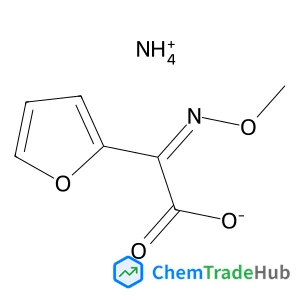
Ammonium (Z)-2-(furan-2-yl)-2-(methoxyimino)acetate
CAS Number:
97148-39-5
Molecular Formula:
C7H10N2O4
Recommended Suppliers





Disclaimer
This page provides academic journal information for reference and research purposes only. We are not affiliated with any journal publishers and do not handle publication submissions. For publication-related inquiries, please contact the respective journal publishers directly.
If you notice any inaccuracies in the information displayed, please contact us at support@chemtradehub.com. We will promptly review and address your concerns.