












ωB97X-V: A 10-parameter, range-separated hybrid, generalized gradient approximation density functional with nonlocal correlation, designed by a survival-of-the-fittest strategy
Literature Information
Publication Date
2013-12-18
DOI
10.1039/C3CP54374A
Impact Factor
3.676
Authors
Narbe Mardirossian, Martin Head-Gordon
View Original
Abstract
A 10-parameter, range-separated hybrid (RSH), generalized gradient approximation (GGA) density functional with nonlocal correlation (VV10) is presented. Instead of truncating the B97-type power series inhomogeneity correction factors (ICF) for the exchange, same-spin correlation, and opposite-spin correlation functionals uniformly, all 16 383 combinations of the linear parameters up to fourth order (m = 4) are considered. These functionals are individually fit to a training set and the resulting parameters are validated on a primary test set in order to identify the 3 optimal ICF expansions. Through this procedure, it is discovered that the functional that performs best on the training and primary test sets has 7 linear parameters, with 3 additional nonlinear parameters from range-separation and nonlocal correlation. The resulting density functional, ωB97X-V, is further assessed on a secondary test set, the parallel-displaced coronene dimer, as well as several geometry datasets. Furthermore, the basis set dependence and integration grid sensitivity of ωB97X-V are analyzed and documented in order to facilitate the use of the functional.
Related Literature
Highly stable SERS pH nanoprobes produced by co-solvent controlled AuNP aggregation
2016-04-22
Paper
DOI: 10.1039/C6AN00650G
Molecular labels for analysis of amines and diols by spray based ionization-mass spectrometry
S. T. Ayrton, R. G. Cooks, M. Pugia
2016-06-22
Paper
DOI: 10.1039/C6AN00907G
Sensitive fluorescence assay of organophosphorus pesticides based on the fluorescence resonance energy transfer between CdTe quantum dots and porphyrin
Gao Xue, Zhao Yue, Zhang Bing, Tang Yiwei, Liu Xiuying, Li Jianrong
2016-06-06
Paper
DOI: 10.1039/C6AN00626D
A molecularly imprinted electrochemiluminescence sensor based on the mimetic enzyme catalytic effect for ultra-trace Ni2+ determination
Bin Yang, Jianping Li, Lianming Zhang
2016-07-25
Paper
DOI: 10.1039/C6AN00926C
An optimised assay for quantitative, high-throughput analysis of polysialyltransferase activity
Sara M. Elkashef, Mark Sutherland, Laurence H. Patterson, Paul M. Loadman, Robert A. Falconer
2016-08-08
Paper
DOI: 10.1039/C6AN01073C
In vitro monitoring of time and dose dependent cytotoxicity of aminated nanoparticles using Raman spectroscopy
Alan Casey, Hugh J. Byrne
2016-06-28
Paper
DOI: 10.1039/C6AN01199C
Reliable SERS detection of nitrite based on pH and laser irradiance-dependent diazotization through a convenient sampling micro-chamber
Mengyue Gao, Wei Fang, Jiaqiang Ren, Aiguo Shen, Jiming Hu
2016-07-05
Paper
DOI: 10.1039/C6AN00880A
Preparation of an aptamer based organic–inorganic hybrid monolithic column with gold nanoparticles as an intermediary for the enrichment of proteins
Jin-cheng Zhao, Qing-yun Zhu, Ling-yu Zhao, Hong-zhen Lian, Hong-yuan Chen
2016-06-03
Paper
DOI: 10.1039/C6AN00957C
Isotope-filtered nD NMR spectroscopy of complex mixtures to unravel the molecular structures of phenolic compounds in tagged soil organic matter
N. G. A. Bell, M. C. Graham, D. Uhrín
2016-06-01
Paper
DOI: 10.1039/C6AN00999A
Detection of potentially toxic metals by SERS using salen complexes
Julie Docherty, Samuel Mabbott, Ewen Smith, Karen Faulds, Christine Davidson, John Reglinski, Duncan Graham
2016-08-10
Paper
DOI: 10.1039/C6AN01584K
You might also like
Compound Q&A
What precautions should be taken when handling 2-Chloro-1,2-bis(4-methylphenyl)ethanone (CAS: 71193-32-3)?
When handling 2-Chloro-1,2-bis(4-methylphenyl)ethanone (CAS: 71193-32-3), it is ...
71193-32-32-Chloro-1,2-bis(4-m...
Compound Q&A
What industries use 4-Ethoxy-3-(5-methyl-4-oxo-7-propyl-1,4-dihydroimidazo[5,1-f][1,2,4]triazin-2-yl)benzenesulfonyl chloride (CAS: 224789-26-8)?
4-Ethoxy-3-(5-methyl-4-oxo-7-propyl-1,4-dihydroimidazo[5,1-f][1,2,4]triazin-2-yl...
224789-26-84-Ethoxy-3-(5-methyl...
Compound Q&A
How should Methyl 3-Oxo-4-Androsten-17-Carboxylate (CAS: 2681-55-2) be stored?
Methyl 3-Oxo-4-Androsten-17-Carboxylate (CAS: 2681-55-2) should be stored in a c...
2681-55-2Methyl 3-Oxo-4-Andro...
Compound Q&A
What are the main uses of (R)-3-Amino-4-(3-hexylphenylamino)-4-oxobutylphosphonic acid (CAS: 909725-61-7)?
(R)-3-Amino-4-(3-hexylphenylamino)-4-oxobutylphosphonic acid is primarily used i...
909725-61-7(R)-3-Amino-4-(3-hex...
Compound Q&A
What regulatory guidelines apply to 2-Methyl-2-propanyl 3-amino-3-carbamoyl-1-azetidinecarboxylate (CAS: 1254120-14-3)?
2-Methyl-2-propanyl 3-amino-3-carbamoyl-1-azetidinecarboxylate (CAS: 1254120-14-...
1254120-14-32-Methyl-2-propanyl ...
Compound Q&A
Are there alternatives to (E)-4-(tert-Butoxy)-4-oxobut-2-enoic acid (CAS: 135355-96-3) in synthesis?
There are alternative reagents that can be used in synthesis instead of (E)-4-(t...
135355-96-3(E)-4-(tert-Butoxy)-...
Compound Q&A
What are the physical and chemical properties of [2-(3-Chlorophenyl)-1,3-thiazol-4-yl]methanol (CAS: 121202-20-8)?
[2-(3-Chlorophenyl)-1,3-thiazol-4-yl]methanol (CAS: 121202-20-8) is a crystallin...
121202-20-8[2-(3-Chlorophenyl)-...
Compound Q&A
What is the market or research trend for Methyl (2S)-[(4S)-2,2-dimethyl-1,3-dioxolan-4-yl]{[(4-methylphenyl)sulfonyl]oxy}acetate (CAS: 166249-17-8)?
The market and research trends for Methyl (2S)-[(4S)-2,2-dimethyl-1,3-dioxolan-4...
166249-17-8Methyl (2S)-[(4S)-2,...
Compound Q&A
What is the market or research trend for 1-Bromo-2-isocyanatoethane (CAS: 42865-19-0)?
The market for 1-Bromo-2-isocyanatoethane (CAS: 42865-19-0) is driven by its use...
42865-19-01-Bromo-2-isocyanato...
Compound Q&A
What are the main uses of 4-Nitro-D-phenylalanine hydrochloride (CAS: 147065-06-3)?
4-Nitro-D-phenylalanine hydrochloride (CAS: 147065-06-3) is primarily used in re...
147065-06-34-Nitro-D-phenylalan...
Source Journal
Physical Chemistry Chemical Physics

CiteScore:
5.5
Self-citation Rate:
10.3%
Articles per Year:
3036
Physical Chemistry Chemical Physics (PCCP) is an international journal co-owned by 19 physical chemistry and physics societies from around the world. This journal publishes original, cutting-edge research in physical chemistry, chemical physics and biophysical chemistry. To be suitable for publication in PCCP, articles must include significant innovation and/or insight into physical chemistry; this is the most important criterion that reviewers and Editors will judge against when evaluating submissions. The journal has a broad scope and welcomes contributions spanning experiment, theory, computation and data science. Topical coverage includes spectroscopy, dynamics, kinetics, statistical mechanics, thermodynamics, electrochemistry, catalysis, surface science, quantum mechanics, quantum computing and machine learning. Interdisciplinary research areas such as polymers and soft matter, materials, nanoscience, energy, surfaces/interfaces, and biophysical chemistry are welcomed if they demonstrate significant innovation and/or insight into physical chemistry. Joined experimental/theoretical studies are particularly appreciated when complementary and based on up-to-date approaches.
Recommended Compounds
![Ethyl 2-[(3-bromo-4-pyridinyl)sulfanyl]-2-methylpropanoate structure](https://static.chemtradehub.com/structs/135/1352794-86-5-a8aa.webp "Ethyl 2-[(3-bromo-4-pyridinyl)sulfanyl]-2-methylpropanoate structure")
Ethyl 2-[(3-bromo-4-pyridinyl)sulfanyl]-2-methylpropanoate
CAS Number:
1352794-86-5
Molecular Formula:
C11H14BrNO2S
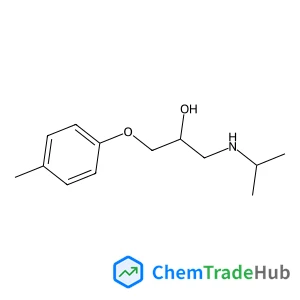
1-(4-Methylphenoxy)-3-(propan-2-ylamino)propan-2-ol
CAS Number:
5790-46-5
Molecular Formula:
C13H21NO2
Recommended Suppliers






Disclaimer
This page provides academic journal information for reference and research purposes only. We are not affiliated with any journal publishers and do not handle publication submissions. For publication-related inquiries, please contact the respective journal publishers directly.
If you notice any inaccuracies in the information displayed, please contact us at support@chemtradehub.com. We will promptly review and address your concerns.