


Detection of potentially toxic metals by SERS using salen complexes
Literature Information
Publication Date
2016-08-10
DOI
10.1039/C6AN01584K
Impact Factor
4.616
Authors
Julie Docherty, Samuel Mabbott, Ewen Smith, Karen Faulds, Christine Davidson, John Reglinski, Duncan Graham
View Original
Abstract
Surfaced enhanced Raman scattering (SERS) can discriminate between metal complexes due to the characteristic “spectral fingerprints” obtained. As a result, SERS has the potential to develop relatively simple and sensitive methods of detecting and quantifying a range of metal ions in solution. This could be beneficial for the environmental monitoring of potentially toxic metals (PTMs). Here, salen was used as a ligand to form complexes of Ni(II), Cu(II), Mn(II) and Co(II) in solution. The SERS spectra showed characteristic spectral differences specific to each metal complex, thus allowing the identification of each of these metal ions. This method allows a number of metal ions to be detected using the same ligand and an identical preparation procedure. The limit of detection (LOD) was determined for each metal ion, and it was found that Ni(II), Cu(II) and Mn(II) could be detected below the WHO's recommended limits in drinking water at 1, 2 and 2 μg L−1, respectively. Co(II) was found to have an LOD of 20 μg L−1, however no limit has been set for this ion by the WHO as the concentration of Co(II) in drinking water is generally <1–2 μg L−1. A contaminated water sample was also analysed where Mn(II) was detected at a level of 800 μg L−1.
Recommended Journals

Organic Preparations and Procedures International

Proceedings of the National Academy of Sciences of the United States of America

Journal of Physics and Chemistry of Solids

Kinetics and Catalysis

European Journal of Wood and Wood Products

Science

Helvetica Chimica Acta

Russian Chemical Reviews

Pure and Applied Chemistry

Molecular Pharmacology
Related Literature
Thiogermanate glasses—influence of the modifier cation—a combined XPS and theoretical study
D. Foix, H. Martinez, D. Gonbeau, D. Granier, A. Pradel, M. Ribes
2004-11-18
Paper
DOI: 10.1039/B410834E
Adsorption and reaction of thiophene and H2S on Mo2C/Al2O3catalyst studied by in situFT-IR spectroscopy
Weicheng Wu, Zili Wu, Zhaochi Feng, Pinliang Ying, Can Li
2004-11-08
Paper
DOI: 10.1039/B414360B
Casting a new light on azide photochemistry: photolytic production of cyclic-N3
2007-05-23
Invited Article
DOI: 10.1039/B704782G
An IR study on the surface passivation of Mo2C/Al2O3catalyst with O2, H2O and CO2
Weicheng Wu, Zili Wu, Changhai Liang, Pinliang Ying, Zhaochi Feng, Can Li
2004-11-02
Paper
DOI: 10.1039/B411849A
On the influence of ion exchange on the local structure of the titanosilicate ETS-10
Claudiu C. Pavel, Bodo Zibrowius, Elke Löffler, Wolfgang Schmidt
2007-05-22
Paper
DOI: 10.1039/B701773A
Dumbbells and onions in ternary nucleation
Ricky B. Nellas, Bin Chen, J. Ilja Siepmann
2007-05-03
Communication
DOI: 10.1039/B705385A
Hydrogen storage: the remaining scientific and technological challenges
Michael Felderhoff, Claudia Weidenthaler, Rittmar von Helmolt, Ulrich Eberle
2007-05-09
Invited Article
DOI: 10.1039/B701563C
On the role of interface polymers for the mechanics of natural polymeric composites
Peter Fratzl, Ingo Burgert, Himadri S. Gupta
2004-10-25
Paper
DOI: 10.1039/B411986J
Photo-induced decomposition of organic peroxides: Ultrafast formation and decarboxylation of carbonyloxy radicals
Michael Buback, Matthias Kling, Stefan Schmatz, Jörg Schroeder
2004-11-04
Invited Article
DOI: 10.1039/B410875B
You might also like
Compound Q&A
What precautions should be taken when handling 2-Chloro-1,2-bis(4-methylphenyl)ethanone (CAS: 71193-32-3)?
When handling 2-Chloro-1,2-bis(4-methylphenyl)ethanone (CAS: 71193-32-3), it is ...
71193-32-32-Chloro-1,2-bis(4-m...
Compound Q&A
What industries use 4-Ethoxy-3-(5-methyl-4-oxo-7-propyl-1,4-dihydroimidazo[5,1-f][1,2,4]triazin-2-yl)benzenesulfonyl chloride (CAS: 224789-26-8)?
4-Ethoxy-3-(5-methyl-4-oxo-7-propyl-1,4-dihydroimidazo[5,1-f][1,2,4]triazin-2-yl...
224789-26-84-Ethoxy-3-(5-methyl...
Compound Q&A
How should Methyl 3-Oxo-4-Androsten-17-Carboxylate (CAS: 2681-55-2) be stored?
Methyl 3-Oxo-4-Androsten-17-Carboxylate (CAS: 2681-55-2) should be stored in a c...
2681-55-2Methyl 3-Oxo-4-Andro...
Compound Q&A
What are the main uses of (R)-3-Amino-4-(3-hexylphenylamino)-4-oxobutylphosphonic acid (CAS: 909725-61-7)?
(R)-3-Amino-4-(3-hexylphenylamino)-4-oxobutylphosphonic acid is primarily used i...
909725-61-7(R)-3-Amino-4-(3-hex...
Compound Q&A
What regulatory guidelines apply to 2-Methyl-2-propanyl 3-amino-3-carbamoyl-1-azetidinecarboxylate (CAS: 1254120-14-3)?
2-Methyl-2-propanyl 3-amino-3-carbamoyl-1-azetidinecarboxylate (CAS: 1254120-14-...
1254120-14-32-Methyl-2-propanyl ...
Compound Q&A
Are there alternatives to (E)-4-(tert-Butoxy)-4-oxobut-2-enoic acid (CAS: 135355-96-3) in synthesis?
There are alternative reagents that can be used in synthesis instead of (E)-4-(t...
135355-96-3(E)-4-(tert-Butoxy)-...
Compound Q&A
What are the physical and chemical properties of [2-(3-Chlorophenyl)-1,3-thiazol-4-yl]methanol (CAS: 121202-20-8)?
[2-(3-Chlorophenyl)-1,3-thiazol-4-yl]methanol (CAS: 121202-20-8) is a crystallin...
121202-20-8[2-(3-Chlorophenyl)-...
Compound Q&A
What is the market or research trend for Methyl (2S)-[(4S)-2,2-dimethyl-1,3-dioxolan-4-yl]{[(4-methylphenyl)sulfonyl]oxy}acetate (CAS: 166249-17-8)?
The market and research trends for Methyl (2S)-[(4S)-2,2-dimethyl-1,3-dioxolan-4...
166249-17-8Methyl (2S)-[(4S)-2,...
Compound Q&A
What is the market or research trend for 1-Bromo-2-isocyanatoethane (CAS: 42865-19-0)?
The market for 1-Bromo-2-isocyanatoethane (CAS: 42865-19-0) is driven by its use...
42865-19-01-Bromo-2-isocyanato...
Compound Q&A
What are the main uses of 4-Nitro-D-phenylalanine hydrochloride (CAS: 147065-06-3)?
4-Nitro-D-phenylalanine hydrochloride (CAS: 147065-06-3) is primarily used in re...
147065-06-34-Nitro-D-phenylalan...
Source Journal
Analyst

CiteScore:
7.8
Self-citation Rate:
5.6%
Articles per Year:
653
Analyst publishes analytical and bioanalytical research that reports premier fundamental discoveries and inventions, and the applications of those discoveries, unconfined by traditional discipline barriers.
Recommended Compounds
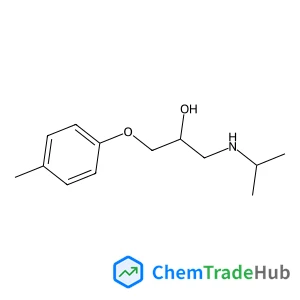
1-(4-Methylphenoxy)-3-(propan-2-ylamino)propan-2-ol
CAS Number:
5790-46-5
Molecular Formula:
C13H21NO2
![(3aR,7R,7aR)-2,2-Diethyl-3a,6,7,7a-tetrahydro-7-[(methylsulfonyl)oxy]-1,3-benzodioxole-5-carboxylic Acid Ethyl Ester structure](https://static.chemtradehub.com/structs/204/204254-90-0-7172.webp "(3aR,7R,7aR)-2,2-Diethyl-3a,6,7,7a-tetrahydro-7-[(methylsulfonyl)oxy]-1,3-benzodioxole-5-carboxylic Acid Ethyl Ester structure")
(3aR,7R,7aR)-2,2-Diethyl-3a,6,7,7a-tetrahydro-7-[(methylsulfonyl)oxy]-1,3-benzodioxole-5-carboxylic Acid Ethyl Ester
CAS Number:
204254-90-0
Molecular Formula:
C15H24O7S

Recommended Suppliers






Disclaimer
This page provides academic journal information for reference and research purposes only. We are not affiliated with any journal publishers and do not handle publication submissions. For publication-related inquiries, please contact the respective journal publishers directly.
If you notice any inaccuracies in the information displayed, please contact us at support@chemtradehub.com. We will promptly review and address your concerns.