


Isotope-filtered nD NMR spectroscopy of complex mixtures to unravel the molecular structures of phenolic compounds in tagged soil organic matter
Literature Information
Publication Date
2016-06-01
DOI
10.1039/C6AN00999A
Impact Factor
4.616
Authors
N. G. A. Bell, M. C. Graham, D. Uhrín
View Original
Abstract
Unravelling structures of molecules contained in complex, chromatographically inseparable mixtures is a challenging task. Due to the number of overlapping resonances in NMR spectra of these mixtures, unambiguous chemical shift correlations attributable to individual molecules cannot be achieved and thus their structure determination is elusive by this technique. Placing a tag carrying an NMR active nucleus onto a subset of molecules enables (i) to eliminate signals from the non-tagged molecules, and (ii) to obtain a set of correlated chemical shifts and coupling constants belonging to a single molecular type. This approach provides an opportunity for structure determination without the need for compound separation. Focusing on the most abundant functional groups of natural organic matter molecules, the carboxyl and hydroxyl groups were converted into esters and ethers, respectively by introducing 13CH3O groups. A set of 13C-filtered nD NMR experiments was designed yielding structures/structural motives of tagged molecules. The relative sensitivity of these experiments was compared and a step-by-step guide how to use these experiments to analyse the structures of methylated phenolics is provided. The methods are illustrated using an operational fraction of soil organic matter, fulvic acid isolated from a Scottish peat bog. Analysis of 33 structures identified in this sample revealed a correlation between the position of the methoxy cross-peaks in the 1H, 13C HSQC spectra and the compound type. This information enables profiling of phenolic compounds in natural organic matter without the need to acquire a full set of experiments described here or access to high field cryoprobe NMR spectrometers.
Recommended Journals

Pure and Applied Chemistry

Journal of Heterocyclic Chemistry

Kinetics and Catalysis

Fibre Chemistry

Organic Preparations and Procedures International

Proceedings of the National Academy of Sciences of the United States of America

European Journal of Wood and Wood Products

Science

Molecular Pharmacology

Journal of Organometallic Chemistry
Related Literature
Using γ distributions to predict self-diffusivities and density of states of fluids confined in carbon nanotubes
Vinit Choudhary, K. G. Ayappa
2007-02-21
Paper
DOI: 10.1039/B613900K
Sodium stabilization of dinucleotide multiplexes in the gas phase
Erin Shammel Baker, Jennifer Gidden, Alessandra Ferzoco, Michael T. Bowers
2004-04-06
Paper
DOI: 10.1039/B315727J
Raman spectroscopic study of mixed valence neodymium and cerium chloride solutions in eutectic LiCl–KCl melts
Veronica M. Rodriguez-Betancourtt, Detlef Nattland
2004-11-09
Paper
DOI: 10.1039/B414757J
Endohedral clusterfullerenes—playing with cluster and cage sizes
Lothar Dunsch, Shangfeng Yang
2007-05-15
Invited Article
DOI: 10.1039/B704143H
On the influence of ion exchange on the local structure of the titanosilicate ETS-10
Claudiu C. Pavel, Bodo Zibrowius, Elke Löffler, Wolfgang Schmidt
2007-05-22
Paper
DOI: 10.1039/B701773A
Kinetics of the reactions of HO with methanol (210–351 K) and with ethanol (216–368 K)
T. J. Dillon, D. Hölscher, V. Sivakumaran, A. Horowitz, J. N. Crowley
2004-11-18
Paper
DOI: 10.1039/B413961E
Resonant infrared multiphoton dissociation spectroscopy of gas-phase protonated peptides. Experiments and Car–Parrinello dynamics at 300 K‡
D. C. Marinica, J. Lemaire
2007-03-26
Invited Article
DOI: 10.1039/B618094A
Highly effective quenching of the ultrafast radiationless decay of photoexcited pyrimidine bases by covalent modification: photophysics of 5,6-trimethylenecytosine and 5,6-trimethyleneuracil
Marek Z. Zgierski, Takashige Fujiwara, William G. Kofron, Edward C. Lim
2007-05-25
Communication
DOI: 10.1039/B704001F
A new infrared spectroscopy technique for structural studies of mass-selected neutral polar complexes without chromophore
Bruno Lucas, Frédéric Lecomte, Bernd Reimann, Hans-Dieter Barth, Gilles Grégoire, Yves Bouteiller, Jean-Pierre Schermann, Charles Desfrançois
2004-02-10
Paper
DOI: 10.1039/B316054H
You might also like
Compound Q&A
What precautions should be taken when handling 2-Chloro-1,2-bis(4-methylphenyl)ethanone (CAS: 71193-32-3)?
When handling 2-Chloro-1,2-bis(4-methylphenyl)ethanone (CAS: 71193-32-3), it is ...
71193-32-32-Chloro-1,2-bis(4-m...
Compound Q&A
What industries use 4-Ethoxy-3-(5-methyl-4-oxo-7-propyl-1,4-dihydroimidazo[5,1-f][1,2,4]triazin-2-yl)benzenesulfonyl chloride (CAS: 224789-26-8)?
4-Ethoxy-3-(5-methyl-4-oxo-7-propyl-1,4-dihydroimidazo[5,1-f][1,2,4]triazin-2-yl...
224789-26-84-Ethoxy-3-(5-methyl...
Compound Q&A
How should Methyl 3-Oxo-4-Androsten-17-Carboxylate (CAS: 2681-55-2) be stored?
Methyl 3-Oxo-4-Androsten-17-Carboxylate (CAS: 2681-55-2) should be stored in a c...
2681-55-2Methyl 3-Oxo-4-Andro...
Compound Q&A
What are the main uses of (R)-3-Amino-4-(3-hexylphenylamino)-4-oxobutylphosphonic acid (CAS: 909725-61-7)?
(R)-3-Amino-4-(3-hexylphenylamino)-4-oxobutylphosphonic acid is primarily used i...
909725-61-7(R)-3-Amino-4-(3-hex...
Compound Q&A
What regulatory guidelines apply to 2-Methyl-2-propanyl 3-amino-3-carbamoyl-1-azetidinecarboxylate (CAS: 1254120-14-3)?
2-Methyl-2-propanyl 3-amino-3-carbamoyl-1-azetidinecarboxylate (CAS: 1254120-14-...
1254120-14-32-Methyl-2-propanyl ...
Compound Q&A
Are there alternatives to (E)-4-(tert-Butoxy)-4-oxobut-2-enoic acid (CAS: 135355-96-3) in synthesis?
There are alternative reagents that can be used in synthesis instead of (E)-4-(t...
135355-96-3(E)-4-(tert-Butoxy)-...
Compound Q&A
What are the physical and chemical properties of [2-(3-Chlorophenyl)-1,3-thiazol-4-yl]methanol (CAS: 121202-20-8)?
[2-(3-Chlorophenyl)-1,3-thiazol-4-yl]methanol (CAS: 121202-20-8) is a crystallin...
121202-20-8[2-(3-Chlorophenyl)-...
Compound Q&A
What is the market or research trend for Methyl (2S)-[(4S)-2,2-dimethyl-1,3-dioxolan-4-yl]{[(4-methylphenyl)sulfonyl]oxy}acetate (CAS: 166249-17-8)?
The market and research trends for Methyl (2S)-[(4S)-2,2-dimethyl-1,3-dioxolan-4...
166249-17-8Methyl (2S)-[(4S)-2,...
Compound Q&A
What is the market or research trend for 1-Bromo-2-isocyanatoethane (CAS: 42865-19-0)?
The market for 1-Bromo-2-isocyanatoethane (CAS: 42865-19-0) is driven by its use...
42865-19-01-Bromo-2-isocyanato...
Compound Q&A
What are the main uses of 4-Nitro-D-phenylalanine hydrochloride (CAS: 147065-06-3)?
4-Nitro-D-phenylalanine hydrochloride (CAS: 147065-06-3) is primarily used in re...
147065-06-34-Nitro-D-phenylalan...
Source Journal
Analyst

CiteScore:
7.8
Self-citation Rate:
5.6%
Articles per Year:
653
Analyst publishes analytical and bioanalytical research that reports premier fundamental discoveries and inventions, and the applications of those discoveries, unconfined by traditional discipline barriers.
Recommended Compounds
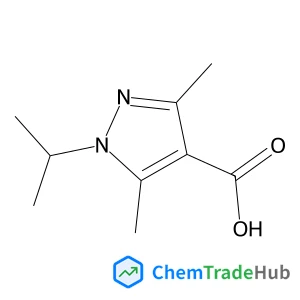
1-isopropyl-3,5-dimethyl-1H-pyrazole-4-carboxylic acid
CAS Number:
1007542-01-9
Molecular Formula:
C9H14N2O2
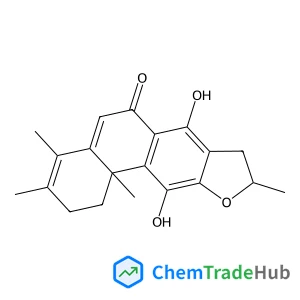
Phenanthro(3,2-b)furan-6(2H)-one, 1,8,9,11b-tetrahydro-7,11-dihydroxy-3,4,9,11b-tetramethyl-, cis-
CAS Number:
99624-92-7
Molecular Formula:
C20H22O4
Recommended Suppliers






Disclaimer
This page provides academic journal information for reference and research purposes only. We are not affiliated with any journal publishers and do not handle publication submissions. For publication-related inquiries, please contact the respective journal publishers directly.
If you notice any inaccuracies in the information displayed, please contact us at support@chemtradehub.com. We will promptly review and address your concerns.