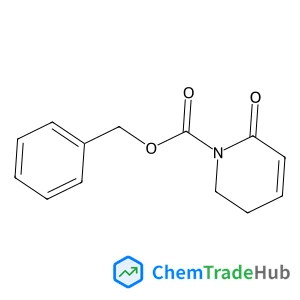
Benzyl 6-oxo-3,6-dihydro-1(2H)-pyridinecarboxylate
CAS Number:
725746-35-0
Molecular Formula:
C13H13NO3
Jacek Gasiorowski, Jan Philipp Kollender, Kurt Hingerl, Niyazi Serdar Sariciftci, Andrei Ionut Mardare
Photoelectrochemical characterization of the regioregular poly(3-hexylthiophene) (P3HT) was performed using an adapted version of a photoelectrochemical scanning droplet cell microscope (PE-SDCM). The real and imaginary parts of the dielectric function were determined using spectroscopic ellipsometry in order to identify the absorption region of the polymer. Detailed photoelectrochemical experiments were performed for the thin polymer layer contacted with 0.1 M tetrabutylammonium hexafluorophosphate dissolved in propylene carbonate as well as with an electrolyte containing a 5.4 mM ferrocene/ferrocenium redox couple. The effect of the illumination on the P3HT covered WE in contact with both the pure electrolyte and an electrolyte containing a ferrocene/ferrocenium redox couple was studied using dark/illumination sequences. The stability of the photovoltaic effect was characterized using long term current transients. Finally, the photoelectrochemical impedance spectroscopy was applied to determine the electrical properties of the P3HT in the dark and under illumination.

Planta Medica

Molecular Pharmacology

Kinetics and Catalysis

Journal of Physics and Chemistry of Solids

Proceedings of the National Academy of Sciences of the United States of America

Organic Preparations and Procedures International

Journal of Organometallic Chemistry

Pure and Applied Chemistry

Israel Journal of Chemistry

Journal of Catalysis
Vasiliy A. Bakulev, Vera S. Berseneva, Natalia P. Belskaia, Yury Yu. Morzherin, Andreiy Zaitsev, Wim Dehaen, Ingrid Luyten, Suzanne Toppet
DOI: 10.1039/B207854F
Hien The Ho, Alexandre Bénard, Gwenaël Forcher, Maël Le Bohec, Véronique Montembault, Sagrario Pascual, Laurent Fontaine
DOI: 10.1039/C8OB01807C
Han Xu, Feng Sha, Qiong Li, Xin-Yan Wu
DOI: 10.1039/C8OB01970C
J. E. Tungen, M. Aursnes, S. Ramon, R. A. Colas, C. N. Serhan, S. Nuruddin, F. Willoch, T. V. Hansen
DOI: 10.1039/C8OB01232F
Sofiane Hocine, Gilles Berger, K. N. Houk, Stephen Hanessian
DOI: 10.1039/D1QO01688A
Ting Wang, Yong Jiang, Yanyan Wang, Rulong Yan
DOI: 10.1039/C8OB01184B
Huanyu Shan, Rihuang Pan, Xufeng Lin
DOI: 10.1039/C8OB01785A
Edda E. Neuteboom, Edwin H. A. Beckers, Stefan C. J. Meskers, E. W. Meijer, René A. J. Janssen
DOI: 10.1039/B208824J
Margarita Escudero-Casao, Adrià Cardona, Raúl Beltrán-Debón, Yolanda Díaz, M. Isabel Matheu, Sergio Castillón
DOI: 10.1039/C8OB01867G
Fangyi Li, Changfu Qiu, Guangwei Yin, Chunhua Wang, Zheng Li
DOI: 10.1039/C8OB01941J
N-(4-Methoxybenzyl)-2-pyridinamine (CAS: 52818-63-0) is increasingly being used ...
When handling Ethyl 4-(2-chlorophenyl)-1,3-thiazole-2-carboxylate, appropriate p...
Diethyldiselane (CAS: 628-39-7) is classified under the Globally Harmonized Syst...
The market for oxocopper (CAS: 12053-18-8) is primarily driven by its use in cat...
The market for 5-{[(2-Methyl-2-propanyl)oxy]carbonyl}-5-azaspiro[2.4]heptane-7-c...
2-(1-Pyrrolidinyl)-4-pyridinamine is a chemical compound with the CAS number 359...
2-(3-Pyridinyl)-1-azabicyclo[2.2.2]octane (CAS: 91556-75-1) is a crystalline sol...
(S)-Alpha-allyl-proline hydrochloride is usually synthesized via a Wittig reacti...
3-Methyl-1,2-oxazole-5-carboxylic acid (CAS: 4857-42-5) is an organic compound w...
Lys-SMCC-DM1 is synthesized via a multi-step process involving the coupling of S...

Physical Chemistry Chemical Physics (PCCP) is an international journal co-owned by 19 physical chemistry and physics societies from around the world. This journal publishes original, cutting-edge research in physical chemistry, chemical physics and biophysical chemistry. To be suitable for publication in PCCP, articles must include significant innovation and/or insight into physical chemistry; this is the most important criterion that reviewers and Editors will judge against when evaluating submissions. The journal has a broad scope and welcomes contributions spanning experiment, theory, computation and data science. Topical coverage includes spectroscopy, dynamics, kinetics, statistical mechanics, thermodynamics, electrochemistry, catalysis, surface science, quantum mechanics, quantum computing and machine learning. Interdisciplinary research areas such as polymers and soft matter, materials, nanoscience, energy, surfaces/interfaces, and biophysical chemistry are welcomed if they demonstrate significant innovation and/or insight into physical chemistry. Joined experimental/theoretical studies are particularly appreciated when complementary and based on up-to-date approaches.
![(2R,6S)-6-[(Benzyloxy)methyl]-4-{[(2-methyl-2-propanyl)oxy]carbonyl}-2-morpholinecarboxylic acid structure](https://static.chemtradehub.com/structs/109/1093085-91-6-3382.webp "(2R,6S)-6-[(Benzyloxy)methyl]-4-{[(2-methyl-2-propanyl)oxy]carbonyl}-2-morpholinecarboxylic acid structure")