












Molecular insights: structure and dynamics of a Li ion doped organic ionic plastic crystal
Literature Information
Publication Date
2013-10-11
DOI
10.1039/C3CP53604A
Impact Factor
3.676
Authors
Simon de Leeuw, Marina V. Koudriachova, Jennifer M. Pringle, Patrick C. Howlett, Fangfang Chen, Maria Forsyth
View Original
Abstract
A molecular-level understanding of why the addition of lithium salts to Organic Ionic Plastic Crystals (OIPCs) produces excellent ionic conductivity is described for the first time. These materials are promising electrolytes for safe, robust lithium batteries, and have been experimentally characterised in some detail. Here, molecular dynamics simulations demonstrate the effects of lithium ion doping on both the structure and dynamics of an OIPC matrix (tetramethylammonium dicyanamide [TMA][DCA]) and illustrate a molecular-level transport model: in the plastic crystal phase lithium ions can form clusters with [DCA]−, and this clustering then in turn creates free volume or defect paths in the remainder of the lattice, which enhances ion conduction.
Related Literature
Radiation-induced transformations of matrix-isolated formic acid: evidence for the HCOOH → HOCO + H channel
Sergey V. Ryazantsev, Vladimir I. Feldman
2015-10-23
Paper
DOI: 10.1039/C5CP05446J
Trap-limited charge recombination in intrinsic perovskite film and meso-superstructured perovskite solar cells and the passivation effect of the hole-transport material on trap states
Yi Wang, Hao-Yi Wang, Man Yu, Li-Min Fu, Yujun Qin, Jian-Ping Zhang, Xi-Cheng Ai
2015-10-13
Communication
DOI: 10.1039/C5CP04360C
Molecular dynamics simulations of the enhanced recovery of confined methane with carbon dioxide
Quanzi Yuan, Xueyan Zhu, Kui Lin, Ya-Pu Zhao
2015-11-05
Paper
DOI: 10.1039/C5CP06649B
Cerium oxide as a promoter for the electro-oxidation reaction of ethanol: in situ XAFS characterization of the Pt nanoparticles supported on CeO2 nanoparticles and nanorods
Juan Corchado-García, Luis E. Betancourt, Carlos A. Vélez, Sanjaya D. Senanayake, Dario Stacchiola, Kotaro Sasaki, Maxime J.-F. Guinel, Yunyun Zhou, Chin Li Cheung, Carlos R. Cabrera
2015-10-26
Paper
DOI: 10.1039/C5CP04813C
Direct determination of ionic transference numbers in ionic liquids by electrophoretic NMR
Martin Gouverneur, Jakob Kopp, Leo van Wüllen, Monika Schönhoff
2015-10-27
Paper
DOI: 10.1039/C5CP05753A
Manipulating the voltage drop in graphene nanojunctions using a gate potential
2015-12-10
Paper
DOI: 10.1039/C5CP04613K
You might also like
Compound Q&A
How should waste containing 6-Chloro-5-(2'-hydroxy-3'-methoxy-4-biphenylyl)-3-(3-methoxyphenyl)-1H-pyrrolo[3,2-d]pyrimidine-2,4(3H,5H)-dione (CAS: 1346607-05-3) be handled?
Waste containing 6-Chloro-5-(2'-hydroxy-3'-methoxy-4-biphenylyl)-3-(3-methoxyphe...
1346607-05-36-Chloro-5-(2'-hydro...
Compound Q&A
What are the main uses of (3alpha,5alpha)-3-Hydroxypregnane-11,20-dione (CAS: 23930-19-0)?
(3alpha,5alpha)-3-Hydroxypregnane-11,20-dione is primarily used in the pharmaceu...
23930-19-0(3alpha,5alpha)-3-Hy...
Compound Q&A
What is the market or research trend for 4-Amino-6-chloro-2-pyridinecarboxylic acid (CAS: 546141-56-4)?
The market for 4-Amino-6-chloro-2-pyridinecarboxylic acid (CAS: 546141-56-4) is ...
546141-56-44-Amino-6-chloro-2-p...
Compound Q&A
Are there alternatives to (2-Benzoylethyl)trimethylammonium chloride (CAS: 24472-88-6) in synthesis?
Alternatives to (2-Benzoylethyl)trimethylammonium chloride (CAS: 24472-88-6) in ...
24472-88-6(2-Benzoylethyl)trim...
Compound Q&A
Is N-[4-Nitro-3-(trifluoromethyl)phenyl]acetamide (CAS: 393-12-4) safe?
N-[4-Nitro-3-(trifluoromethyl)phenyl]acetamide (CAS: 393-12-4) is generally safe...
393-12-4N-[4-Nitro-3-(triflu...
Compound Q&A
Are there alternatives to [(4R,5R,6S)-5-hydroxy-10-imino-3,7-dioxa-1,9-diazatricyclo[6.4.0.02,6]dodeca-8,11-dien-4-yl]methyl dihydrogen phosphate (CAS: 39679-56-6) in synthesis?
Alternative reagents such as other phosphates or similar functional groups can b...
39679-56-6[(4R,5R,6S)-5-hydrox...
Compound Q&A
Are there alternatives to N,N'-Bis(3-aminopropyl)-1,3-propanediamine (CAS: 4605-14-5) in synthesis?
There are alternatives to N,N'-Bis(3-aminopropyl)-1,3-propanediamine (CAS: 4605-...
4605-14-5N,N'-Bis(3-aminoprop...
Compound Q&A
What precautions should be taken when handling Aluminium trihexadecanoate (CAS: 555-35-1)?
When handling Aluminium trihexadecanoate, it is important to use appropriate per...
555-35-1Aluminium trihexadec...
Compound Q&A
What is (1,1-Dioxido-3-oxo-1,2-benzothiazol-2(3H)-yl)acetic acid (CAS: 52188-11-1)?
(1,1-Dioxido-3-oxo-1,2-benzothiazol-2(3H)-yl)acetic acid is a chemical compound ...
52188-11-1(1,1-Dioxido-3-oxo-1...
Compound Q&A
Are there alternatives to 5,5-dimethyloxolan-2-one (CAS: 3123-97-5) in synthesis?
Several alternatives to 5,5-dimethyloxolan-2-one (CAS: 3123-97-5) can be used in...
3123-97-55,5-dimethyloxolan-2...
Source Journal
Physical Chemistry Chemical Physics

CiteScore:
5.5
Self-citation Rate:
10.3%
Articles per Year:
3036
Physical Chemistry Chemical Physics (PCCP) is an international journal co-owned by 19 physical chemistry and physics societies from around the world. This journal publishes original, cutting-edge research in physical chemistry, chemical physics and biophysical chemistry. To be suitable for publication in PCCP, articles must include significant innovation and/or insight into physical chemistry; this is the most important criterion that reviewers and Editors will judge against when evaluating submissions. The journal has a broad scope and welcomes contributions spanning experiment, theory, computation and data science. Topical coverage includes spectroscopy, dynamics, kinetics, statistical mechanics, thermodynamics, electrochemistry, catalysis, surface science, quantum mechanics, quantum computing and machine learning. Interdisciplinary research areas such as polymers and soft matter, materials, nanoscience, energy, surfaces/interfaces, and biophysical chemistry are welcomed if they demonstrate significant innovation and/or insight into physical chemistry. Joined experimental/theoretical studies are particularly appreciated when complementary and based on up-to-date approaches.
Recommended Compounds
![Benzyl 2-{[(tert-butoxy)carbonyl]amino}acetate structure](https://static.chemtradehub.com/structs/542/54244-69-8-6399.webp "Benzyl 2-{[(tert-butoxy)carbonyl]amino}acetate structure")
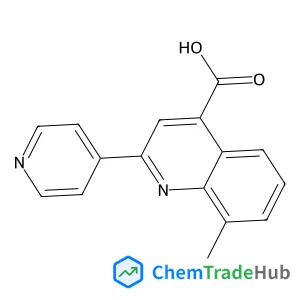
8-Methyl-2-pyridin-4-ylquinoline-4-carboxylic acid
CAS Number:
107027-42-9
Molecular Formula:
C16H12N2O2
-1,2-cyclohexanediamine structure](https://static.chemtradehub.com/structs/928/928769-12-4-a4f0.webp "N,N'-Bis[3-(2-methoxyphenyl)-2-hydroxybenzyl](1R,2R)-1,2-cyclohexanediamine structure")
N,N'-Bis[3-(2-methoxyphenyl)-2-hydroxybenzyl](1R,2R)-1,2-cyclohexanediamine
CAS Number:
928769-12-4
Molecular Formula:
C34H38N2O4
Recommended Suppliers






Disclaimer
This page provides academic journal information for reference and research purposes only. We are not affiliated with any journal publishers and do not handle publication submissions. For publication-related inquiries, please contact the respective journal publishers directly.
If you notice any inaccuracies in the information displayed, please contact us at support@chemtradehub.com. We will promptly review and address your concerns.