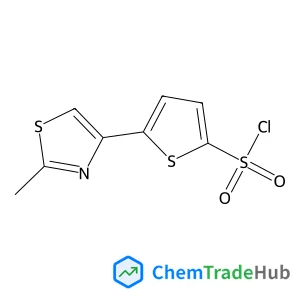
![2-Methyl-2-propanyl (2E)-5-chloro-2-[3-methoxy-4-(4-methyl-1H-imidazol-1-yl)benzylidene]pentanoate structure](https://static.chemtradehub.com/structs/122/1225232-42-7-ee03.webp "2-Methyl-2-propanyl (2E)-5-chloro-2-[3-methoxy-4-(4-methyl-1H-imidazol-1-yl)benzylidene]pentanoate structure")
2-Methyl-2-propanyl (2E)-5-chloro-2-[3-methoxy-4-(4-methyl-1H-imidazol-1-yl)benzylidene]pentanoate
CAS Number:
1225232-42-7
Molecular Formula:
C21H27ClN2O3
D. Baye, J. Dohet-Eraly
The Lagrange-mesh method has the simplicity of a calculation on a mesh and can have the accuracy of a variational method. It is applied to the study of a confined helium atom. Two types of confinement are considered. Soft confinements by potentials are studied in perimetric coordinates. Hard confinement in impenetrable spherical cavities is studied in a system of rescaled perimetric coordinates varying in [0,1] intervals. Energies and mean values of the distances between electrons and between an electron and the helium nucleus are calculated. A high accuracy of 11 to 15 significant figures is obtained with small computing times. Pressures acting on the confined atom are also computed. For sphere radii smaller than 1, their relative accuracies are better than 10−10. For larger radii up to 10, they progressively decrease to 10−3, still improving the best literature results.
Conor J. Crawford
DOI: 10.1039/D3CS00321C
Yifeng Tang, Jeremiah Y. Kim, Carman K. M. IP, Azadeh Bahmani, Qing Chen, Matthew G. Rosenberger, Aaron P. Esser-Kahn, Andrew L. Ferguson
DOI: 10.1039/D3SC03613H
Siyong Shen, Pengwei Sun, Zhi Gu, Yifei Bai, Xianglin Wang
DOI: 10.1039/D2CS00889K
Sungwoon Lee, Liyan Bi, Hao Chen, Dong Lin, Rongchao Mei, Yixuan Wu, Sang-Woo Joo, Jaebum Choo
DOI: 10.1039/D3CS00709J
Ryuta Shioi, Lu Xiao, Sayantan Chatterjee
DOI: 10.1039/D3SC03067A
Huashuai Hu, Xiaoli Wang, J. Paul Attfield, Minghui Yang
DOI: 10.1039/D3CS00717K
Hao Lan, Jiawei Wang, Liwei Cheng, Dandan Yu, Hua Wang, Lin Guo
DOI: 10.1039/D3CS00860F
Fuqiang Hu, Cefei Zhang, Zhihao Liu, Xinyu Xie, Xiaohu Zhao, Yanju Luo, Jielin Fu, Baolin Li, Changwei Hu, Zhishan Su, Zhipeng Yu
DOI: 10.1039/D3SC03675H
Zhi-Mao Zhang, Junliang Zhang, Quan Cai
DOI: 10.1039/D3SC04335E
Waste containing 6-Chloro-5-(2'-hydroxy-3'-methoxy-4-biphenylyl)-3-(3-methoxyphe...
(3alpha,5alpha)-3-Hydroxypregnane-11,20-dione is primarily used in the pharmaceu...
The market for 4-Amino-6-chloro-2-pyridinecarboxylic acid (CAS: 546141-56-4) is ...
Alternatives to (2-Benzoylethyl)trimethylammonium chloride (CAS: 24472-88-6) in ...
N-[4-Nitro-3-(trifluoromethyl)phenyl]acetamide (CAS: 393-12-4) is generally safe...
Alternative reagents such as other phosphates or similar functional groups can b...
There are alternatives to N,N'-Bis(3-aminopropyl)-1,3-propanediamine (CAS: 4605-...
When handling Aluminium trihexadecanoate, it is important to use appropriate per...
(1,1-Dioxido-3-oxo-1,2-benzothiazol-2(3H)-yl)acetic acid is a chemical compound ...
Several alternatives to 5,5-dimethyloxolan-2-one (CAS: 3123-97-5) can be used in...

Physical Chemistry Chemical Physics (PCCP) is an international journal co-owned by 19 physical chemistry and physics societies from around the world. This journal publishes original, cutting-edge research in physical chemistry, chemical physics and biophysical chemistry. To be suitable for publication in PCCP, articles must include significant innovation and/or insight into physical chemistry; this is the most important criterion that reviewers and Editors will judge against when evaluating submissions. The journal has a broad scope and welcomes contributions spanning experiment, theory, computation and data science. Topical coverage includes spectroscopy, dynamics, kinetics, statistical mechanics, thermodynamics, electrochemistry, catalysis, surface science, quantum mechanics, quantum computing and machine learning. Interdisciplinary research areas such as polymers and soft matter, materials, nanoscience, energy, surfaces/interfaces, and biophysical chemistry are welcomed if they demonstrate significant innovation and/or insight into physical chemistry. Joined experimental/theoretical studies are particularly appreciated when complementary and based on up-to-date approaches.
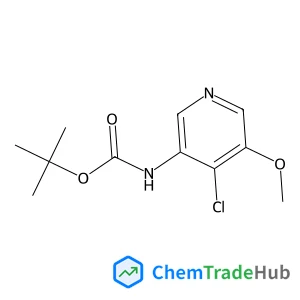
![4-{[4-(Trifluoromethoxy)benzyl]oxy}benzonitrile structure](https://static.chemtradehub.com/structs/103/1036629-63-6-2172.webp "4-{[4-(Trifluoromethoxy)benzyl]oxy}benzonitrile structure")
-1,2-cyclohexanediamine structure](https://static.chemtradehub.com/structs/928/928769-12-4-a4f0.webp "N,N'-Bis[3-(2-methoxyphenyl)-2-hydroxybenzyl](1R,2R)-1,2-cyclohexanediamine structure")