












Theoretical insights into the adsorption of neutral, radical and anionic thiophenols on gold(111)
Literature Information
Publication Date
2013-10-14
DOI
10.1039/C3CP53591F
Impact Factor
3.676
Authors
View Original
Abstract
The interaction of thiol and thiolate containing molecules with gold (S–Au) has gained increasing interest because of its applications in molecular electronic devices and catalysis. In this context, the enhanced conductivity of thiophenol compared to alkanethiol represents an opportunity to develop more sensitive and selective gold-based devices by incorporating molecules with the aryl–thiol moiety into their structures. As has been proposed earlier, the thiol moiety is deprotonated after binding to gold, hence, we present here a comparative study of the S–Au bond strength between several neutral and deprotonated aromatic–sulfur systems in their anionic and radical forms with a detailed description of the nature of this interaction. The study was performed by means of computational chemistry methods, using a cluster of 42 Au atoms as a model of the Au(111) surface that allowed us to provide new chemical insights to control the S–Au interface interaction strength. Our results revealed that the thiophenols–gold interaction is mainly dispersive where the interaction energies range between 31 and 43 kcal mol−1. The radical and anionic thiophenolates–gold interaction increases due to a strong charge transfer character, depicting interaction energies in the range of 50 to 55 kcal mol−1 and 62 to 92 kcal mol−1, respectively. These results suggest that for the anionic thiophenolate the binding strength can be tailored according to the electron–donor capabilities of the ligand which in turn can be finely tuned by several substituents. Our results are of possible impact for the design of new devices.
Related Literature
An adaptive mutation simulated annealing based investigation of Coulombic explosion and identification of dissociation patterns in (CO2)n2+ clusters
Pulak Naskar, Srijeeta Talukder, Pinaki Chaudhury
2017-03-15
Paper
DOI: 10.1039/C7CP00655A
Mediated water electrolysis in biphasic systems
Micheál D. Scanlon, Pekka Peljo, Lucie Rivier, Heron Vrubel, Hubert H. Girault
2017-08-02
Paper
DOI: 10.1039/C7CP04601D
A new insight into the thermodynamical criterion for the preparation of semiconductor and metal nanocrystals using a polymerized complexing method
Pingyun Li, Qingqing Wang, Guodong Deng, Xiaode Guo, Wei Jiang, Hongying Liu, Fengsheng Li
2017-08-15
Paper
DOI: 10.1039/C7CP04097K
A comparison of SERS and MEF of rhodamine 6G on a gold substrate
Elizabeth Kohr, Buddini I. Karawdeniya, Jason R. Dwyer, Anju Gupta, William B. Euler
2017-09-25
Paper
DOI: 10.1039/C7CP05569B
Investigation of superconductivity in compressed vanadium hydrides‡
Quan Zhuang, Xilian Jin, Qianqian Lv, Ying Li, Ziji Shao, Zhao Liu, Xin Li, Huadi Zhang, Xing Meng, Kuo Bao, Tian Cui
2017-08-21
Paper
DOI: 10.1039/C7CP03435K
Less stable tautomers form stronger hydrogen bonds: the case of water complexes
Shmuel Zilberg, Bernhard Dick
2017-09-01
Paper
DOI: 10.1039/C7CP04105E
Transition-metal doping induces the transition of electronic and magnetic properties in armchair MoS2 nanoribbons
Jing Pan, Rui Wang, Xiaoyu Zhou, Jiansheng Zhong, Xiaoyong Xu, Jingguo Hu
2017-08-03
Paper
DOI: 10.1039/C7CP03151C
Water and hexane in an ionic liquid: computational evidence of association under high pressure
A. Mariani, L. Gontrani
2017-03-03
Communication
DOI: 10.1039/C6CP08450H
Changing the dehydrogenation pathway of LiBH4–MgH2via nanosized lithiated TiO2
J. A. Puszkiel, M. V. Castro Riglos, F. Karimi, A. Santoru, C. Pistidda, T. Klassen, J. M. Bellosta von Colbe, M. Dornheim
2017-01-18
Communication
DOI: 10.1039/C6CP08278E
You might also like
Compound Q&A
How should 2-Methylbenzene-1,4-diamine dihydrochloride (CAS: 615-45-2) be stored?
2-Methylbenzene-1,4-diamine dihydrochloride (CAS: 615-45-2) should be stored in ...
615-45-22-Methylbenzene-1,4-...
Compound Q&A
Is (1S,4S)-2,5-Diazabicyclo[2.2.1]heptane dihydrobromide (CAS: 132747-20-7) safe?
(1S,4S)-2,5-Diazabicyclo[2.2.1]heptane dihydrobromide is generally considered sa...
132747-20-7(1S,4S)-2,5-Diazabic...
Compound Q&A
What industries use (6-Chloropyridazin-3-YL)methanamine (CAS: 871826-15-2)?
(6-Chloropyridazin-3-YL)methanamine finds applications in the pharmaceutical ind...
871826-15-2(6-Chloropyridazin-3...
Compound Q&A
What are the main uses of 2-Fluoro-3-methylphenol (CAS: 77772-72-6)?
2-Fluoro-3-methylphenol is primarily used in the synthesis of pharmaceuticals, p...
77772-72-62-Fluoro-3-methylphe...
Compound Q&A
What precautions should be taken when handling 3-Methoxy-4-nitrobenzonitrile (CAS: 177476-75-4)?
When handling 3-Methoxy-4-nitrobenzonitrile, it is important to wear appropriate...
177476-75-43-Methoxy-4-nitroben...
Compound Q&A
What precautions should be taken when handling 1,3-Oxazolo[4,5-b]pyridine-2(3H)-thione (CAS: 211949-57-4)?
When handling 1,3-Oxazolo[4,5-b]pyridine-2(3H)-thione (CAS: 211949-57-4), it is ...
211949-57-4[1,3]Oxazolo[4,5-b]p...
Compound Q&A
What regulatory guidelines apply to 4-Ethynylbenzamide (CAS: 90347-86-7)?
4-Ethynylbenzamide (CAS: 90347-86-7) falls under various regulatory guidelines i...
90347-86-74-Ethynylbenzamide
Compound Q&A
What are the main uses of 3-(2-Ethylphenyl)-2-thioxo-4-imidazolidinone (CAS: 186822-57-1)?
3-(2-Ethylphenyl)-2-thioxo-4-imidazolidinone is primarily used as an intermediat...
186822-57-13-(2-Ethylphenyl)-2-...
Compound Q&A
What is (2-Fluoro-6-methoxyphenyl)acetic acid (CAS: 500912-19-6)?
(2-Fluoro-6-methoxyphenyl)acetic acid, also known as 4-fluoro-3-methoxybenzoic a...
500912-19-6(2-Fluoro-6-methoxyp...
Compound Q&A
What is the market or research trend for 2-[4-(Hydroxymethyl)phenoxy]ethanol (CAS: 102196-18-9)?
Market trends for 2-[4-(Hydroxymethyl)phenoxy]ethanol (CAS: 102196-18-9) indicat...
102196-18-92-[4-(Hydroxymethyl)...
Source Journal
Physical Chemistry Chemical Physics

CiteScore:
5.5
Self-citation Rate:
10.3%
Articles per Year:
3036
Physical Chemistry Chemical Physics (PCCP) is an international journal co-owned by 19 physical chemistry and physics societies from around the world. This journal publishes original, cutting-edge research in physical chemistry, chemical physics and biophysical chemistry. To be suitable for publication in PCCP, articles must include significant innovation and/or insight into physical chemistry; this is the most important criterion that reviewers and Editors will judge against when evaluating submissions. The journal has a broad scope and welcomes contributions spanning experiment, theory, computation and data science. Topical coverage includes spectroscopy, dynamics, kinetics, statistical mechanics, thermodynamics, electrochemistry, catalysis, surface science, quantum mechanics, quantum computing and machine learning. Interdisciplinary research areas such as polymers and soft matter, materials, nanoscience, energy, surfaces/interfaces, and biophysical chemistry are welcomed if they demonstrate significant innovation and/or insight into physical chemistry. Joined experimental/theoretical studies are particularly appreciated when complementary and based on up-to-date approaches.
Recommended Compounds
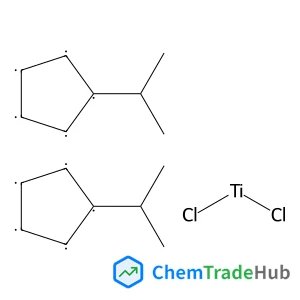
BIS(I-PROPYLCYCLOPENTADIENYL)TITANIUM DICHLORIDE
CAS Number:
12130-65-3
Molecular Formula:
C16H22Cl2Ti
![(3R,4aR,7aS,9aR,10S,11R,13aR,13bS,15aS,15bR)-3,11-Dihydroxy-10-(hydroxymethyl)-4,4,7a,10,13a,15b-hexamethyl-1,2,3,4,4a,7,7a,8,9,9a,10,11,12,13,13a,13b,14,15,15a,15b-icosahydro-5H-naphtho[2',1':4,5]cyc
lohepta[1,2-a]naphthalen-5-one structure](https://static.chemtradehub.com/structs/538/53800-21-8-9f18.webp "(3R,4aR,7aS,9aR,10S,11R,13aR,13bS,15aS,15bR)-3,11-Dihydroxy-10-(hydroxymethyl)-4,4,7a,10,13a,15b-hexamethyl-1,2,3,4,4a,7,7a,8,9,9a,10,11,12,13,13a,13b,14,15,15a,15b-icosahydro-5H-naphtho[2',1':4,5]cyc
lohepta[1,2-a]naphthalen-5-one structure")
Recommended Suppliers





Disclaimer
This page provides academic journal information for reference and research purposes only. We are not affiliated with any journal publishers and do not handle publication submissions. For publication-related inquiries, please contact the respective journal publishers directly.
If you notice any inaccuracies in the information displayed, please contact us at support@chemtradehub.com. We will promptly review and address your concerns.