












![5-Bromo-3-isopropyl-1H-pyrrolo[2,3-b]pyridine structure](https://static.chemtradehub.com/structs/125/1256819-54-1-8620.webp "5-Bromo-3-isopropyl-1H-pyrrolo[2,3-b]pyridine structure")
Less stable tautomers form stronger hydrogen bonds: the case of water complexes
Literature Information
Publication Date
2017-09-01
DOI
10.1039/C7CP04105E
Impact Factor
3.676
Authors
Shmuel Zilberg, Bernhard Dick
View Original
Abstract
Hydrogen bonding in cyclic complexes of water with tautomeric pairs of molecules M0 and M1 is calculated to be stronger by more than 25% for the less stable tautomer M1 in all cases where the energy gap between the two tautomers is large (ΔE(M0 − M1) > 10 kcal mol−1). This is accompanied by a large red-shift (>200 cm−1) of the N–H/O–H stretch frequency in the complexes involving M1. Large barriers for double proton transfer in both directions should permit an experimental verification. Exceptions to this rule were found in heterocycles with an N–CO fragment incorporated into a conjugated cycle resulting in two nearly degenerate tautomers – keto and enol forms. The wavefunction of the keto form has a large contribution from a zwitterionic VB structure which is also aromatic. This increases the polarity of the keto group, making the oxygen atom a strong H-bond acceptor. It can also stabilize the keto form below the aromatic enol form. In this case the extra-HB stabilization is observed for the most stable tautomer (i.e. for the keto form). H-bonding enhances the aromatic character of less aromatic molecules, but the more aromatic tautomers partially loose aromaticity.
Related Literature
A multimer-based SERS aptasensor for highly sensitive and homogeneous assay of carcinoembryonic antigens
Tian Lu, Liping Wang, Yuhong Xia, Yang Jin, Liying Zhang, Shuhu Du
2021-03-05
Paper
DOI: 10.1039/D1AN00121C
Vinyl-λ3-iodanes act as efficient sulfur atom acceptors: vinylic SN2-based strategy for conversion of tertiary thioamides to amides
Masahito Ochiai, Shinji Yamamoto
2002-10-24
Communication
DOI: 10.1039/B209097J
Supramolecular fixation of NO2 with calix[4]arenes
Grigory V. Zyryanov, Yanlong Kang, Stephen P. Stampp, Dmitry M. Rudkevich
2002-10-25
Communication
DOI: 10.1039/B207901A
Evidence for an anomalous redox ionic pair between Ru and Mn in SrRu0.5Mn0.5O3: An X-ray absorption spectroscopy approach
S. Sundar Manoharan, Ranjan K. Sahu
2002-11-19
Communication
DOI: 10.1039/B209293J
Lanthanide coordination polymer nanoparticles as a turn-on fluorescence sensing platform for simultaneous detection of histidine and cysteine
Zhenzhen Zhang, Gaiping Li, Baoxian Ye
2017-04-12
Paper
DOI: 10.1039/C7AN00415J
A microfluidic microparticle-labeled impedance sensor array for enhancing immunoassay sensitivity
Drago Sticker, Mario Rothbauer, Peter Ertl
2021-03-10
Paper
DOI: 10.1039/D0AN02081H
17O MQMAS NMR studies of Na-A and Ca-A
Jennifer E. Readman, Namjun Kim, Martine Ziliox, Clare P. Grey
2002-10-25
Communication
DOI: 10.1039/B208356F
Rapid and low-cost amplicon visualization for nucleic acid amplification tests using magnetic microbeads
Michihiko Nakano, Masafumi Inaba, Junya Suehiro
2021-03-10
Communication
DOI: 10.1039/D0AN02349C
Molecularly imprinted electrochemical aptasensor based on functionalized graphene and nitrogen-doped carbon quantum dots for trace cortisol assay
Chenhong Yu, Li Li, Yaping Ding, Huajie Liu, Hanyue Cui
2022-01-13
Paper
DOI: 10.1039/D1AN01838H
You might also like
Compound Q&A
How should 2-Methylbenzene-1,4-diamine dihydrochloride (CAS: 615-45-2) be stored?
2-Methylbenzene-1,4-diamine dihydrochloride (CAS: 615-45-2) should be stored in ...
615-45-22-Methylbenzene-1,4-...
Compound Q&A
Is (1S,4S)-2,5-Diazabicyclo[2.2.1]heptane dihydrobromide (CAS: 132747-20-7) safe?
(1S,4S)-2,5-Diazabicyclo[2.2.1]heptane dihydrobromide is generally considered sa...
132747-20-7(1S,4S)-2,5-Diazabic...
Compound Q&A
What industries use (6-Chloropyridazin-3-YL)methanamine (CAS: 871826-15-2)?
(6-Chloropyridazin-3-YL)methanamine finds applications in the pharmaceutical ind...
871826-15-2(6-Chloropyridazin-3...
Compound Q&A
What are the main uses of 2-Fluoro-3-methylphenol (CAS: 77772-72-6)?
2-Fluoro-3-methylphenol is primarily used in the synthesis of pharmaceuticals, p...
77772-72-62-Fluoro-3-methylphe...
Compound Q&A
What precautions should be taken when handling 3-Methoxy-4-nitrobenzonitrile (CAS: 177476-75-4)?
When handling 3-Methoxy-4-nitrobenzonitrile, it is important to wear appropriate...
177476-75-43-Methoxy-4-nitroben...
Compound Q&A
What precautions should be taken when handling 1,3-Oxazolo[4,5-b]pyridine-2(3H)-thione (CAS: 211949-57-4)?
When handling 1,3-Oxazolo[4,5-b]pyridine-2(3H)-thione (CAS: 211949-57-4), it is ...
211949-57-4[1,3]Oxazolo[4,5-b]p...
Compound Q&A
What regulatory guidelines apply to 4-Ethynylbenzamide (CAS: 90347-86-7)?
4-Ethynylbenzamide (CAS: 90347-86-7) falls under various regulatory guidelines i...
90347-86-74-Ethynylbenzamide
Compound Q&A
What are the main uses of 3-(2-Ethylphenyl)-2-thioxo-4-imidazolidinone (CAS: 186822-57-1)?
3-(2-Ethylphenyl)-2-thioxo-4-imidazolidinone is primarily used as an intermediat...
186822-57-13-(2-Ethylphenyl)-2-...
Compound Q&A
What is (2-Fluoro-6-methoxyphenyl)acetic acid (CAS: 500912-19-6)?
(2-Fluoro-6-methoxyphenyl)acetic acid, also known as 4-fluoro-3-methoxybenzoic a...
500912-19-6(2-Fluoro-6-methoxyp...
Compound Q&A
What is the market or research trend for 2-[4-(Hydroxymethyl)phenoxy]ethanol (CAS: 102196-18-9)?
Market trends for 2-[4-(Hydroxymethyl)phenoxy]ethanol (CAS: 102196-18-9) indicat...
102196-18-92-[4-(Hydroxymethyl)...
Source Journal
Physical Chemistry Chemical Physics

CiteScore:
5.5
Self-citation Rate:
10.3%
Articles per Year:
3036
Physical Chemistry Chemical Physics (PCCP) is an international journal co-owned by 19 physical chemistry and physics societies from around the world. This journal publishes original, cutting-edge research in physical chemistry, chemical physics and biophysical chemistry. To be suitable for publication in PCCP, articles must include significant innovation and/or insight into physical chemistry; this is the most important criterion that reviewers and Editors will judge against when evaluating submissions. The journal has a broad scope and welcomes contributions spanning experiment, theory, computation and data science. Topical coverage includes spectroscopy, dynamics, kinetics, statistical mechanics, thermodynamics, electrochemistry, catalysis, surface science, quantum mechanics, quantum computing and machine learning. Interdisciplinary research areas such as polymers and soft matter, materials, nanoscience, energy, surfaces/interfaces, and biophysical chemistry are welcomed if they demonstrate significant innovation and/or insight into physical chemistry. Joined experimental/theoretical studies are particularly appreciated when complementary and based on up-to-date approaches.
Recommended Compounds
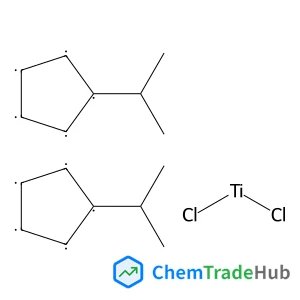
BIS(I-PROPYLCYCLOPENTADIENYL)TITANIUM DICHLORIDE
CAS Number:
12130-65-3
Molecular Formula:
C16H22Cl2Ti
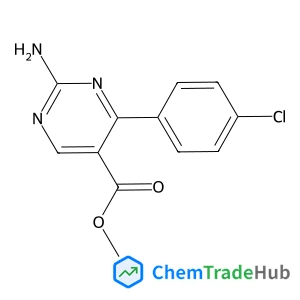
Methyl 2-amino-4-(4-chlorophenyl)-5-pyrimidinecarboxylate
CAS Number:
1133115-56-6
Molecular Formula:
C12H10ClN3O2
Recommended Suppliers



Disclaimer
This page provides academic journal information for reference and research purposes only. We are not affiliated with any journal publishers and do not handle publication submissions. For publication-related inquiries, please contact the respective journal publishers directly.
If you notice any inaccuracies in the information displayed, please contact us at support@chemtradehub.com. We will promptly review and address your concerns.