












A comparison of SERS and MEF of rhodamine 6G on a gold substrate
Literature Information
Publication Date
2017-09-25
DOI
10.1039/C7CP05569B
Impact Factor
3.676
Authors
Elizabeth Kohr, Buddini I. Karawdeniya, Jason R. Dwyer, Anju Gupta, William B. Euler
View Original
Abstract
Rhodamine 6G is spin-cast onto gold surfaces and the reflectance, emission, excitation, and SERS spectra are reported. Electron microscopy shows that the particle sizes of the gold are uniform for all preparations. Reflection spectra demonstrate the spectroscopic signature for Rh6G aggregates for thicker films and that the gold plasmon band shifts due to the refractive index change on the surface. The intensity of the SERS spectra increases with increasing surface coverage but the change is nonlinear between submonolayer and multilayer surface densities. The SERS resonance frequencies are unchanged as a function of Rh6G thickness, indicating that there is no coupling between Rh6G molecules in the ground state. The emission spectra behave unexpectedly as a function of Rh6G coverage. At submonolayer coverage the emission is relatively strong, decreases as the surface density increases to a monolayer, and then increases as the Rh6G thickness increases. Excitation spectra demonstrate that the emitting species at low surface density is monomeric but for thicker layers the moiety responsible for emission is Rh6G excited state aggregates. For the thicker films, the Rh6G acts as its own dielectric layer for metal enhanced fluorescence of the aggregates, which is the first example of a system where the fluorophore acts as its own dielectric for metal enhanced fluorescence. The intensity of the aggregate emission on gold intensity is three times of that found when Rh6G is deposited on glass. The gold induces emission in the Rh6G excited state aggregates that are quenched in the absence of the plasmon field.
Related Literature
Synthesis of crystalline boron nanowires by laser ablation
Yingjiu Zhang, Hiroki Ago, Motoo Yumura, Toshiki Komatsu, Satoshi Ohshima, Kunio Uchida
2002-10-25
Communication
DOI: 10.1039/B207449D
Comparing the abundance of HClO in cancer/normal cells and visualizing in vivo using a mitochondria-targeted ultra-fast fluorescent probe
Qian Pang, Tao Li, Caixia Yin, Kaiqing Ma, Fangjun Huo
2021-03-17
Paper
DOI: 10.1039/D1AN00375E
Multi-dimensional LC-MS: the next generation characterization of antibody-based therapeutics by unified online bottom-up, middle-up and intact approaches
Julien Camperi, Alexandre Goyon, Kelly Zhang, Cinzia Stella
2020-12-15
Critical Review
DOI: 10.1039/D0AN01963A
Synthesis of silver nanoparticlesvia electrochemical reduction on compact zeolite film modified electrodes
Yahong Zhang, Fei Chen, Jihua Zhuang, Yi Tang, Deju Wang, Yajun Wang, Angang Dong, Nan Ren
2002-10-25
Communication
DOI: 10.1039/B208222E
Electrified liquid–liquid interface as an electrochemical tool for the sensing of putrescine and cadaverine
2021-03-11
Paper
DOI: 10.1039/D1AN00019E
Reversible zinc phthalocyanine fullerene ensembles
Dirk M. Guldi, Jeff Ramey, M. Victoria Martínez-Díaz, Andrés de la Escosura, Tomás Torres, Tatiana Da Ros, Maurizio Prato
2002-10-24
Communication
DOI: 10.1039/B208516J
Click preparation of multiple-thioether bridged cyclodextrin chiral materials for efficient enantioseparation in high-performance liquid chromatography
Ming Chen, Xinling Lu, Xiaofei Ma, Yin Xiao, Yong Wang
2021-03-30
Paper
DOI: 10.1039/D1AN00145K
Chemometrics in forensic science: approaches and applications
Georgina Sauzier, Wilhelm van Bronswijk, Simon W. Lewis
2021-03-11
Tutorial Review
DOI: 10.1039/D1AN00082A
Current state of commercial point-of-care nucleic acid tests for infectious diseases
Jane Y. Zhang, Andrew T. Bender, David S. Boyle
2021-03-23
Critical Review
DOI: 10.1039/D0AN01988G
You might also like
Compound Q&A
How should 2-Methylbenzene-1,4-diamine dihydrochloride (CAS: 615-45-2) be stored?
2-Methylbenzene-1,4-diamine dihydrochloride (CAS: 615-45-2) should be stored in ...
615-45-22-Methylbenzene-1,4-...
Compound Q&A
Is (1S,4S)-2,5-Diazabicyclo[2.2.1]heptane dihydrobromide (CAS: 132747-20-7) safe?
(1S,4S)-2,5-Diazabicyclo[2.2.1]heptane dihydrobromide is generally considered sa...
132747-20-7(1S,4S)-2,5-Diazabic...
Compound Q&A
What industries use (6-Chloropyridazin-3-YL)methanamine (CAS: 871826-15-2)?
(6-Chloropyridazin-3-YL)methanamine finds applications in the pharmaceutical ind...
871826-15-2(6-Chloropyridazin-3...
Compound Q&A
What are the main uses of 2-Fluoro-3-methylphenol (CAS: 77772-72-6)?
2-Fluoro-3-methylphenol is primarily used in the synthesis of pharmaceuticals, p...
77772-72-62-Fluoro-3-methylphe...
Compound Q&A
What precautions should be taken when handling 3-Methoxy-4-nitrobenzonitrile (CAS: 177476-75-4)?
When handling 3-Methoxy-4-nitrobenzonitrile, it is important to wear appropriate...
177476-75-43-Methoxy-4-nitroben...
Compound Q&A
What precautions should be taken when handling 1,3-Oxazolo[4,5-b]pyridine-2(3H)-thione (CAS: 211949-57-4)?
When handling 1,3-Oxazolo[4,5-b]pyridine-2(3H)-thione (CAS: 211949-57-4), it is ...
211949-57-4[1,3]Oxazolo[4,5-b]p...
Compound Q&A
What regulatory guidelines apply to 4-Ethynylbenzamide (CAS: 90347-86-7)?
4-Ethynylbenzamide (CAS: 90347-86-7) falls under various regulatory guidelines i...
90347-86-74-Ethynylbenzamide
Compound Q&A
What are the main uses of 3-(2-Ethylphenyl)-2-thioxo-4-imidazolidinone (CAS: 186822-57-1)?
3-(2-Ethylphenyl)-2-thioxo-4-imidazolidinone is primarily used as an intermediat...
186822-57-13-(2-Ethylphenyl)-2-...
Compound Q&A
What is (2-Fluoro-6-methoxyphenyl)acetic acid (CAS: 500912-19-6)?
(2-Fluoro-6-methoxyphenyl)acetic acid, also known as 4-fluoro-3-methoxybenzoic a...
500912-19-6(2-Fluoro-6-methoxyp...
Compound Q&A
What is the market or research trend for 2-[4-(Hydroxymethyl)phenoxy]ethanol (CAS: 102196-18-9)?
Market trends for 2-[4-(Hydroxymethyl)phenoxy]ethanol (CAS: 102196-18-9) indicat...
102196-18-92-[4-(Hydroxymethyl)...
Source Journal
Physical Chemistry Chemical Physics

CiteScore:
5.5
Self-citation Rate:
10.3%
Articles per Year:
3036
Physical Chemistry Chemical Physics (PCCP) is an international journal co-owned by 19 physical chemistry and physics societies from around the world. This journal publishes original, cutting-edge research in physical chemistry, chemical physics and biophysical chemistry. To be suitable for publication in PCCP, articles must include significant innovation and/or insight into physical chemistry; this is the most important criterion that reviewers and Editors will judge against when evaluating submissions. The journal has a broad scope and welcomes contributions spanning experiment, theory, computation and data science. Topical coverage includes spectroscopy, dynamics, kinetics, statistical mechanics, thermodynamics, electrochemistry, catalysis, surface science, quantum mechanics, quantum computing and machine learning. Interdisciplinary research areas such as polymers and soft matter, materials, nanoscience, energy, surfaces/interfaces, and biophysical chemistry are welcomed if they demonstrate significant innovation and/or insight into physical chemistry. Joined experimental/theoretical studies are particularly appreciated when complementary and based on up-to-date approaches.
Recommended Compounds
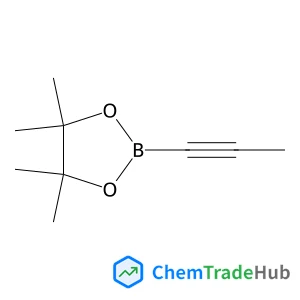
4,4,5,5-Tetramethyl-2-(1-propyn-1-YL)-1,3,2-dioxaborolane
CAS Number:
347389-75-7
Molecular Formula:
C9H15BO2


(S)-1-(3-(Benzyloxy)phenyl)-3-(dimethylamino)-2-methylpropan-1-one (2r,3r)-2,3-bis(benzoyloxy)succinate
CAS Number:
1004315-81-4
Molecular Formula:
C37H37NO10
Recommended Suppliers






Disclaimer
This page provides academic journal information for reference and research purposes only. We are not affiliated with any journal publishers and do not handle publication submissions. For publication-related inquiries, please contact the respective journal publishers directly.
If you notice any inaccuracies in the information displayed, please contact us at support@chemtradehub.com. We will promptly review and address your concerns.