












![(1R,6R)-6-({[(2-Methyl-2-propanyl)oxy]carbonyl}amino)-3-cyclohexene-1-carboxylic acid structure](https://static.chemtradehub.com/structs/865/865689-24-3-5fef.webp "(1R,6R)-6-({[(2-Methyl-2-propanyl)oxy]carbonyl}amino)-3-cyclohexene-1-carboxylic acid structure")
(1R,6R)-6-({[(2-Methyl-2-propanyl)oxy]carbonyl}amino)-3-cyclohexene-1-carboxylic acid
CAS Number:
865689-24-3
Molecular Formula:
C12H19NO4
Jing Pan, Rui Wang, Xiaoyu Zhou, Jiansheng Zhong, Xiaoyong Xu, Jingguo Hu
The electronic structure, magnetic properties and stability of transition-metal (TM) doped armchair MoS2 nanoribbons (AMoS2NRs) with full hydrogen passivation have been investigated using density functional theory. The hydrogen passivated AMoS2NRs are non-magnetic semiconductors, but TM doping can make the AMoS2NRs display diverse characteristics (such as non-magnetic metal, magnetic semiconductor, non-magnetic semiconductor and semi-metal properties), in which a transition of the electronic and magnetic properties is observed. Electronic structure analysis shows that the magnetism of the TM-doped AMoS2NRs is concentrated on the TM dopant and the edge Mo atoms, which mainly comes from the competition between the exchange splitting and crystal-field splitting. More importantly, Mn-doped AMoS2NRs may be good candidates for spintronic devices due to their good ferromagnetism with long-range FM magnetic coupling, reliable Curie temperature and high stability. These interesting findings on AMoS2NRs may open the possibility of their application in nanodevices and spintronic devices based on low-dimensional nanostructures.
Yahong Zhang, Fei Chen, Jihua Zhuang, Yi Tang, Deju Wang, Yajun Wang, Angang Dong, Nan Ren
DOI: 10.1039/B208222E
Amy E. Herr, Takehiko Kitamori, Ulf Landegren, Masood Kamali-Moghaddam
DOI: 10.1039/C9AN90011J
Shanmin Gao, Jun Lu, Nan Chen, Yan Zhao, Yi Xie
DOI: 10.1039/B210164E
Xin Xing Zhang, Qiu Yan Zhu, Jiao Yang Lu, Fu Rui Zhang, Wei Tao Huang, Xue Zhi Ding, Li Qiu Xia
DOI: 10.1039/C8AN01565A
Jane Y. Zhang, Andrew T. Bender, David S. Boyle
DOI: 10.1039/D0AN01988G
Qian Pang, Tao Li, Caixia Yin, Kaiqing Ma, Fangjun Huo
DOI: 10.1039/D1AN00375E
Ming Chen, Xinling Lu, Xiaofei Ma, Yin Xiao, Yong Wang
DOI: 10.1039/D1AN00145K
Tian Lu, Liping Wang, Yuhong Xia, Yang Jin, Liying Zhang, Shuhu Du
DOI: 10.1039/D1AN00121C
Pengfei Zhang, Aniruddha M. Kaushik, Kathleen E. Mach, Kuangwen Hsieh, Joseph C. Liao
DOI: 10.1039/D1AN00039J
2-Methylbenzene-1,4-diamine dihydrochloride (CAS: 615-45-2) should be stored in ...
(1S,4S)-2,5-Diazabicyclo[2.2.1]heptane dihydrobromide is generally considered sa...
(6-Chloropyridazin-3-YL)methanamine finds applications in the pharmaceutical ind...
2-Fluoro-3-methylphenol is primarily used in the synthesis of pharmaceuticals, p...
When handling 3-Methoxy-4-nitrobenzonitrile, it is important to wear appropriate...
When handling 1,3-Oxazolo[4,5-b]pyridine-2(3H)-thione (CAS: 211949-57-4), it is ...
4-Ethynylbenzamide (CAS: 90347-86-7) falls under various regulatory guidelines i...
3-(2-Ethylphenyl)-2-thioxo-4-imidazolidinone is primarily used as an intermediat...
(2-Fluoro-6-methoxyphenyl)acetic acid, also known as 4-fluoro-3-methoxybenzoic a...
Market trends for 2-[4-(Hydroxymethyl)phenoxy]ethanol (CAS: 102196-18-9) indicat...

Physical Chemistry Chemical Physics (PCCP) is an international journal co-owned by 19 physical chemistry and physics societies from around the world. This journal publishes original, cutting-edge research in physical chemistry, chemical physics and biophysical chemistry. To be suitable for publication in PCCP, articles must include significant innovation and/or insight into physical chemistry; this is the most important criterion that reviewers and Editors will judge against when evaluating submissions. The journal has a broad scope and welcomes contributions spanning experiment, theory, computation and data science. Topical coverage includes spectroscopy, dynamics, kinetics, statistical mechanics, thermodynamics, electrochemistry, catalysis, surface science, quantum mechanics, quantum computing and machine learning. Interdisciplinary research areas such as polymers and soft matter, materials, nanoscience, energy, surfaces/interfaces, and biophysical chemistry are welcomed if they demonstrate significant innovation and/or insight into physical chemistry. Joined experimental/theoretical studies are particularly appreciated when complementary and based on up-to-date approaches.
![trans-2-{[(Tert-butoxy)carbonyl]amino}cyclobutane-1-carboxylic acid structure](https://static.chemtradehub.com/structs/951/951173-25-4-27cd.webp "trans-2-{[(Tert-butoxy)carbonyl]amino}cyclobutane-1-carboxylic acid structure")
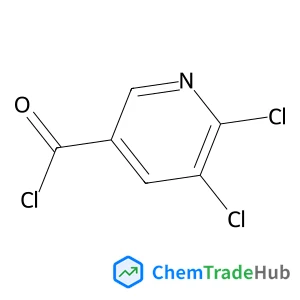
![[1-(5-Methyl-2-pyridinyl)-1H-pyrazol-4-yl]methanol structure](https://static.chemtradehub.com/structs/143/1439822-99-7-6cc9.webp "[1-(5-Methyl-2-pyridinyl)-1H-pyrazol-4-yl]methanol structure")
![5-Bromo-3-isopropyl-1H-pyrrolo[2,3-b]pyridine structure](https://static.chemtradehub.com/structs/125/1256819-54-1-8620.webp "5-Bromo-3-isopropyl-1H-pyrrolo[2,3-b]pyridine structure")



