


268 nm photodissociation of ClN3: a femtosecond velocity-map imaging study
Literature Information
Publication Date
2013-10-07
DOI
10.1039/C3CP53507J
Impact Factor
3.676
Authors
D. Staedter, E. Baynard, Peter C. Samartzis
View Original
Abstract
We report the first time-resolved study of the photochemistry of chlorine azide (ClN3) by femtosecond velocity-map imaging (fs-VMI). The dissociation dynamics are initiated at 4.6 eV and the photofragments are detected by multiphoton ionization using an intense laser field centered at 803 nm. A dissociation time of 262 ± 38 fs was measured from the rising time of the co-fragments N3 and Cl. The time dependency of the angular distribution of N3, which converges from β2 ∼ 2 to β2 = 1.61 ± 0.07 in 170 ± 45 fs, reveals the parallel nature of the transition dipole moment.
Recommended Journals

Journal of Chemical Sciences

Heteroatom Chemistry

Topics in Catalysis

Critical Reviews in Solid State and Materials Sciences

Acta Metallurgica Sinica-English Letters

Bioorganic & Medicinal Chemistry Letters

Bioorganic & Medicinal Chemistry

NDT & E International

Journal of the Indian Institute of Science

Medicinal Chemistry Research
Related Literature
Ultrafast charge carrier relaxation and charge transfer processes in CdS/CdTe thin films
Ruvini Dharmadasa, I. M. Dharmadasa, Thad Druffel
2015-05-27
Paper
DOI: 10.1039/C5CP01652E
Resistive switching memory devices based on electrical conductance tuning in poly(4-vinyl phenol)–oxadiazole composites
Yanmei Sun, Fengjuan Miao, Rui Li, Dianzhong Wen
2015-10-08
Paper
DOI: 10.1039/C5CP05481H
Towards the first theoretical scale of the trans effect in octahedral complexes
Vincent Tognetti, Laurent Joubert, Henry Chermette, Dominique Luneau, Christophe Morell
2015-11-18
Paper
DOI: 10.1039/C5CP04982B
Theoretical description of efficiency enhancement in DSSCs sensitized by newly synthesized heteroleptic Ru complexes
Yavar T. Azar, Mahmoud Payami
2015-10-09
Paper
DOI: 10.1039/C5CP02947C
Correction: Analysis of computational models for an accurate study of electronic excitations in GFP
Tobias Schwabe, Maarten T. P. Beerepoot, Jacob Kongsted
2015-12-15
Correction
DOI: 10.1039/C5CP90225H
Self-powered broadband, high-detectivity and ultrafast photodetectors based on Pd-MoS2/Si heterojunctions
W. Gao, Y. J. Liu, Y. M. Liu, Z. D. Han, Q. Z. Xue, J. Zhu
2015-11-30
Paper
DOI: 10.1039/C5CP05642J
Unveiling the peculiar hydrogen bonding behavior of solvated N-heterocyclic carbenes
2015-11-11
Paper
DOI: 10.1039/C5CP05369B
You might also like
Compound Q&A
How should waste containing 6-Chloro-5-(2'-hydroxy-3'-methoxy-4-biphenylyl)-3-(3-methoxyphenyl)-1H-pyrrolo[3,2-d]pyrimidine-2,4(3H,5H)-dione (CAS: 1346607-05-3) be handled?
Waste containing 6-Chloro-5-(2'-hydroxy-3'-methoxy-4-biphenylyl)-3-(3-methoxyphe...
1346607-05-36-Chloro-5-(2'-hydro...
Compound Q&A
What are the main uses of (3alpha,5alpha)-3-Hydroxypregnane-11,20-dione (CAS: 23930-19-0)?
(3alpha,5alpha)-3-Hydroxypregnane-11,20-dione is primarily used in the pharmaceu...
23930-19-0(3alpha,5alpha)-3-Hy...
Compound Q&A
What is the market or research trend for 4-Amino-6-chloro-2-pyridinecarboxylic acid (CAS: 546141-56-4)?
The market for 4-Amino-6-chloro-2-pyridinecarboxylic acid (CAS: 546141-56-4) is ...
546141-56-44-Amino-6-chloro-2-p...
Compound Q&A
Are there alternatives to (2-Benzoylethyl)trimethylammonium chloride (CAS: 24472-88-6) in synthesis?
Alternatives to (2-Benzoylethyl)trimethylammonium chloride (CAS: 24472-88-6) in ...
24472-88-6(2-Benzoylethyl)trim...
Compound Q&A
Is N-[4-Nitro-3-(trifluoromethyl)phenyl]acetamide (CAS: 393-12-4) safe?
N-[4-Nitro-3-(trifluoromethyl)phenyl]acetamide (CAS: 393-12-4) is generally safe...
393-12-4N-[4-Nitro-3-(triflu...
Compound Q&A
Are there alternatives to [(4R,5R,6S)-5-hydroxy-10-imino-3,7-dioxa-1,9-diazatricyclo[6.4.0.02,6]dodeca-8,11-dien-4-yl]methyl dihydrogen phosphate (CAS: 39679-56-6) in synthesis?
Alternative reagents such as other phosphates or similar functional groups can b...
39679-56-6[(4R,5R,6S)-5-hydrox...
Compound Q&A
Are there alternatives to N,N'-Bis(3-aminopropyl)-1,3-propanediamine (CAS: 4605-14-5) in synthesis?
There are alternatives to N,N'-Bis(3-aminopropyl)-1,3-propanediamine (CAS: 4605-...
4605-14-5N,N'-Bis(3-aminoprop...
Compound Q&A
What precautions should be taken when handling Aluminium trihexadecanoate (CAS: 555-35-1)?
When handling Aluminium trihexadecanoate, it is important to use appropriate per...
555-35-1Aluminium trihexadec...
Compound Q&A
What is (1,1-Dioxido-3-oxo-1,2-benzothiazol-2(3H)-yl)acetic acid (CAS: 52188-11-1)?
(1,1-Dioxido-3-oxo-1,2-benzothiazol-2(3H)-yl)acetic acid is a chemical compound ...
52188-11-1(1,1-Dioxido-3-oxo-1...
Compound Q&A
Are there alternatives to 5,5-dimethyloxolan-2-one (CAS: 3123-97-5) in synthesis?
Several alternatives to 5,5-dimethyloxolan-2-one (CAS: 3123-97-5) can be used in...
3123-97-55,5-dimethyloxolan-2...
Source Journal
Physical Chemistry Chemical Physics

CiteScore:
5.5
Self-citation Rate:
10.3%
Articles per Year:
3036
Physical Chemistry Chemical Physics (PCCP) is an international journal co-owned by 19 physical chemistry and physics societies from around the world. This journal publishes original, cutting-edge research in physical chemistry, chemical physics and biophysical chemistry. To be suitable for publication in PCCP, articles must include significant innovation and/or insight into physical chemistry; this is the most important criterion that reviewers and Editors will judge against when evaluating submissions. The journal has a broad scope and welcomes contributions spanning experiment, theory, computation and data science. Topical coverage includes spectroscopy, dynamics, kinetics, statistical mechanics, thermodynamics, electrochemistry, catalysis, surface science, quantum mechanics, quantum computing and machine learning. Interdisciplinary research areas such as polymers and soft matter, materials, nanoscience, energy, surfaces/interfaces, and biophysical chemistry are welcomed if they demonstrate significant innovation and/or insight into physical chemistry. Joined experimental/theoretical studies are particularly appreciated when complementary and based on up-to-date approaches.
Recommended Compounds
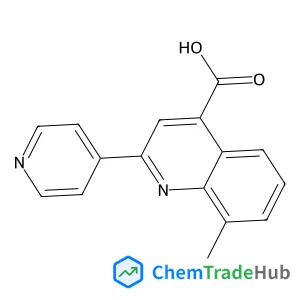
8-Methyl-2-pyridin-4-ylquinoline-4-carboxylic acid
CAS Number:
107027-42-9
Molecular Formula:
C16H12N2O2
Recommended Suppliers




Disclaimer
This page provides academic journal information for reference and research purposes only. We are not affiliated with any journal publishers and do not handle publication submissions. For publication-related inquiries, please contact the respective journal publishers directly.
If you notice any inaccuracies in the information displayed, please contact us at support@chemtradehub.com. We will promptly review and address your concerns.