












A roaming wavepacket in the dynamics of electronically excited 2-hydroxypyridine
Literature Information
Publication Date
2013-10-18
DOI
10.1039/C3CP52923A
Impact Factor
3.676
Authors
Lionel Poisson, Benoît Soep, Majdi Hochlaf, Martial Boggio-Pasqua, Jean-Michel Mestdagh
View Original
Abstract
How much time does it take for a wavepacket to roam on a multidimensional potential energy surface? This combined theoretical and pump–probe femtosecond time experiment on 2-hydroxypyridine proposes an answer. Bypassing the well-established transition state and conical intersection relaxation pathways, this molecular system undergoes relaxation into the S1 excited state: the central ring is destabilized by the electronic excitation, within ∼100 fs after absorption of the pump photon, then the H-atom bound to oxygen undergoes a roaming behavior when it couples to other degrees of freedom of the molecule. The timescale of the latter process is measured to be ∼1.3 ps. Further evolution of the wavepacket is either an oscillation onto the S1 potential or a conversion into the triplet state for timescale larger than ∼110 ps. Our work introduces a new tool for the understanding of time-resolved relaxation dynamics applied to large molecules through the roaming dynamics characterized by its strongly delocalized wavepacket on flat molecular potential energy surfaces.
Related Literature
Photocatalysis with atomically thin sheets
Yingying Fan, Jinguang Hu, Hyeon Suk Shin, Damien Voiry, Qingye Lu, Jimmy C. Yu
2023-10-25
Tutorial Review
DOI: 10.1039/D2CS00205A
Photo- and electro-chemical strategies for the activations of strong chemical bonds
Xianhai Tian, Yuliang Liu, Shahboz Yakubov, Jonathan Schütte, Shunsuke Chiba, Joshua P. Barham
2023-12-07
Review Article
DOI: 10.1039/D2CS00581F
Synthesis and hybridization of CuInS2 nanocrystals for emerging applications
Xiuwen Xu
2023-11-10
Review Article
DOI: 10.1039/D3CS00611E
Covalent inorganic complexes enabled zinc blende to wurtzite phase changes in CdSe nanoplatelets
Xinke Kong, Lin Ru, Junjun Ge, Yalei Deng, Pan-ke Zhang, Yuanyuan Wang
2023-11-08
Edge Article
DOI: 10.1039/D3SC04296K
Reversible Cl/Cl− redox in a spinel Mn3O4 electrode
Sean K. Sandstrom, Qiuyao Li, Yiming Sui, Mason Lyons, Chun-Wai Chang, Rui Zhang, Heng Jiang, Mingliang Yu, David Hoang, William F. Stickle, Huolin L. Xin, Zhenxing Feng, Xiulei Ji
2023-10-24
Edge Article
DOI: 10.1039/D3SC04545E
The semisynthesis of nucleolar human selenoprotein H
Rebecca Notis Dardashti, Shay Laps, Jacob S. Gichtin
2023-10-24
Edge Article
DOI: 10.1039/D3SC03059H
Metal nitrides for seawater electrolysis
Huashuai Hu, Xiaoli Wang, J. Paul Attfield, Minghui Yang
2023-11-29
Review Article
DOI: 10.1039/D3CS00717K
Rare earth oxide based electrocatalysts: synthesis, properties and applications
Yong Jiang, Zhong Liang, Qian Zhang, Yaping Du
2023-12-18
Review Article
DOI: 10.1039/D3CS00708A
Recent advances in Pd-catalyzed asymmetric cyclization reactions
Quanpu Wang, Chao Fang
2023-12-18
Review Article
DOI: 10.1039/D3CS00489A
You might also like
Compound Q&A
How should waste containing 6-Chloro-5-(2'-hydroxy-3'-methoxy-4-biphenylyl)-3-(3-methoxyphenyl)-1H-pyrrolo[3,2-d]pyrimidine-2,4(3H,5H)-dione (CAS: 1346607-05-3) be handled?
Waste containing 6-Chloro-5-(2'-hydroxy-3'-methoxy-4-biphenylyl)-3-(3-methoxyphe...
1346607-05-36-Chloro-5-(2'-hydro...
Compound Q&A
What are the main uses of (3alpha,5alpha)-3-Hydroxypregnane-11,20-dione (CAS: 23930-19-0)?
(3alpha,5alpha)-3-Hydroxypregnane-11,20-dione is primarily used in the pharmaceu...
23930-19-0(3alpha,5alpha)-3-Hy...
Compound Q&A
What is the market or research trend for 4-Amino-6-chloro-2-pyridinecarboxylic acid (CAS: 546141-56-4)?
The market for 4-Amino-6-chloro-2-pyridinecarboxylic acid (CAS: 546141-56-4) is ...
546141-56-44-Amino-6-chloro-2-p...
Compound Q&A
Are there alternatives to (2-Benzoylethyl)trimethylammonium chloride (CAS: 24472-88-6) in synthesis?
Alternatives to (2-Benzoylethyl)trimethylammonium chloride (CAS: 24472-88-6) in ...
24472-88-6(2-Benzoylethyl)trim...
Compound Q&A
Is N-[4-Nitro-3-(trifluoromethyl)phenyl]acetamide (CAS: 393-12-4) safe?
N-[4-Nitro-3-(trifluoromethyl)phenyl]acetamide (CAS: 393-12-4) is generally safe...
393-12-4N-[4-Nitro-3-(triflu...
Compound Q&A
Are there alternatives to [(4R,5R,6S)-5-hydroxy-10-imino-3,7-dioxa-1,9-diazatricyclo[6.4.0.02,6]dodeca-8,11-dien-4-yl]methyl dihydrogen phosphate (CAS: 39679-56-6) in synthesis?
Alternative reagents such as other phosphates or similar functional groups can b...
39679-56-6[(4R,5R,6S)-5-hydrox...
Compound Q&A
Are there alternatives to N,N'-Bis(3-aminopropyl)-1,3-propanediamine (CAS: 4605-14-5) in synthesis?
There are alternatives to N,N'-Bis(3-aminopropyl)-1,3-propanediamine (CAS: 4605-...
4605-14-5N,N'-Bis(3-aminoprop...
Compound Q&A
What precautions should be taken when handling Aluminium trihexadecanoate (CAS: 555-35-1)?
When handling Aluminium trihexadecanoate, it is important to use appropriate per...
555-35-1Aluminium trihexadec...
Compound Q&A
What is (1,1-Dioxido-3-oxo-1,2-benzothiazol-2(3H)-yl)acetic acid (CAS: 52188-11-1)?
(1,1-Dioxido-3-oxo-1,2-benzothiazol-2(3H)-yl)acetic acid is a chemical compound ...
52188-11-1(1,1-Dioxido-3-oxo-1...
Compound Q&A
Are there alternatives to 5,5-dimethyloxolan-2-one (CAS: 3123-97-5) in synthesis?
Several alternatives to 5,5-dimethyloxolan-2-one (CAS: 3123-97-5) can be used in...
3123-97-55,5-dimethyloxolan-2...
Source Journal
Physical Chemistry Chemical Physics

CiteScore:
5.5
Self-citation Rate:
10.3%
Articles per Year:
3036
Physical Chemistry Chemical Physics (PCCP) is an international journal co-owned by 19 physical chemistry and physics societies from around the world. This journal publishes original, cutting-edge research in physical chemistry, chemical physics and biophysical chemistry. To be suitable for publication in PCCP, articles must include significant innovation and/or insight into physical chemistry; this is the most important criterion that reviewers and Editors will judge against when evaluating submissions. The journal has a broad scope and welcomes contributions spanning experiment, theory, computation and data science. Topical coverage includes spectroscopy, dynamics, kinetics, statistical mechanics, thermodynamics, electrochemistry, catalysis, surface science, quantum mechanics, quantum computing and machine learning. Interdisciplinary research areas such as polymers and soft matter, materials, nanoscience, energy, surfaces/interfaces, and biophysical chemistry are welcomed if they demonstrate significant innovation and/or insight into physical chemistry. Joined experimental/theoretical studies are particularly appreciated when complementary and based on up-to-date approaches.
Recommended Compounds
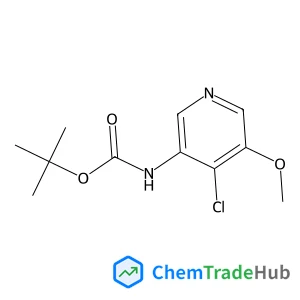
tert-Butyl 4-chloro-5-methoxypyridin-3-ylcarbamate
CAS Number:
1045858-17-0
Molecular Formula:
C11H15ClN2O3
Recommended Suppliers






Disclaimer
This page provides academic journal information for reference and research purposes only. We are not affiliated with any journal publishers and do not handle publication submissions. For publication-related inquiries, please contact the respective journal publishers directly.
If you notice any inaccuracies in the information displayed, please contact us at support@chemtradehub.com. We will promptly review and address your concerns.