












The interactions of methyl tert-butyl ether on high silicazeolites: a combined experimental and computational study
Literature Information
Publication Date
2013-07-02
DOI
10.1039/C3CP51684A
Impact Factor
3.676
Authors
G. Berlier, R. Bagatin
View Original
Abstract
In this work, the interactions of methyl tert-butyl ether (MTBE) on different dealuminated high silica zeolites were studied by means of both experimental and computational approaches. Zeolites with different textural and surface features were selected as adsorbents and the effect of their physico-chemical properties (i.e. pore size architecture and type and amount of surface OH sites) on sorption capacity were studied. High silica mordenite (MOR) and Y zeolites (both with a SiO2/Al2O3 ratio of 200) and ZSM-5 solid (SiO2/Al2O3 ratio of 500) were selected as model sorbents. By combining FTIR and SS-NMR (both 1H and 13C CPMAS NMR) spectroscopy it was possible to follow accurately the MTBE adsorption process on highly defective MOR characterized by a high concentration of surface SiOH groups. The adsorption process is found to occur in different steps and to involve isolated silanol sites, weakly interacting silanols, and the siloxane network of the zeolite, respectively. H-bonding and van der Waals interactions occurring between the mordenite surface and MTBE molecules were modeled by DFT calculations using a large cluster of the MOR structure where two adjacent side-pockets were fused in a large micropore to simulate a dealumination process leading to silanol groups. This is the locus where MTBE molecules are more strongly bound and stabilized. FTIR spectroscopy and gravimetric measurements allowed determination of the interaction strength and sorption capacities of all three zeolites. In the case of both Y and MOR zeolites, medium-weak H-bonding with isolated silanols (both on internal and external zeolite surfaces) and van der Waals interactions are responsible for MTBE adsorption, whereas ZSM-5, in which a negligible amount of surface silanol species is present, displays a much lower amount of adsorbed MTBE retained mainly through van der Waals interactions with zeolite siloxane network.
Related Literature
Methyl substituent effect on structure, luminescence and semiconducting properties of furan/phenylene co-oligomer single crystals
Vladislav G. Konstantinov, Dmitry Yu. Paraschuk
2017-02-28
Paper
DOI: 10.1039/C6CE02565J
Template-assisted generation of three-dimensionally branched titaniananotubes on a substrate
Kevin R. Moonoosawmy, Martha Es-Souni, Robert Minch, Matthias Dietze, Mohammed Es-Souni
2011-10-26
Paper
DOI: 10.1039/C1CE06064C
Construction of mesoporous Cu-doped Co9S8 rectangular nanotube arrays for high energy density all-solid-state asymmetric supercapacitors
Wen Lu, Ze Yuan, Chunyang Xu, Jiqiang Ning, Yijun Zhong, Ziyang Zhang, Yong Hu
2019-02-04
Paper
DOI: 10.1039/C8TA10998B
Electron distribution tuning of fluorine-doped carbon for ammonia electrosynthesis
Di Yuan, Zengxi Wei, Peng Han, Chao Yang, Linsong Huang, Zhengxiang Gu, Yu Ding, Jianmin Ma, Gengfeng Zheng
2019-06-25
Paper
DOI: 10.1039/C9TA04141A
An in situ cross-linked 1D/3D perovskite heterostructure improves the stability of hybrid perovskite solar cells for over 3000 h operation
Ning Yang, Cheng Zhu, Yihua Chen, Huachao Zai, Chenyue Wang, Xi Wang, Hao Wang, Sai Ma, Ziyan Gao, Xueyun Wang, Jiawang Hong, Yang Bai, Huanping Zhou
2020-09-28
Paper
DOI: 10.1039/D0EE01736A
Function-oriented synthesis of two-dimensional (2D) covalent organic frameworks – from 3D solids to 2D sheets
Xing Li, Priya Yadav, Kian Ping Loh
2020-06-03
Review Article
DOI: 10.1039/D0CS00236D
Transition metal electrocatalysts encapsulated into N-doped carbon nanotubes on reduced graphene oxide nanosheets: efficient water splitting through synergistic effects
Wenchao Wan, Shiqian Wei, Jingguo Li, Carlos A. Triana, Ying Zhou, Greta R. Patzke
2019-06-10
Paper
DOI: 10.1039/C9TA03213D
Self-sacrificial templated synthesis of a three-dimensional hierarchical macroporous honeycomb-like ZnO/ZnCo2O4 hybrid for carbon monoxide sensing
Yusuf Valentino Kaneti, Ni Luh Wulan Septiani, Xuchuan Jiang, Brian Yuliarto, Muhammad J. A. Shiddiky, Nobuyoshi Fukumitsu, Yong-Mook Kang
2019-01-09
Paper
DOI: 10.1039/C8TA11380G
Hydroxyl-group-modified polymeric carbon nitride with the highly selective hydrogenation of nitrobenzene to N-phenylhydroxylamine under visible light
Ruiyi Wang, Xianmo Gu, Xuebin Ke, Jianfeng Jia
2021-04-12
Paper
DOI: 10.1039/D1GC00325A
Enzyme-catalyzed synthesis of malonate polyesters and their use as metal chelating materials
Fergal P. Byrne, Jamie M. Z. Assemat, Amy E. Stanford, Thomas J. Farmer
2021-06-29
Communication
DOI: 10.1039/D1GC01783G
You might also like
Compound Q&A
What are the main uses of (5-Sulfamoyl-3-pyridinyl)boronic acid (CAS: 951233-61-7)?
(5-Sulfamoyl-3-pyridinyl)boronic acid is primarily used in chemical synthesis, p...
951233-61-7(5-Sulfamoyl-3-pyrid...
Compound Q&A
How is Benzyl 2-methyl-2-(methylsulfonyl)-4-pentenoate (CAS: 1942858-50-5) typically synthesized?
Benzyl 2-methyl-2-(methylsulfonyl)-4-pentenoate is typically synthesized via est...
1942858-50-5Benzyl 2-methyl-2-(m...
Compound Q&A
What precautions should be taken when handling 8-Fluoroquinolin-6-ol (CAS: 209353-22-0)?
When handling 8-Fluoroquinolin-6-ol (CAS: 209353-22-0), it is important to use p...
209353-22-08-Fluoroquinolin-6-o...
Compound Q&A
What are the physical and chemical properties of 1,3-Dibromo-5-(2-methyl-2-propanyl)benzene (CAS: 129316-09-2)?
1,3-Dibromo-5-(2-methyl-2-propanyl)benzene (CAS: 129316-09-2) is a crystalline c...
129316-09-21,3-Dibromo-5-(2-met...
Compound Q&A
What industries use Ethyl 7-chloro-4-oxo-1-(1,3-thiazol-2-yl)-1,4-dihydro-1,8-naphthyridine-3-carboxylate (CAS: 174726-87-5)?
Ethyl 7-chloro-4-oxo-1-(1,3-thiazol-2-yl)-1,4-dihydro-1,8-naphthyridine-3-carbox...
174726-87-5Ethyl 7-chloro-4-oxo...
Compound Q&A
What precautions should be taken when handling Delta-7-Avenasterol (CAS: 23290-26-8)?
When handling Delta-7-Avenasterol (CAS: 23290-26-8), it is important to wear app...
23290-26-8Delta-7-Avenasterol
Compound Q&A
What precautions should be taken when handling N-({(5R)-3-[3-Fluoro-4-(4-morpholinyl)phenyl]-2-oxo-1,3-oxazolidin-5-yl}methyl)acetamide (CAS: 872992-20-6)?
Proper handling involves the use of personal protective equipment such as gloves...
872992-20-6N-({(5R)-3-[3-Fluoro...
Compound Q&A
What precautions should be taken when handling 2-Methyl-2-proanyl 4-[(2-aminophenyl)amino]-1-piperidinecarboxylate (CAS: 79099-00-6)?
When handling 2-Methyl-2-proanyl 4-[(2-aminophenyl)amino]-1-piperidinecarboxylat...
79099-00-62-Methyl-2-propanyl ...
Compound Q&A
What is N-Methyl-4-chlorobenzylamine hydrochloride (CAS: 65542-24-7)?
N-Methyl-4-chlorobenzylamine hydrochloride (CAS: 65542-24-7) is a organic compou...
65542-24-7N-Methyl-4-chloroben...
Compound Q&A
Is [2-(Dodecyloxy)ethoxy]acetic acid (CAS: 27306-90-7) safe?
[2-(Dodecyloxy)ethoxy]acetic acid (CAS: 27306-90-7) is generally considered safe...
27306-90-7[2-(Dodecyloxy)ethox...
Source Journal
Physical Chemistry Chemical Physics

CiteScore:
5.5
Self-citation Rate:
10.3%
Articles per Year:
3036
Physical Chemistry Chemical Physics (PCCP) is an international journal co-owned by 19 physical chemistry and physics societies from around the world. This journal publishes original, cutting-edge research in physical chemistry, chemical physics and biophysical chemistry. To be suitable for publication in PCCP, articles must include significant innovation and/or insight into physical chemistry; this is the most important criterion that reviewers and Editors will judge against when evaluating submissions. The journal has a broad scope and welcomes contributions spanning experiment, theory, computation and data science. Topical coverage includes spectroscopy, dynamics, kinetics, statistical mechanics, thermodynamics, electrochemistry, catalysis, surface science, quantum mechanics, quantum computing and machine learning. Interdisciplinary research areas such as polymers and soft matter, materials, nanoscience, energy, surfaces/interfaces, and biophysical chemistry are welcomed if they demonstrate significant innovation and/or insight into physical chemistry. Joined experimental/theoretical studies are particularly appreciated when complementary and based on up-to-date approaches.
Recommended Compounds
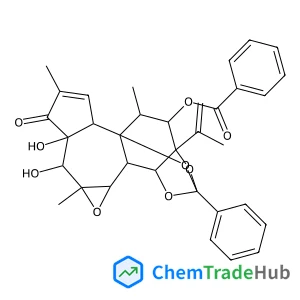
![4-[(4-Bromophenyl)sulfonyl]thiomorpholine structure](https://static.chemtradehub.com/structs/223/223555-81-5-2d67.webp "4-[(4-Bromophenyl)sulfonyl]thiomorpholine structure")
![N-[4-(Cyanoethynyl)phenyl]-16-oxo-4,7,10,13-tetraoxa-17-azahenicos-1-yn-21-amide structure](https://static.chemtradehub.com/structs/218/2183440-36-8-68cb.webp "N-[4-(Cyanoethynyl)phenyl]-16-oxo-4,7,10,13-tetraoxa-17-azahenicos-1-yn-21-amide structure")
N-[4-(Cyanoethynyl)phenyl]-16-oxo-4,7,10,13-tetraoxa-17-azahenicos-1-yn-21-amide
CAS Number:
2183440-36-8
Molecular Formula:
C25H31N3O6
Recommended Suppliers




Disclaimer
This page provides academic journal information for reference and research purposes only. We are not affiliated with any journal publishers and do not handle publication submissions. For publication-related inquiries, please contact the respective journal publishers directly.
If you notice any inaccuracies in the information displayed, please contact us at support@chemtradehub.com. We will promptly review and address your concerns.