












Enzyme-catalyzed synthesis of malonate polyesters and their use as metal chelating materials
Literature Information
Publication Date
2021-06-29
DOI
10.1039/D1GC01783G
Impact Factor
10.182
Authors
Fergal P. Byrne, Jamie M. Z. Assemat, Amy E. Stanford, Thomas J. Farmer
View Original
Abstract
Following the environmental problems caused by non-degradable plastics there is a need to synthesise greener and more sustainable polymers. In this work we describe, for the first time, the facile enzyme-catalysed synthesis of linear polyesters using dimethyl malonate as the diester. These polymers, containing a different aliphatic diol component (C4, C6 or C8), were synthesised in solventless conditions using immobilized Candida antarctica lipase B as the biocatalyst. The potential of enzymes for catalysing this reaction is compared with the unsuccessful antimony- and titanium-catalysed synthesis (T > 150 °C). The application of the synthesized polymers as effective metal chelators in biphasic, green solvent systems was also described, together with the characterisation of the synthesised materials.
Related Literature
Water-wetting surfaces as hydrate promoters during transport of carbon dioxide with impurities
Tatiana Kuznetsova, Bjørnar Jensen, Bjørn Kvamme, Sara Sjøblom
2015-04-13
Paper
DOI: 10.1039/C5CP00660K
Realization of a p–n junction in a single layer boron-phosphide
Deniz Çakır, Deniz Kecik, Hasan Sahin, Engin Durgun, Francois M. Peeters
2015-04-16
Paper
DOI: 10.1039/C5CP00414D
A class of rare antiferromagnetic metallic oxides: double perovskite AMn3V4O12 (A = Na+, Ca2+, and La3+) and the site-selective doping effect
Guangbiao Zhang, Yuanxu Wang, Yuli Yan, Chengxiao Peng, Chao Wang, Shuai Dong
2015-04-15
Paper
DOI: 10.1039/C5CP00186B
In situ PM-IRRAS of a glassy carbon electrode/deep eutectic solvent interface
Robert Schennach
2015-04-16
Paper
DOI: 10.1039/C5CP00070J
Dynamics and mechanisms of DNA repair by photolyase
Zheyun Liu, Lijuan Wang, Dongping Zhong
2015-03-26
Perspective
DOI: 10.1039/C4CP05286B
Tuning the switching behavior of binary oxide-based resistive memory devices by inserting an ultra-thin chemically active metal nanolayer: a case study on the Ta2O5–Ta system
Shuang Gao, Fei Zeng, Minjuan Wang, Guangyue Wang, Cheng Song, Feng Pan
2015-04-17
Paper
DOI: 10.1039/C5CP01235J
ZnO@Ag2S core–shell nanowire arrays for environmentally friendly solid-state quantum dot-sensitized solar cells with panchromatic light capture and enhanced electron collection
Xiaoliang Zhang, Jianhua Liu, Jindan Zhang, Erik M. J. Johansson
2015-04-17
Paper
DOI: 10.1039/C4CP06068G
In situ FTIR and Raman spectroelectrochemical characterization of graphene oxide upon electrochemical reduction in organic solvents
Antti Viinikanoja, Pia Damlin, Milla Suominen, Carita Kvarnström
2015-04-10
Paper
DOI: 10.1039/C5CP00942A
Competitive excited-state single or double proton transfer mechanisms for bis-2,5-(2-benzoxazolyl)-hydroquinone and its derivatives
Jinfeng Zhao, Junsheng Chen, Jianyong Liu, Mark R. Hoffmann
2015-03-24
Paper
DOI: 10.1039/C4CP05651E
Three-dimensional sp2-hybridized carbons consisting of orthogonal nanoribbons of graphene and net C
Meng Hu, Xu Dong, Bingchao Yang, Bo Xu, Dongli Yu, Julong He
2015-04-16
Paper
DOI: 10.1039/C5CP01621E
You might also like
Compound Q&A
What are the main uses of (5-Sulfamoyl-3-pyridinyl)boronic acid (CAS: 951233-61-7)?
(5-Sulfamoyl-3-pyridinyl)boronic acid is primarily used in chemical synthesis, p...
951233-61-7(5-Sulfamoyl-3-pyrid...
Compound Q&A
How is Benzyl 2-methyl-2-(methylsulfonyl)-4-pentenoate (CAS: 1942858-50-5) typically synthesized?
Benzyl 2-methyl-2-(methylsulfonyl)-4-pentenoate is typically synthesized via est...
1942858-50-5Benzyl 2-methyl-2-(m...
Compound Q&A
What precautions should be taken when handling 8-Fluoroquinolin-6-ol (CAS: 209353-22-0)?
When handling 8-Fluoroquinolin-6-ol (CAS: 209353-22-0), it is important to use p...
209353-22-08-Fluoroquinolin-6-o...
Compound Q&A
What are the physical and chemical properties of 1,3-Dibromo-5-(2-methyl-2-propanyl)benzene (CAS: 129316-09-2)?
1,3-Dibromo-5-(2-methyl-2-propanyl)benzene (CAS: 129316-09-2) is a crystalline c...
129316-09-21,3-Dibromo-5-(2-met...
Compound Q&A
What industries use Ethyl 7-chloro-4-oxo-1-(1,3-thiazol-2-yl)-1,4-dihydro-1,8-naphthyridine-3-carboxylate (CAS: 174726-87-5)?
Ethyl 7-chloro-4-oxo-1-(1,3-thiazol-2-yl)-1,4-dihydro-1,8-naphthyridine-3-carbox...
174726-87-5Ethyl 7-chloro-4-oxo...
Compound Q&A
What precautions should be taken when handling Delta-7-Avenasterol (CAS: 23290-26-8)?
When handling Delta-7-Avenasterol (CAS: 23290-26-8), it is important to wear app...
23290-26-8Delta-7-Avenasterol
Compound Q&A
What precautions should be taken when handling N-({(5R)-3-[3-Fluoro-4-(4-morpholinyl)phenyl]-2-oxo-1,3-oxazolidin-5-yl}methyl)acetamide (CAS: 872992-20-6)?
Proper handling involves the use of personal protective equipment such as gloves...
872992-20-6N-({(5R)-3-[3-Fluoro...
Compound Q&A
What precautions should be taken when handling 2-Methyl-2-proanyl 4-[(2-aminophenyl)amino]-1-piperidinecarboxylate (CAS: 79099-00-6)?
When handling 2-Methyl-2-proanyl 4-[(2-aminophenyl)amino]-1-piperidinecarboxylat...
79099-00-62-Methyl-2-propanyl ...
Compound Q&A
What is N-Methyl-4-chlorobenzylamine hydrochloride (CAS: 65542-24-7)?
N-Methyl-4-chlorobenzylamine hydrochloride (CAS: 65542-24-7) is a organic compou...
65542-24-7N-Methyl-4-chloroben...
Compound Q&A
Is [2-(Dodecyloxy)ethoxy]acetic acid (CAS: 27306-90-7) safe?
[2-(Dodecyloxy)ethoxy]acetic acid (CAS: 27306-90-7) is generally considered safe...
27306-90-7[2-(Dodecyloxy)ethox...
Source Journal
Green Chemistry

CiteScore:
16.1
Self-citation Rate:
7.5%
Articles per Year:
944
Green Chemistry provides a unique forum for the publication of innovative research on the development of alternative green and sustainable technologies. The scope of Green Chemistry is based on, but not limited to, the definition proposed by Anastas and Warner (Green Chemistry: Theory and Practice, P T Anastas and J C Warner, Oxford University Press, Oxford, 1998). Green chemistry is the utilisation of a set of principles that reduces or eliminates the use or generation of hazardous substances in the design, manufacture and application of chemical products. Green Chemistry is at the frontiers of this continuously-evolving interdisciplinary science and publishes research that attempts to reduce the environmental impact of the chemical enterprise by developing a technology base that is inherently non-toxic to living things and the environment. Submissions on all aspects of research relating to the endeavour are welcome. The journal publishes original and significant cutting-edge research that is likely to be of wide general appeal. To be published, work must present a significant advance in green chemistry. Papers must contain a comparison with existing methods and demonstrate advantages over those methods before publication can be considered. For more information please see this Editorial. Coverage includes the following, but is not limited to: Design (e.g. biomimicry, design for degradation/recycling/reduced toxicity…) Reagents & Feedstocks (e.g. renewables, CO2, solvents, auxiliary agents, waste utilization…) Synthesis (e.g. organic, inorganic, synthetic biology…) Catalysis (e.g. homogeneous, heterogeneous, enzyme, whole cell…) Process (e.g. process design, intensification, separations, recycling, efficiency…) Energy (e.g. renewable energy, fuels, photovoltaics, fuel cells, energy storage, energy carriers…) Applications (e.g. electronics, dyes, consumer products, coatings, pharmaceuticals, preservatives, building materials, chemicals for industry/agriculture/mining…) Impact (e.g. safety, metrics, LCA, sustainability, (eco)toxicology…) Green chemistry is, by definition, a continuously-evolving frontier. Therefore, the inclusion of a particular material or technology does not, of itself, guarantee that a paper is suitable for the journal. To be suitable, the novel advance should have the potential for reduced environmental impact relative to the state of the art. Green Chemistry does not normally deal with research associated with 'end-of-pipe' or remediation issues.
Recommended Compounds
![N-[4-(Cyanoethynyl)phenyl]-16-oxo-4,7,10,13-tetraoxa-17-azahenicos-1-yn-21-amide structure](https://static.chemtradehub.com/structs/218/2183440-36-8-68cb.webp "N-[4-(Cyanoethynyl)phenyl]-16-oxo-4,7,10,13-tetraoxa-17-azahenicos-1-yn-21-amide structure")
N-[4-(Cyanoethynyl)phenyl]-16-oxo-4,7,10,13-tetraoxa-17-azahenicos-1-yn-21-amide
CAS Number:
2183440-36-8
Molecular Formula:
C25H31N3O6
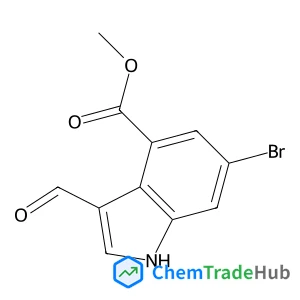
methyl 6-bromo-3-formyl-1H-indole-4-carboxylate
CAS Number:
1353636-63-1
Molecular Formula:
C11H8BrNO3
Recommended Suppliers







Disclaimer
This page provides academic journal information for reference and research purposes only. We are not affiliated with any journal publishers and do not handle publication submissions. For publication-related inquiries, please contact the respective journal publishers directly.
If you notice any inaccuracies in the information displayed, please contact us at support@chemtradehub.com. We will promptly review and address your concerns.