












Electron distribution tuning of fluorine-doped carbon for ammonia electrosynthesis
Literature Information
Publication Date
2019-06-25
DOI
10.1039/C9TA04141A
Impact Factor
12.732
Authors
Di Yuan, Zengxi Wei, Peng Han, Chao Yang, Linsong Huang, Zhengxiang Gu, Yu Ding, Jianmin Ma, Gengfeng Zheng
View Original
Abstract
The electrochemical N2 reduction reaction (N2RR), as a key reaction to realize the electrosynthesis of ammonia under ambient conditions, is significantly inhibited by the low efficiency of electrocatalysts. In this study, we report the improvement of the N2RR efficiency using a nonmetal, fluorine-doped carbon. The fluorine doping enables the tuning of the electron distribution of carbon, which provides positively charged carbon sites that are prone to adsorb N2 than H+ under acidic aqueous conditions. Density-functional theory calculations indicate that the N2 molecule is adsorbed on the two contrapuntal carbon atoms in the form of a side-on pattern, and the pathway of N2 turning to NH3 has the lowest energy barrier. The fluorine-doped carbon exhibits better N2RR performance than the undoped carbon, with a peak ammonia production rate (6.9 μg h−1 cm−2) and a corresponding high faradaic efficiency (12.1%) at −0.55 V versus the reversible hydrogen electrode (RHE). Our work shows the attractive features of developing doped carbon materials as nonmetal N2RR electrocatalysts.
Related Literature
Low temperature (550–700 K) oxidation pathways of cyclic ketones: dominance of HO2-elimination channels yielding conjugated cyclic coproducts
Adam M. Scheer, Oliver Welz, Subith S. Vasu, David L. Osborn, Craig A. Taatjes
2015-04-13
Paper
DOI: 10.1039/C4CP06097K
Atomic structure of biodegradable Mg-based bulk metallic glass
2015-04-15
Paper
DOI: 10.1039/C4CP03714F
Composition-dependent buckling behaviour of hybrid boron nitride–carbon nanotubes
Jin Zhang, S. A. Meguid
2015-04-17
Paper
DOI: 10.1039/C5CP00914F
Experimental and first-principles investigation of the adsorption and entrapping of guanine with SiO2 clusters of sol–gel silicate material for understanding DNA photodamage
V. L. Chandraboss, B. Karthikeyan, S. Senthilvelan
2015-04-02
Paper
DOI: 10.1039/C5CP00451A
Experimental determination of the rate of V–V collisional relaxation in 14N2 in its ground (X1Σg+) electronic state between 77 and 300 K
R. Z. Martínez, D. Bermejo
2015-04-23
Paper
DOI: 10.1039/C5CP01264C
Cluster evolution during the early stages of heating explosives and its relationship to sensitivity: a comparative study of TATB, β-HMX and PETN by molecular reactive force field simulations
Yushi Wen, Chaoyang Zhang, Xianggui Xue, Xinping Long
2015-04-01
Paper
DOI: 10.1039/C5CP00006H
Decomposition of nitroimidazole ions: experiment and theory
Johannes Postler, Athanasios Zavras, Paul Scheier, Stephan Denifl, Richard A. J. O'Hair
2015-04-16
Paper
DOI: 10.1039/C5CP01014D
Dithiafulvalene functionalized diketopyrrolopyrrole based sensitizers for efficient hydrogen production
S. Niveditha, K. Bhanuprakash
2015-04-27
Paper
DOI: 10.1039/C5CP01777G
Radical anions of hypervalent silicon compounds: 1-substituted silatranes
Elena F. Belogolova, Tamara I. Vakul'skaya, Valery F. Sidorkin
2015-04-23
Paper
DOI: 10.1039/C4CP06046F
You might also like
Compound Q&A
What are the main uses of (5-Sulfamoyl-3-pyridinyl)boronic acid (CAS: 951233-61-7)?
(5-Sulfamoyl-3-pyridinyl)boronic acid is primarily used in chemical synthesis, p...
951233-61-7(5-Sulfamoyl-3-pyrid...
Compound Q&A
How is Benzyl 2-methyl-2-(methylsulfonyl)-4-pentenoate (CAS: 1942858-50-5) typically synthesized?
Benzyl 2-methyl-2-(methylsulfonyl)-4-pentenoate is typically synthesized via est...
1942858-50-5Benzyl 2-methyl-2-(m...
Compound Q&A
What precautions should be taken when handling 8-Fluoroquinolin-6-ol (CAS: 209353-22-0)?
When handling 8-Fluoroquinolin-6-ol (CAS: 209353-22-0), it is important to use p...
209353-22-08-Fluoroquinolin-6-o...
Compound Q&A
What are the physical and chemical properties of 1,3-Dibromo-5-(2-methyl-2-propanyl)benzene (CAS: 129316-09-2)?
1,3-Dibromo-5-(2-methyl-2-propanyl)benzene (CAS: 129316-09-2) is a crystalline c...
129316-09-21,3-Dibromo-5-(2-met...
Compound Q&A
What industries use Ethyl 7-chloro-4-oxo-1-(1,3-thiazol-2-yl)-1,4-dihydro-1,8-naphthyridine-3-carboxylate (CAS: 174726-87-5)?
Ethyl 7-chloro-4-oxo-1-(1,3-thiazol-2-yl)-1,4-dihydro-1,8-naphthyridine-3-carbox...
174726-87-5Ethyl 7-chloro-4-oxo...
Compound Q&A
What precautions should be taken when handling Delta-7-Avenasterol (CAS: 23290-26-8)?
When handling Delta-7-Avenasterol (CAS: 23290-26-8), it is important to wear app...
23290-26-8Delta-7-Avenasterol
Compound Q&A
What precautions should be taken when handling N-({(5R)-3-[3-Fluoro-4-(4-morpholinyl)phenyl]-2-oxo-1,3-oxazolidin-5-yl}methyl)acetamide (CAS: 872992-20-6)?
Proper handling involves the use of personal protective equipment such as gloves...
872992-20-6N-({(5R)-3-[3-Fluoro...
Compound Q&A
What precautions should be taken when handling 2-Methyl-2-proanyl 4-[(2-aminophenyl)amino]-1-piperidinecarboxylate (CAS: 79099-00-6)?
When handling 2-Methyl-2-proanyl 4-[(2-aminophenyl)amino]-1-piperidinecarboxylat...
79099-00-62-Methyl-2-propanyl ...
Compound Q&A
What is N-Methyl-4-chlorobenzylamine hydrochloride (CAS: 65542-24-7)?
N-Methyl-4-chlorobenzylamine hydrochloride (CAS: 65542-24-7) is a organic compou...
65542-24-7N-Methyl-4-chloroben...
Compound Q&A
Is [2-(Dodecyloxy)ethoxy]acetic acid (CAS: 27306-90-7) safe?
[2-(Dodecyloxy)ethoxy]acetic acid (CAS: 27306-90-7) is generally considered safe...
27306-90-7[2-(Dodecyloxy)ethox...
Source Journal
Journal of Materials Chemistry A

CiteScore:
19.5
Self-citation Rate:
4.7%
Articles per Year:
2211
Journal of Materials Chemistry A, B & C cover high quality studies across all fields of materials chemistry. The journals focus on those theoretical or experimental studies that report new understanding, applications, properties and synthesis of materials. The journals have a strong history of publishing quality reports of interest to interdisciplinary communities and providing an efficient and rigorous service through peer review and publication. The journals are led by an international team of Editors-in-Chief and Associate Editors who are all active researchers in their fields. Journal of Materials Chemistry A, B & C are separated by the intended application of the material studied. Broadly, applications in energy and sustainability are of interest to Journal of Materials Chemistry A, applications in biology and medicine are of interest to Journal of Materials Chemistry B, and applications in optical, magnetic and electronic devices are of interest to Journal of Materials Chemistry C. More than one Journal of Materials Chemistry journal may be suitable for certain fields and researchers are encouraged to submit their paper to the journal that they feel best fits for their particular article. Example topic areas within the scope of Journal of Materials Chemistry A are listed below. This list is neither exhaustive nor exclusive. Artificial photosynthesis Batteries Carbon dioxide conversion Catalysis Fuel cells Gas capture/separation/storage Green/sustainable materials Hydrogen generation Hydrogen storage Photocatalysis Photovoltaics Self-cleaning materials Self-healing materials Sensors Supercapacitors Thermoelectrics Water splitting Water treatment
Recommended Compounds
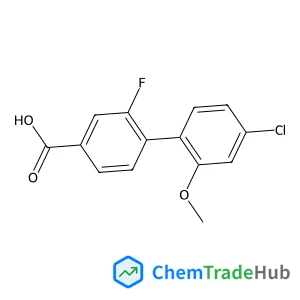
4-(4-Chloro-2-methoxyphenyl)-3-fluorobenzoic acid
CAS Number:
1261970-23-3
Molecular Formula:
C14H10ClFO3
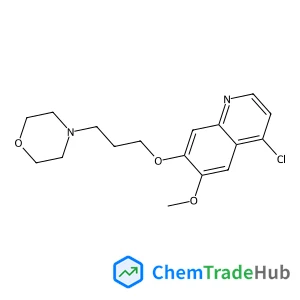
4-(3-((4-Chloro-6-methoxyquinolin-7-yl)oxy)propyl)morpholine
CAS Number:
205448-32-4
Molecular Formula:
C17H21ClN2O3
Recommended Suppliers





Disclaimer
This page provides academic journal information for reference and research purposes only. We are not affiliated with any journal publishers and do not handle publication submissions. For publication-related inquiries, please contact the respective journal publishers directly.
If you notice any inaccuracies in the information displayed, please contact us at support@chemtradehub.com. We will promptly review and address your concerns.